UK Casino Sites That Accept Credit Cards: The Rules
The UK ban rules out credit-card gambling, while casino cashiers determine which other deposit and withdrawal methods are available.
 Available in GB
Table of Contents
Why Credit Cards Stopped Being a Casino Payment Option
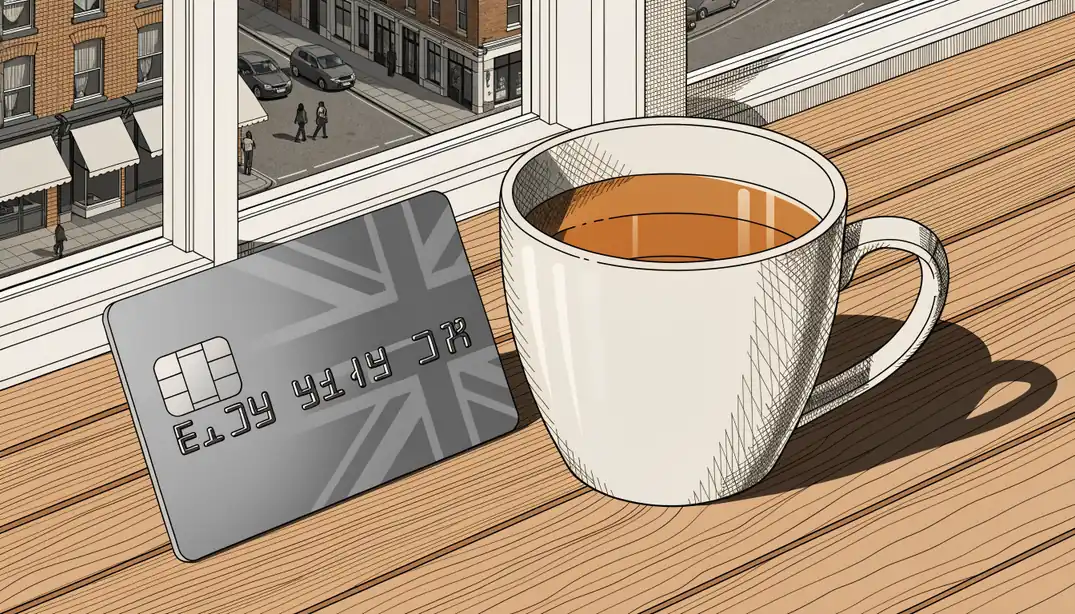
For British gambling, the decisive date is 14 April 2020. On that day, the regulator prohibited credit-card payments for gambling, and the prohibition remains in force. It applies to remote gambling as well as other gambling transactions covered by the rule. A UK-licensed casino therefore cannot accept a credit card as a way to fund play.
The important point is that this is not a temporary cashier setting, a preference adopted by a few operators, or a restriction that disappears when a different card network is used. It is a regulatory ban on credit-card gambling. The same practical answer applies whether the payment is described as a credit-card deposit, a card-funded gambling payment or a credit-card transaction at an online casino.
Why the ban was introduced
The policy rests on the nature of borrowed money. A debit-card payment draws on funds already held in a bank account. A credit-card payment creates a debt to the card issuer, with repayment due later and possible interest if the balance is not cleared under the card agreement. Gambling can already involve uncertain outcomes; adding a line of credit makes the distance between spending and repayment wider.
That distinction mattered to the regulator. The ban was intended to prevent gambling losses from being placed directly on credit and to reduce the risk that a person would continue playing with money that had not yet been earned or set aside. It also recognised that gambling transactions can happen quickly, while the financial consequences arrive on a slower timetable. The card statement is patient in a way the casino is not.
This explains why the rule concerns the funding source, not merely the piece of plastic presented at the cashier. A payment route cannot become acceptable simply because it passes through an intermediary. Remote gambling operators are also prohibited from accepting credit-card funds routed through a money service business. The route may be more elaborate; the underlying borrowing is not transformed by the detour.
Casino Payments in the UK: Deposit and Withdrawal Options
What the prohibition covers
The restriction applies to credit-card payments for gambling at UK-licensed casinos. It is not limited to one brand, one banking group or one type of casino game. An operator serving the British market must comply with the rule as part of its regulatory obligations.
Wallets do not create a loophole either. Where a wallet permits credit-card funds to be used for gambling, the operator cannot accept that payment for gambling. Calling the transaction a wallet transfer does not change the origin of the money. Payment technology has many costumes, but regulators tend to look underneath them.
This is why a casino cashier may show several card-related or wallet-related choices while still refusing a particular transaction. The visible logo is not the whole legal analysis. The funding source, the payment structure and the operator’s controls all matter. A credit card cannot be made permissible merely by being connected to a different service.
The date matters
The UK credit-card gambling ban began on 14 April 2020. It has not subsequently been relaxed. References to casinos that “accept credit cards” can therefore be misleading when they are presented as though they describe a lawful UK-licensed deposit option.
Casinos That Accept E-Checks in the UK: Payment Guide
The wording may refer to an older article, an overseas operator, a general payment-method directory, or a page that has failed to separate debit cards from credit cards. It may also describe a card brand rather than the type of card issued to the customer. Visa and Mastercard, for instance, are networks used for different card products; the network name alone does not overturn the ban.
The correct question is not simply whether a cashier displays a familiar card symbol. It is whether the payment is a permitted gambling transaction under the UK rules and whether the particular card product is treated as a debit card rather than a credit card. That distinction belongs to the payment details, not to the logo.
What remains outside this rule
The ban does not mean that every card payment has vanished from British online gambling. It concerns credit-card gambling. Debit cards are a different payment category, although their availability and suitability are separate matters. Other payment arrangements may also exist, subject to the operator’s controls and the conditions attached to each route.
Payment methods that do not involve credit-card funds are not exceptions to the ban, but different sources of money and different transactions.
Those alternatives should not be confused with an exception to the credit-card ban. A payment method that does not involve credit-card funds is not a way of using a credit card by another name; it is a different source of money and a different transaction. The distinction is simple in principle, though payment interfaces have a talent for making simple things look like a cabinet of small doors.
The practical question of which alternatives support deposits, withdrawals or particular account conditions belongs to the payment process itself. The legal starting point is narrower and firmer: since 14 April 2020, a UK-licensed casino has not been allowed to accept credit-card payments for gambling. That position still stands.
Top online casinos in the UK
- BritsinoBonus: Welcome Package – Get your £2,200 + 2,000 FS · Payout speed: 1-3 business days
- Revery PlayBonus: 100% up to€1,000+ 100 FS · Payout speed: 1-3 business days
- AmunbetBonus: Join now and get 450% up to 2,700 GBP + 450 FS · Payout speed: 1-3 business days
- ZombillionBonus: Welcome Pack 250% up to £4000 + 200 FS · Payout speed: 1-3 business days
- x3betBonus: Welcome Pack 100% Up to £1.000 + 200 Free Spins · Payout speed: 1-3 business days
- NightLuckBonus: Welcome Pack + 805% Up To 6400€ + 280 FS · Payout speed: 1-3 business days
- BeOnBetBonus: 100% up to €500 + 100 FS · Payout speed: 1-3 business days
What the Credit-Card Search Finds in the UK
A search for UK casino sites accepting credit cards runs into a distinction that is easy to miss in a list of payment logos. A page may display familiar card brands, yet that does not make credit-card gambling a lawful deposit route for a customer in Britain. The important question is not whether the word “card” appears beside the cashier. It is which kind of card the operator accepts, for which transaction, and under what conditions.
For UK-licensed remote gambling operators, credit cards are not a valid funding method for gambling. That rules out a genuine category of “credit card casinos in the UK” when the phrase means a casino licensed to serve British customers and accepting credit-card deposits. The wording may survive in titles, directories and promotional copy, but the payment option itself does not survive the regulatory test.
Casinos That Accept Wirecard in the UK: Payment Status
This is why results for “casino sites that accept credit card UK 2026” can appear more generous than the actual cashier. A search result can describe an old payment arrangement, refer to a casino outside the UK regulatory system, or use “card” as shorthand for both credit and debit products. None of those descriptions establishes that a UK-licensed casino will accept a credit card for a gambling deposit.
A card logo is not a credit-card promise
Visa and Mastercard are payment networks, not a single type of bank product. A debit card can carry either logo, as can a credit card. The brand printed on the front therefore does not settle the question. The funding source behind the card matters.
A debit card draws on money held in the associated bank account. A credit card relies on a borrowing facility. That difference is decisive for gambling payments in Britain. A casino cashier may present Visa or Mastercard because debit-card transactions are supported, while the same cashier must reject a credit-card transaction. Treating the two products as interchangeable turns a useful logo into a misleading answer.
The distinction also matters when a bank offers several cards under one account or when a digital banking application displays a card without making its product type obvious. A card that looks like an ordinary Visa payment instrument may still be credit-based. The cashier cannot be assessed by its branding alone; the card product has to match the permitted debit route.
This is less dramatic than a vanished casino, but more consequential.
Regulatory Ban
Since 14 April 2020, UK-licensed casinos are prohibited from accepting credit-card payments for gambling.
A page advertising “UK casinos that accept credit cards” can therefore be describing a search category rather than a lawful payment facility. The same applies to phrases such as “credit card casino sites UK”, “casinos that accept credit card deposits UK” and “best credit card casino sites UK”. They may be useful labels for finding information, but they should not be read as confirmation that credit-card funding will work at a British-facing, UKGC-licensed casino.
Why lists can look more accommodating than cashiers
Payment pages are assembled from several moving parts. A casino may have a general payment page, a country-specific version, a cashier that changes after registration, and card processing supplied by a third party. A logo can remain visible even when the product is not available to a particular customer or cannot be used for a particular transaction.
The practical effect is that availability is conditional rather than purely descriptive. A specialist review may list Visa and Mastercard among the payment methods associated with the sites it examines, but current British availability and eligibility for the particular card product still have to be confirmed inside the casino cashier. That is especially important where the wording says “cards” without expressly identifying debit cards.
The cashier may distinguish between:
- Visa debit and Visa credit;
- Mastercard debit and Mastercard credit;
- cards available for deposits but not for a particular account;
- cards shown in a general payment list but unavailable in the customer’s jurisdiction.
Only the last, account-specific payment display can show what the operator is prepared to process for that account. Even then, the card must remain a debit product rather than a credit facility.
This explains why a list of apparent “credit card casino alternatives UK” can produce confusion. Some entries are not alternatives to the credit-card route at all; they are debit-card casinos described imprecisely. Others may concern an offshore site, where the existence of a payment button does not turn the operator into a UK-licensed casino. A British player has no special permission to use credit-card gambling merely because a foreign website displays a card symbol.
UK availability and product eligibility are separate checks
Two questions tend to be folded into one:
- Does the casino offer the payment brand in Britain?
- Is the particular card eligible for the transaction?
The first concerns the operator’s current payment configuration. The second concerns the product presented for payment. Visa may be supported in one account context and unavailable in another; a Mastercard logo may refer to debit cards rather than all Mastercard products. Current conditions must be checked in the cashier, not inferred from the presence of a brand name elsewhere on the site.
That distinction is particularly relevant to searches for “slots that accept credit cards UK”. Slots do not accept cards independently. The casino account processes the deposit, and the selected payment method is subject to the operator’s rules. A slot therefore cannot create an exception that the cashier does not permit. If the account may be funded by an eligible debit card, the funds can then be used for games available through that account. A credit card does not become acceptable because the intended game is a slot rather than another casino game.
Important Distinction
Payment eligibility and self-exclusion arrangements are separate matters.
The same logic applies to searches for a “credit card casino not on GamStop”. A website’s relationship with a self-exclusion system does not override the prohibition on credit-card payments for gambling at UK-licensed operators. Nor does a foreign licence create a British credit-card option. Payment eligibility and self-exclusion arrangements are separate matters, and neither should be used to disguise the other.
What a reliable payment description should say
A precise description names the product rather than stopping at the network. “Visa debit accepted” conveys something materially different from “Visa accepted”. “Mastercard debit available in the UK” is clearer than “Mastercard supported”. The more general wording may be technically connected with a real payment page, but it leaves the central issue unresolved.
For a UK-facing casino, the relevant details are:
- whether the casino holds the required UK Gambling Commission operating licence;
- whether the cashier shows Visa debit or Mastercard debit for the account;
- whether the displayed method is available to a British customer at that time;
- whether the card product is debit rather than credit;
- whether the cashier permits the intended transaction.
The licence question matters because lawful online gambling in the UK depends on the operator holding the appropriate local licence. A payment method cannot repair an operator’s regulatory status. Conversely, a UKGC-licensed casino cannot make credit-card gambling permissible by placing a credit-card logo on a page.
The “not on GamStop” wording deserves the same care. It often points towards sites outside the UKGC framework, but it does not transform them into UK-licensed operators. Offshore casinos can be accessible to residents, yet they do not hold a UKGC licence. The absence of a UK self-exclusion connection is not evidence that credit-card deposits are permitted under the British rules.
Reading the cashier without confusing debit and credit
A cashier normally presents payment methods as selectable entries, but the label may still require interpretation. The safest reading is the narrow one: if the entry says debit card, it describes a debit route; if it merely says Visa or Mastercard, the product eligibility needs confirmation before any transaction is attempted.
The account currency also belongs in this inspection. A card may be technically compatible while the account uses a currency that creates a different payment arrangement. That does not make a credit card acceptable, nor does it establish that a debit card will be processed in the same way across every account. The cashier remains the point at which the operator’s current configuration is shown.
Payment pages can be polished, familiar and wrong for the transaction in front of them. A logo is not a licence; a brand is not a product; a search result is not a cashier.
That is the whole trick.
Deposits, Payouts and the Route Between Them
A gambling payment has two directions, but they are not mirror images. Money can arrive at a casino account almost immediately and still take considerably longer to leave it. The deposit is an authorisation and account update; the withdrawal is a request that may pass through internal checks, identity review and payment-provider processing. Treating both as one seamless movement of money is how an apparently simple transaction acquires paperwork.
The cleanest arrangement is often one named account used consistently for depositing and withdrawing.
For a British account, the route begins with a supported payment method and ends with a payout method that the casino can use for that particular customer. The cleanest arrangement is often one named account used consistently for depositing and withdrawing. Matching the account holder’s details with the payment route reduces avoidable friction around ownership checks. It does not remove the casino’s right to request KYC, nor does it turn a deposit into an automatic withdrawal.
A deposit is the first leg, not the whole journey
A deposit normally changes the balance visible in the gambling account once the payment provider confirms the transaction. The timing depends on the route chosen and on the provider’s own authorisation process. Open banking, bank transfer and certain wallet or card arrangements can display funds quickly, but the important distinction is between money appearing in the casino balance and money being finally settled between financial institutions.
That distinction matters most when the account is later closed, a payment is reversed or a transaction is queried. A balance shown on screen is not a separate source of funds. It remains connected to the account, payment instrument and customer details used to create it.
The same principle applies to a deposit made through a debit card. The card may be accepted and the balance updated promptly, while the corresponding withdrawal follows a different timetable. A specialist review describes this contrast directly: a card deposit can be instant even though the payout may take several business days. The speed of the first step says little about the second.
Casinos That Accept Citadel in the UK: Payment Guide
This is why a cashier’s “instant” label should be read narrowly. It commonly describes the crediting of a deposit, not the complete round trip from bank account to casino and back again. A payout still has to be requested, assessed and released.
Why withdrawals follow a different route
A withdrawal is not simply a negative deposit. The casino must establish that the request comes from the account holder, that the transaction fits its controls and that the destination is acceptable. UK anti-money-laundering practice generally directs funds back to the original payment source. This is the familiar closed-loop logic: the route into the account helps determine the route out.
The rule serves more than administrative neatness. Returning money to the original source helps operators identify the person behind the transaction and makes the movement of funds easier to trace. It also limits the usefulness of a gambling account as a temporary stop between unrelated financial accounts. An alternative payout route may therefore trigger additional verification rather than provide a shortcut.
The original source is not always a single instrument. A casino may need to return a deposit to the same card, wallet or bank account used for funding before arranging any remaining balance through another permitted route. The exact sequence is determined by the operator’s cashier and payment controls. What looks like a preference in a menu can therefore be the result of an anti-fraud or AML requirement.
The route also depends on ownership. A payment method registered to somebody else can complicate the basic question of who deposited the money and who is requesting it back. Consistent customer and payment details make that question easier to answer. Financial systems remain unimpressed by family explanations.
Attention Deposits are designed to enter accounts; withdrawals have to prove where they are going.
Approval sits between request and receipt
A withdrawal request enters an approval stage before the payment provider receives it. Internal checks may include account information, transaction history, responsible gambling controls and KYC documents. The operator may also confirm that the requested amount is eligible for release under its account terms.
A specialist review identifies internal approval and account verification as central parts of the withdrawal timetable, with first withdrawals sometimes taking longer while checks are completed. That is a statement about the process, not a promise of a fixed waiting period. The casino’s status page may say that a payment method is fast, but the description cannot bypass an incomplete verification step.
The first withdrawal often attracts more attention because it is the point at which the operator must be satisfied that the account belongs to the person using it. Documents may be requested before funds are released, or a payment route may need to be confirmed. Repeated requests for information can feel disproportionate when the deposit itself was accepted without ceremony. Deposits are designed to enter accounts; withdrawals have to prove where they are going.
Once the casino approves the request, the payment provider and the receiving bank become part of the timetable. A bank transfer can be affected by cut-off times, weekends and currency conversion, while a wallet or card route has its own settlement arrangements. The casino may therefore show the withdrawal as processed even though the funds have not yet appeared in the external account.
Fast deposits, slower payouts
The most useful way to compare transaction speed is to separate three moments:
- Authorisation: the provider accepts the deposit and the casino credits the account.
- Approval: the casino checks and releases the withdrawal.
- Delivery: the payment provider and bank make the released funds available.
Only the first may be immediate. The latter two depend on controls outside the initial payment authorisation. A quick deposit is consequently compatible with a slower payout, and there is no contradiction in the two statements.
This difference appears across supported alternatives, although the precise experience varies by casino, provider and account status. A payment method that is convenient for funding may be deposit-only, subject to a separate withdrawal route or unable to receive funds in the same form. A method should not be treated as a complete payment channel until the cashier confirms that it can handle both directions for the account in question.
PayPal, open banking services and debit cards connected to fast payout systems are described in a specialist review as being among the quicker withdrawal routes. That observation concerns relative processing, not a guaranteed delivery time. Internal approval remains decisive, and a fully verified account is less likely to encounter a basic identity hold than one still awaiting checks.
Bank transfers illustrate the layered nature of the process particularly well. The casino can approve a withdrawal while the receiving bank is still waiting for the transfer to arrive. A request made after a bank’s cut-off point may move into a later processing window; a weekend can separate approval from settlement; a conversion can add another stage. The transfer has not necessarily failed merely because the balance has not changed at once.
Payment Speed
- A quick deposit is compatible with a slower payout.
- Internal approval remains decisive for withdrawals.
- The cashier is the point where the operator’s current configuration is shown.
The practical shape of a round trip
A sensible transaction record contains more than the amount. It shows the payment method, the date of the deposit, the date of the withdrawal request, the casino’s approval status and the eventual receipt. Those details help distinguish an unapproved request from a released payment and a provider delay from a casino delay.
They also expose a common misunderstanding about “cashier speed”. A casino can process a deposit quickly because the payment provider gives an immediate authorisation. A withdrawal may require the opposite: evidence, review and a controlled return to the source. The two events share an account but not a clock.
For that reason, the route between deposit and payout should be judged as a chain rather than a single feature. The customer’s details, the original payment source, the casino’s approval process and the receiving provider all matter. When one link requires confirmation, the entire payout waits there.
Paying Without a Credit Card
Once credit-card payments are removed from the picture, the payment menu becomes less dramatic and more practical. The main alternatives fall into a few familiar groups: debit cards, bank-based payments, electronic wallets and prepaid vouchers. Their differences are not merely about speed. A payment route may accept deposits but not withdrawals, or may sit outside a promotional offer even when the cashier displays it plainly.
Debit cards
UK casinos commonly accept debit cards issued by Visa and Mastercard. They use money already held in the linked bank account rather than extending a line of credit, which makes them distinct from credit-card payments for gambling.
Casino Sites That Accept EcoPayz in the UK
That distinction matters because the logo on a card does not settle every question. A casino may list Visa or Mastercard while a particular card product, issuer or transaction route remains ineligible. The available option is therefore the one displayed for the account in the cashier, not every card carrying the same network mark.
Debit cards can be a straightforward choice where the same card is accepted for both sides of the transaction. Keeping the account holder and payment holder aligned also reduces avoidable questions about ownership. Banking systems are fond of paperwork, and they rarely apologise for it.
Bank payments and open banking
Bank transfer and open-banking services move money through a bank account rather than through a card balance. A specialist review may describe these routes as capable of instant deposits and fast withdrawals at many sites, but that performance is not a fixed promise across the market. The receiving bank, the casino and the selected service all remain relevant.
Open banking can be presented as a direct authorisation from the bank account. Traditional bank transfer follows a more familiar route, with the player arranging payment using the casino’s banking details or an integrated transfer screen. Both approaches can avoid the complication of a card being accepted for deposits but excluded from the payout process.
The practical difference is often found in the cashier’s wording. One payment button may be intended only for adding funds; another may also appear in the withdrawal area. A bank route that looks interchangeable with every other option may not be.
E-wallets
PayPal, Skrill and Neteller belong to the electronic-wallet category. They can keep the casino transaction separate from the underlying bank account, although that separation does not erase ownership checks or the rules attached to the wallet itself.
Wallet Eligibility
A wallet cannot be used to bypass the restrictions on credit-card payments for gambling where it allows credit-card funds to be used for that purpose.
A specialist review describes PayPal as valued for speed and convenience, while also warning that a PayPal deposit may be left out of bonus eligibility. That is a condition to read rather than a reason to treat the wallet as universally better. A promotion can have its own payment exclusions, and the payment method can therefore alter the terms attached to a deposit.
Skrill and Neteller are offered by some sites. A specialist review also identifies both as methods that are often excluded from promotions. The word “often” belongs to that review’s description, not to a permanent rule of the British market; availability and promotional treatment can change between operators and offers.
The wallet itself must also be funded in a permitted way. A wallet cannot be used to bypass the restrictions on credit-card payments for gambling where it allows credit-card funds to be used for that purpose. A different interface does not turn the same source of funds into a different legal category.
Prepaid vouchers
Paysafecard works differently from a bank card or wallet. It is a prepaid voucher intended for deposits only. That makes it useful for controlling the amount placed into an account, but it also means it should not be treated as a complete payment loop: the deposit function does not imply a matching withdrawal function.
The distinction is easy to miss when several logos sit together in a cashier. A voucher can be perfectly suitable for funding an account while being unavailable when money needs to leave it. Deposit-only is a functional description, not a minor footnote.
Less common electronic routes
Some UK-facing casino sites also show additional electronic payment names. Jeton, for instance, remains present at a small number of UK online casinos in 2026, according to a specialist review. Its appearance is therefore a matter of site-by-site availability, not evidence that it belongs in every cashier.
Attention The presence of a logo on an information page is weaker evidence than the active option shown after the account has been opened.
The same caution applies to newly presented wallet brands and regional services. A payment method may be technically familiar but absent from a particular operator’s British cashier. The presence of a logo on an information page is weaker evidence than the active option shown after the account has been opened.
What the method changes
The choice of payment route can affect more than the initial transfer. It may determine whether withdrawals are supported, whether a promotion applies and whether additional ownership checks arise. Bank-based services, cards and wallets can all have different treatment under the operator’s terms.
A sensible comparison therefore asks four narrow questions:
- Is the method available to British customers at the selected casino?
- Does it support both deposits and withdrawals, or is it deposit-only?
- Does the payment route qualify for the relevant promotion?
- Are the wallet and funding source themselves compatible with the rules for credit-card payments for gambling?
These questions keep the issue practical. A casino cashier is not a museum of payment logos; it is a set of permissions attached to one account, one currency and one transaction route. The next decision is made there.
The Cashier Is Where Compatibility Is Decided
A payment logo elsewhere on a casino website is not enough to establish that a method can be used for the transaction intended. The cashier is the operational point: it shows which routes are available to that account, in that jurisdiction and at that moment. A card, wallet or bank service named on an information page may not appear after login, or may be offered for deposits without a matching withdrawal route.
That distinction matters when comparing casinos associated with credit-card searches. A UK-licensed casino cannot accept credit-card payments for gambling, so a cashier displaying a card brand must still be read carefully. Visa and Mastercard may refer to debit-card products, while the eligibility of a particular card remains a cashier and issuer question. A credit-card deposit casino is therefore not a valid description of a UK-licensed deposit option.
Check both directions
Before selecting a method, the cashier should be checked for two separate functions:
- whether it accepts a deposit;
- whether it supports a withdrawal.
A method that appears only beside the deposit field is deposit-only. That does not make it defective, but it changes the practical route for taking money out. Anti-fraud and anti-money-laundering controls commonly send funds back through the payment source used for the deposit. Where that route cannot receive a payout, another method may be requested, together with extra checks to establish ownership.
The least complicated arrangement is generally a payment account held in the same name as the casino account and used consistently in both directions. Names, account details and payment ownership then form one coherent record rather than a small administrative mystery.
Currency belongs in the check
The cashier also determines whether the account is operating in a suitable currency. A mismatch can bring conversion into a payment that otherwise looked straightforward. The visible method is only half the question; the currency attached to it is the quieter half.
A cashier, then, is less a menu than a compatibility test. Logos advertise possibilities. The logged-in payment screen decides.
Limits, Fees and the Cost of Moving Money
The amount accepted by a cashier is governed by more than the balance in a bank account. A minimum deposit commonly falls within the £10–£20 range, with the exact threshold tied to the payment method selected. A route that looks suitable in principle may therefore be impractical for a small transaction if its own minimum is higher.
Casinos That Accept Upaycard in the UK: What to Check
Maximums are less uniform. A casino may apply separate ceilings to one transaction, a day or a month, while the payment provider may impose another restriction. Account status can also affect the permitted amount. These limits are not interchangeable: a figure displayed for a single deposit says nothing about the total allowed over a longer period. The cashier’s terms are the relevant record at the point of payment.
Cost has a similarly layered construction. A charge may come from the casino, the payment provider, the card issuer or bank, or the network carrying the transaction. Currency conversion adds another possible deduction. Even where no separate fee is printed, the exchange rate may contain a spread between the underlying rate and the rate applied to the payment. A specialist review notes that this spread can cost more than a visible flat charge. The quiet deduction is often the expensive one.
For a sterling account, a sterling-funded transaction avoids one obvious conversion stage, but the account currency still matters. A payment routed through a different currency can involve the casino’s rate, the provider’s rate, or the bank’s rate, depending on where the conversion occurs. The displayed deposit amount is not necessarily the final cost.
A sensible comparison therefore considers the whole transaction rather than one enticing label:
- the casino’s deposit or withdrawal charge;
- the provider’s fee;
- any issuer or bank charge;
- the exchange-rate spread;
- network costs; and
- the amount actually received or credited.
No single payment method is guaranteed to be the cheapest. The total depends on the method, currency, account terms and transaction size. Small print earns its keep.
Does Daytona Spin accept UK debit cards?
UK casinos commonly accept Visa and Mastercard debit cards, but check Daytona Spin’s cashier to confirm current availability and whether your specific card is eligible.
What is the fastest withdrawal method for UK casinos?
PayPal, open banking services and debit cards linked to fast payout systems are generally among the quickest. The casino’s approval process and whether your account is fully verified also affect the time.
Do UK casino withdrawals require verification?
Verification may be needed, especially for a first withdrawal, and it can delay processing. Payouts commonly return to the original payment source.
Are Visa and Mastercard deposits definitely debit cards?
No. Visa and Mastercard are card networks used for different card products, so check that your specific card is a debit card; UK casinos cannot accept credit-card funds for gambling.
Which method has the lowest fees?
There is no universal lowest-fee method. Compare the casino and payment-provider charges, any bank or network fees, and the exchange-rate spread for your transaction.
Created by the "Casino not on Gamstop" editorial team.