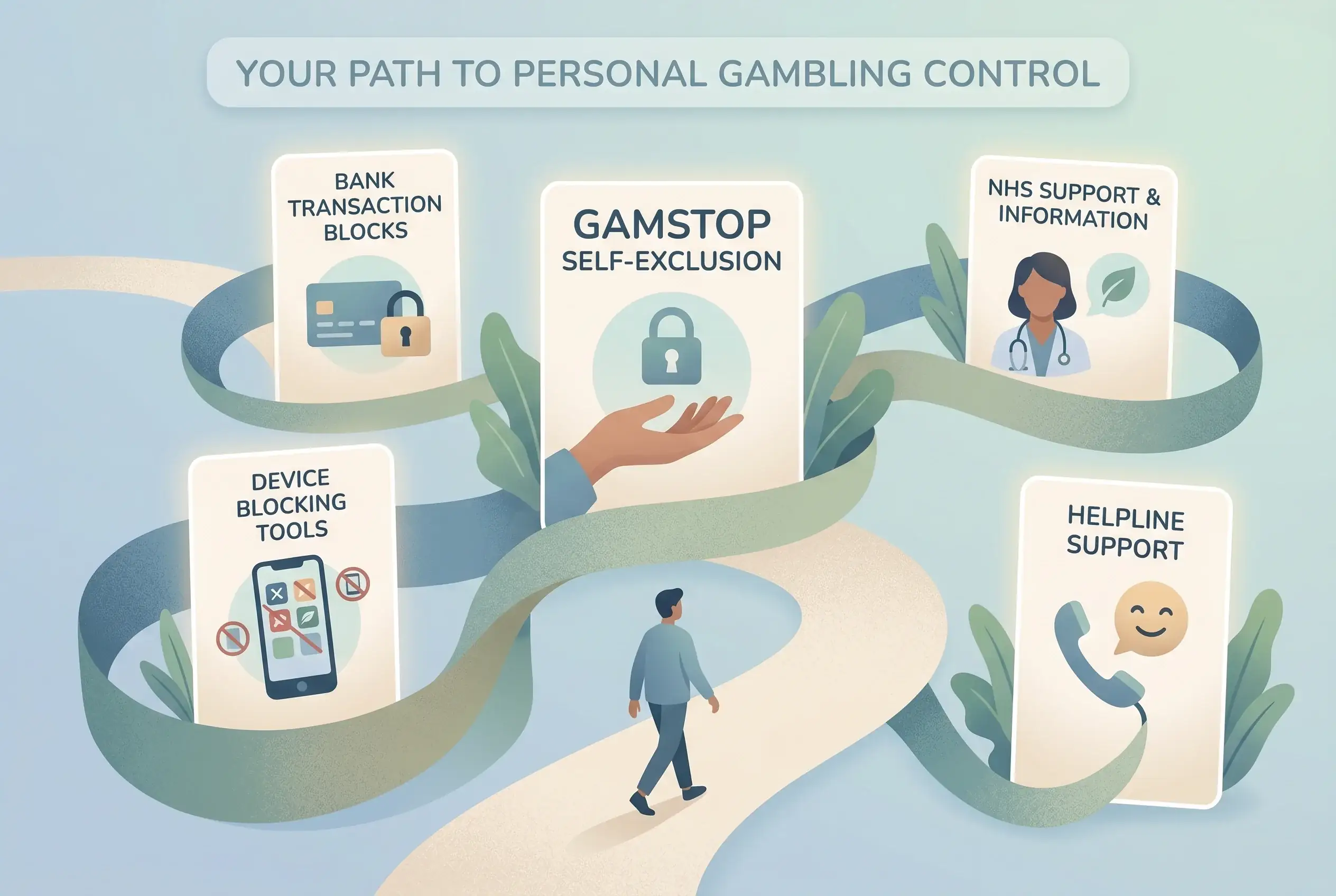
Bank Blocks & Credit Card Rules for UK Gambling Payments
 Available in GB
Credit Card Payment Limits at Licensed UK Casinos
The Gambling Commission’s material on preventing credit card use explains the Great Britain licensed-sector restriction on credit card gambling. The rule covers online casino, betting and bingo, and the Commission also discusses credit card payments made through relevant money service business or e-wallet paths. The plain point for a reader is that a failed credit-funded gambling payment is not just a technical inconvenience. It may reflect a protection rule that should not be worked around.
That distinction is important when a site described as outside GAMSTOP coverage also talks about flexible payments. Do not assume that a payment route is suitable just because a site displays it, and do not assume that a restriction disappears because money passes through another financial service. If the site’s wording is unclear, ask a more careful question: what rules apply to the account, what payment details must belong to the account holder, what restrictions apply to withdrawals, and what information is given before deposit?
Never treat unclear payment arrangements, another person’s payment details or inaccurate account information as normal consumer choices. They can create verification problems, withdrawal disputes and personal risk. They can also take you further away from the protection that a blocked payment was meant to create. A clear account should explain payment restrictions and important terms before you deposit, not after a withdrawal has been requested.
Before making a deposit, it is crucial to understand the specific bonus terms and withdrawal conditions applied by the operator.
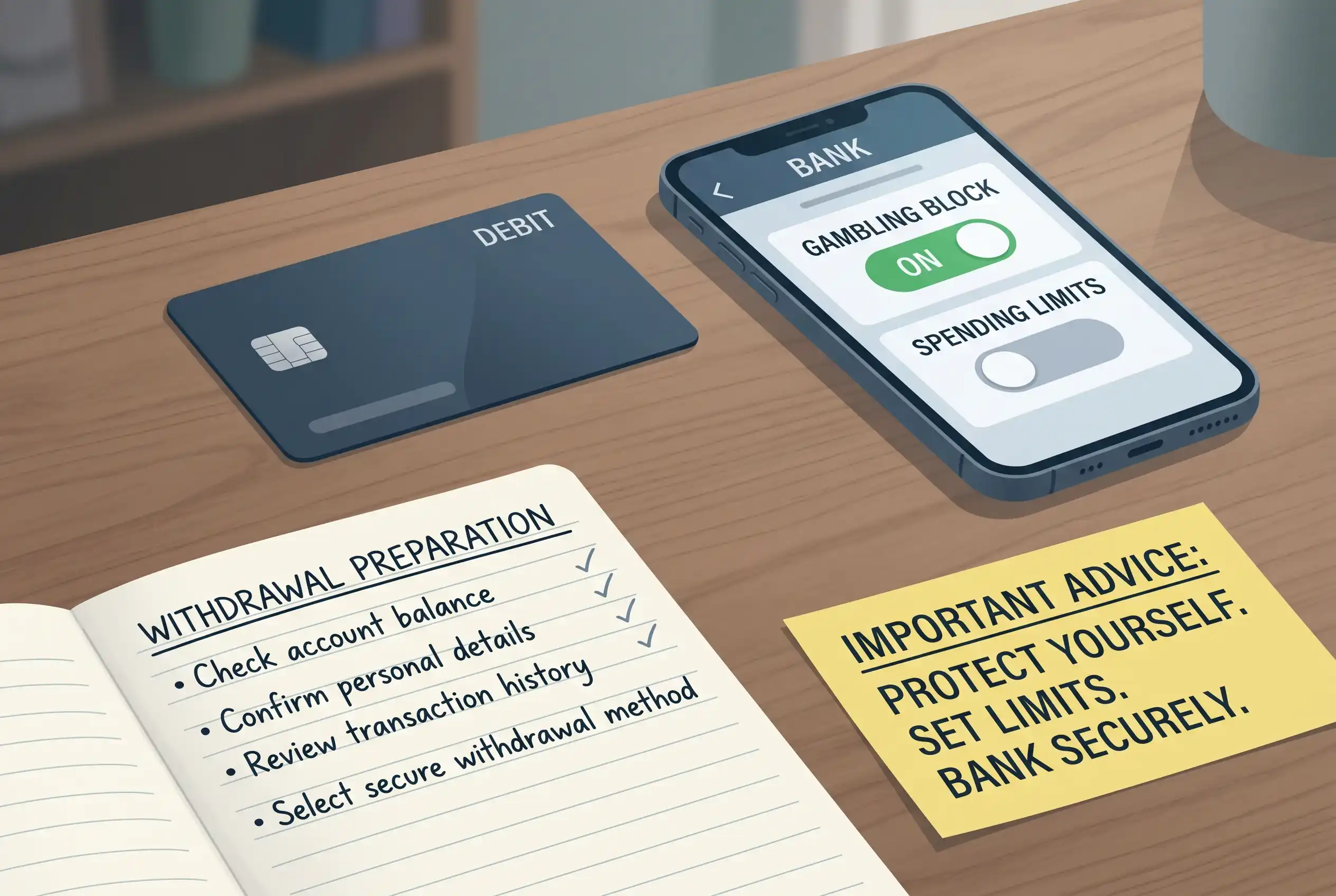
Bank gambling blocks are protection, not an obstacle to beat
Many UK banks offer gambling transaction blocks or related controls. The exact feature depends on the bank, so the careful step is to check your own banking app or contact the bank directly. The Gambling Commission points consumers toward bank blocks and other restrictions as ways to control time and money spent gambling, while GamCare discusses bank gambling blocks as an extra layer of protection.
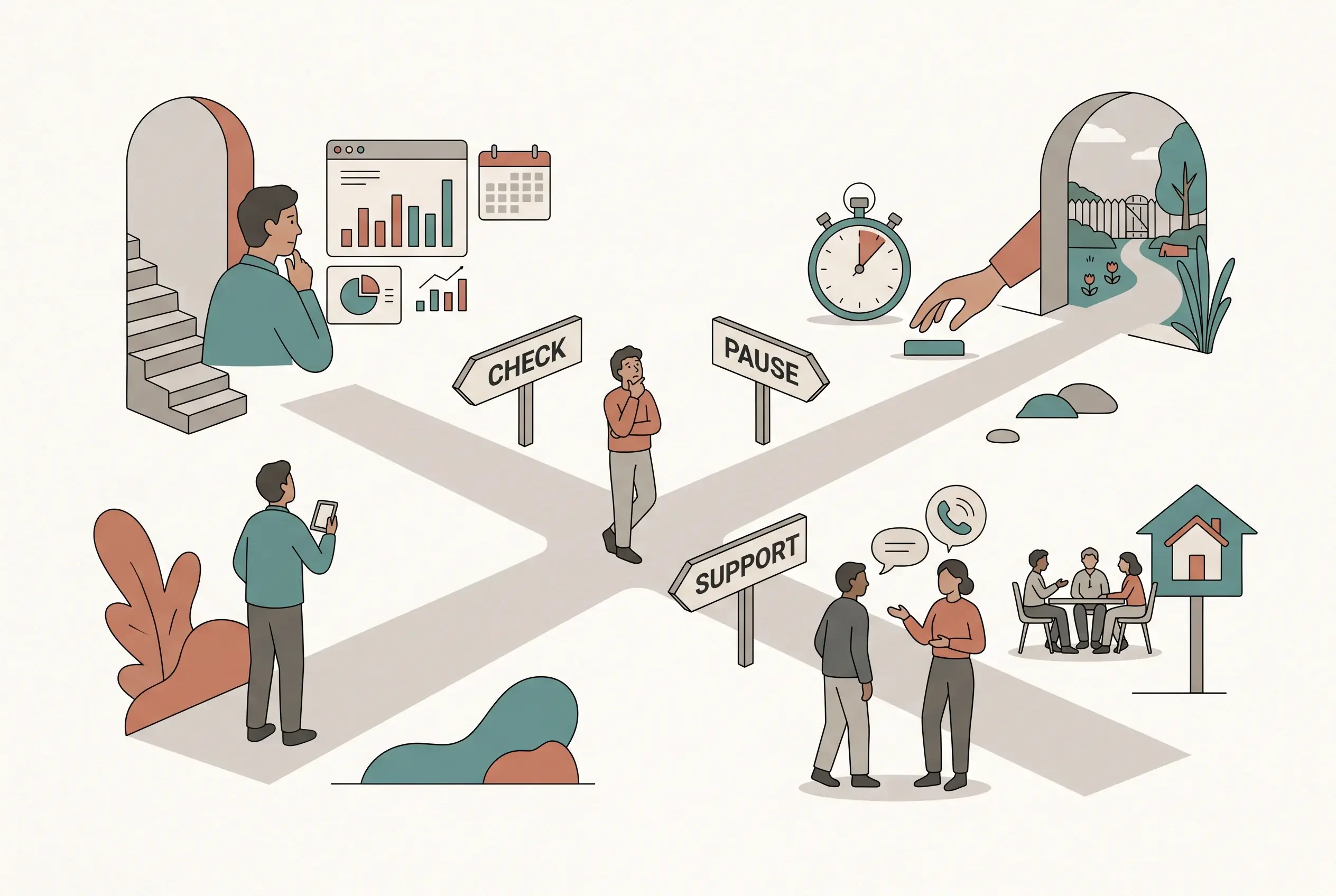
A bank block works by adding friction. That friction may feel annoying when the urge to gamble is strong, but the delay is the useful part. It gives you time to step away, talk to someone, remove saved payment details, or use a support route. Some bank controls may include cooling-off periods or extra steps before removal. Where those exist, they are not a problem to solve quickly. They are part of the barrier.
If the payment block is the reason you are looking at gambling sites outside the familiar licensed environment, stop and separate the two issues. The payment problem is not “which other route can I use?” The more protective question is “what barrier can I keep in place until the urge passes?” If the block is part of managing gambling harm, read the GAMSTOP and extra support guide before making payment decisions.
Payment checks to make before depositing
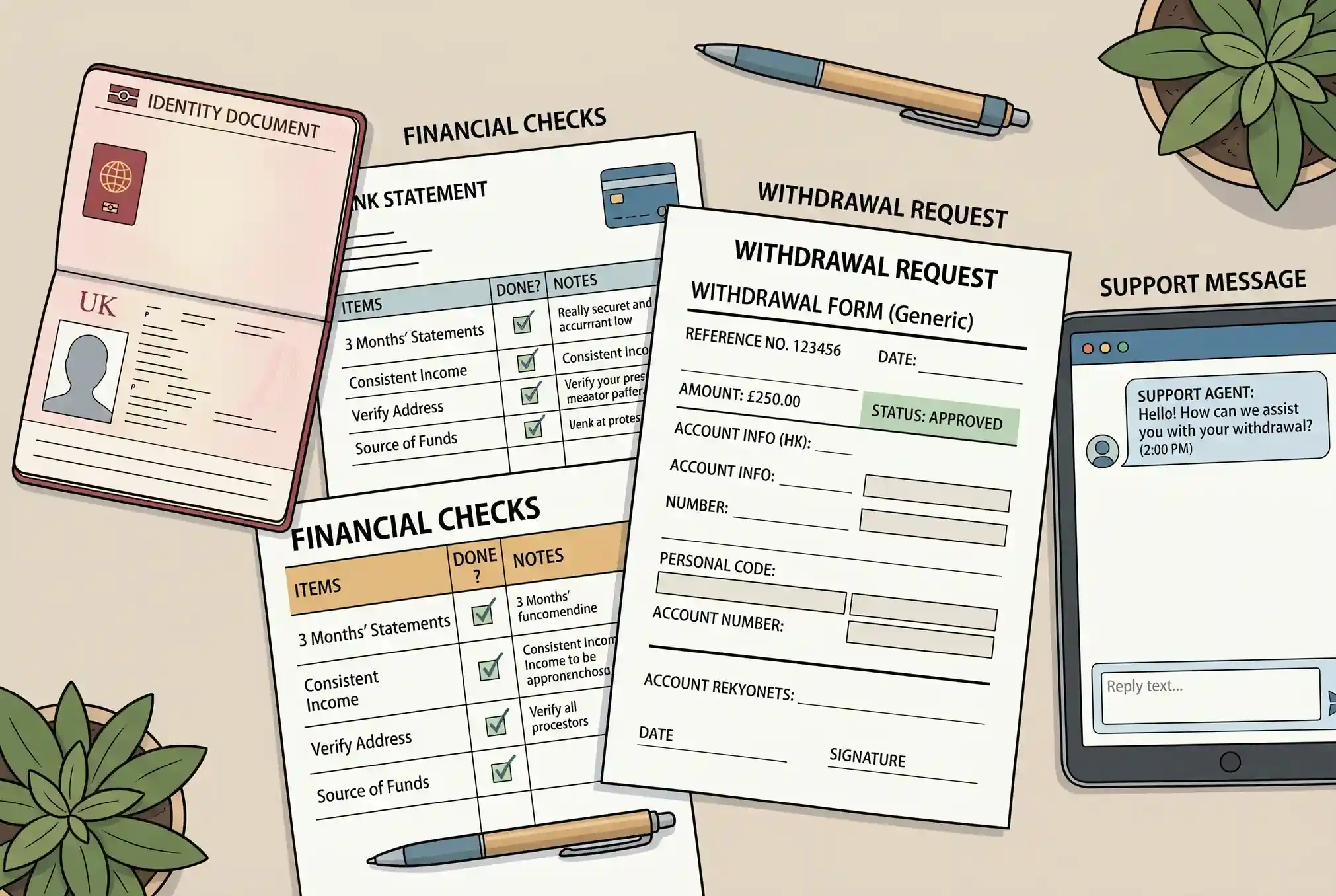
Payment terms are often connected to identity checks, withdrawal conditions and complaints. Before a deposit, look for the parts of the account information that explain who may fund the account, whether the payment method has to belong to the account holder, how withdrawals are handled, what restrictions can apply, and how disputes are raised. If a site makes deposits easy but withdrawal conditions hard to find, that is not a small detail.
Be careful with any wording that promotes speed without explaining checks. A quick deposit does not guarantee a quick withdrawal. A withdrawal may be affected by account verification, unclear terms, bonus conditions, payment-route restrictions or a formal complaint. You do not need to predict every possible problem. You do need enough clarity to avoid handing over money to an account process you do not understand.
Fees, limits and withdrawal timings are operator-specific and can change, so do not rely on a general article for those details. Read the current terms on the site itself and keep dated screenshots if you are already in a dispute. If the terms are unclear, vague or only revealed after registration, that is a reason to pause before deposit rather than a reason to hope the account process will be straightforward later.
Payment risk map
| Payment concern | What it may mean | Careful action | Related guide |
|---|---|---|---|
| A credit card payment fails. | It may reflect the licensed-sector restriction on credit card gambling or a financial-control setting. | Do not look for a layered route. Check the rule, keep the pause, and use support if the block is helping you stop. | GAMSTOP and support |
| An e-wallet or money-service route is unclear. | The credit-card restriction can still be relevant where a wallet path is funded by credit. | Ask how the account is funded and what rules apply before deposit. Avoid vague payment claims. | Licence and account checks |
| A bank gambling block stops the transaction. | The block is adding friction to gambling payments. | Leave the barrier in place while the urge passes. Contact your bank if you need to understand the control. | Extra barriers |
| A site asks for payment from someone else’s card or account. | That can create identity, withdrawal and accountability problems. | Do not involve another person’s payment details. Check verification and account rules instead. | ID and financial checks |
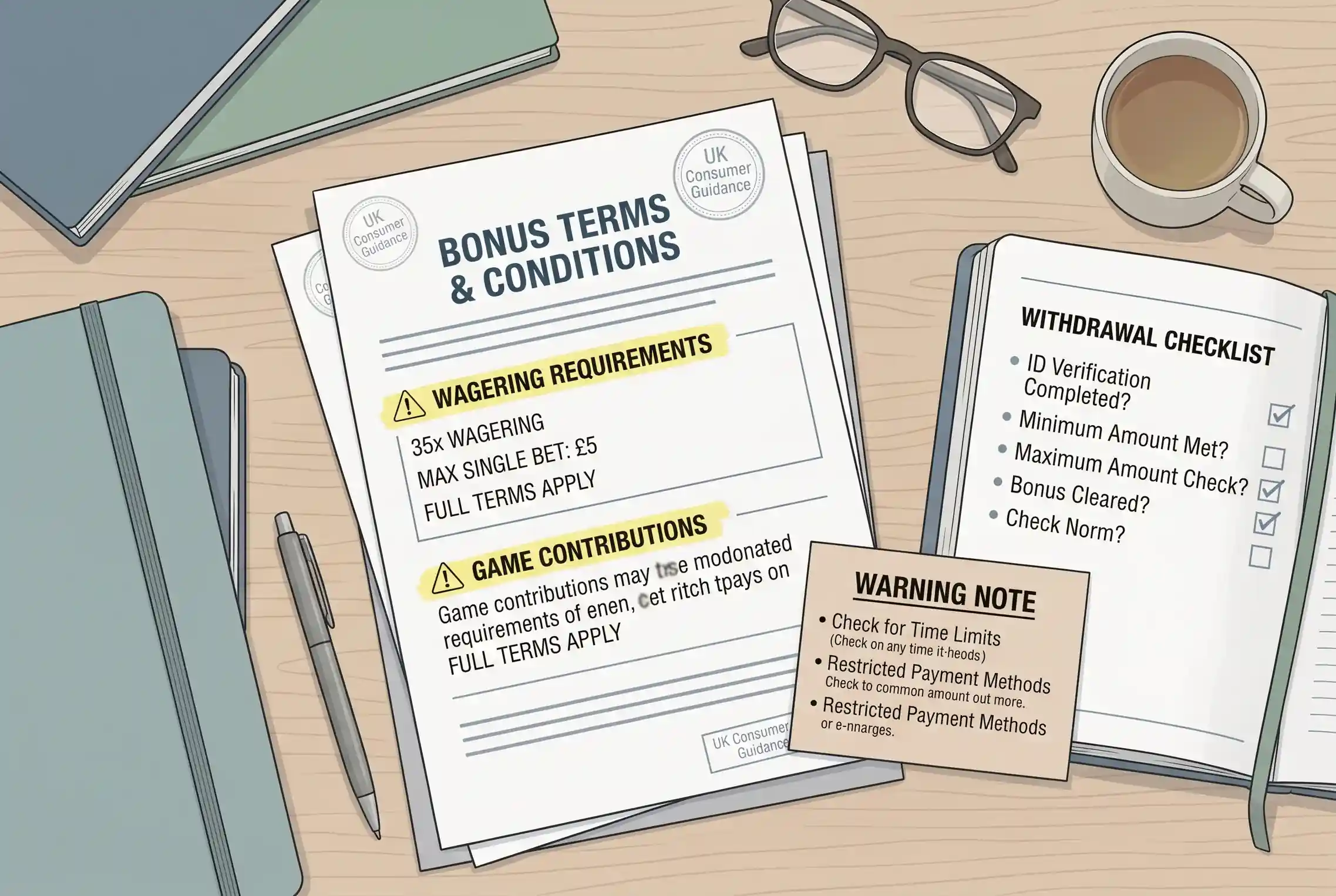
| Withdrawal conditions are hard to find. | Important restrictions may be hidden in terms, bonus rules or account clauses. | Read the withdrawal and bonus terms before deposit. Keep records if a dispute has already started. | Bonus and withdrawal terms |
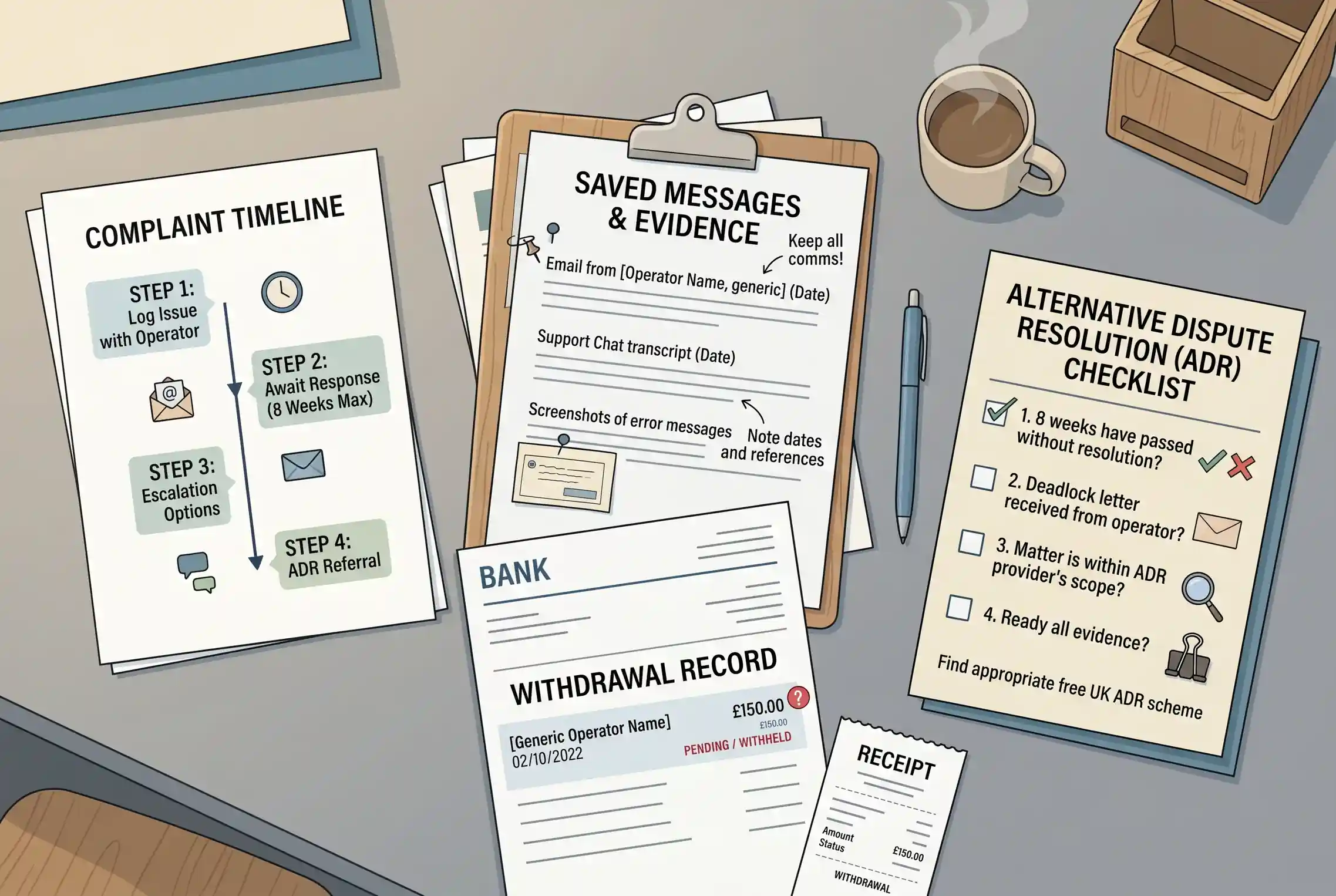
| Money is delayed or withheld after a withdrawal request. | The issue may involve verification, terms, payment-route rules or complaint handling. | Collect account records and use the site’s formal complaint process where relevant. | Complaints and delayed payments |
Next steps for payment concerns
If your main question is whether the site itself is accountable, start with how to check a gambling site before you deposit. If documents or financial questions are part of the payment problem, read ID checks, financial checks and withdrawals. If bonus terms or account clauses are the issue, continue with bonus terms and withdrawal conditions.
For a comprehensive overview of safe gambling options, check our main guide to casinos not on Gamstop available for UK players.
If payment friction is helping you stop, protect that pause. Use the support guide, contact GamCare or the National Gambling Helpline, or speak to your bank about gambling payment controls. If a payment problem has already turned into a dispute, move to the complaints and delayed payments guide with records of deposits, withdrawals, terms and messages.
For the full overview of casino sites described as not on GAMSTOP, return to the main guide.
Created by the "Casino not on Gamstop" editorial team.