Resolving Delayed Payments & Casino Disputes for UK Players
 Available in GB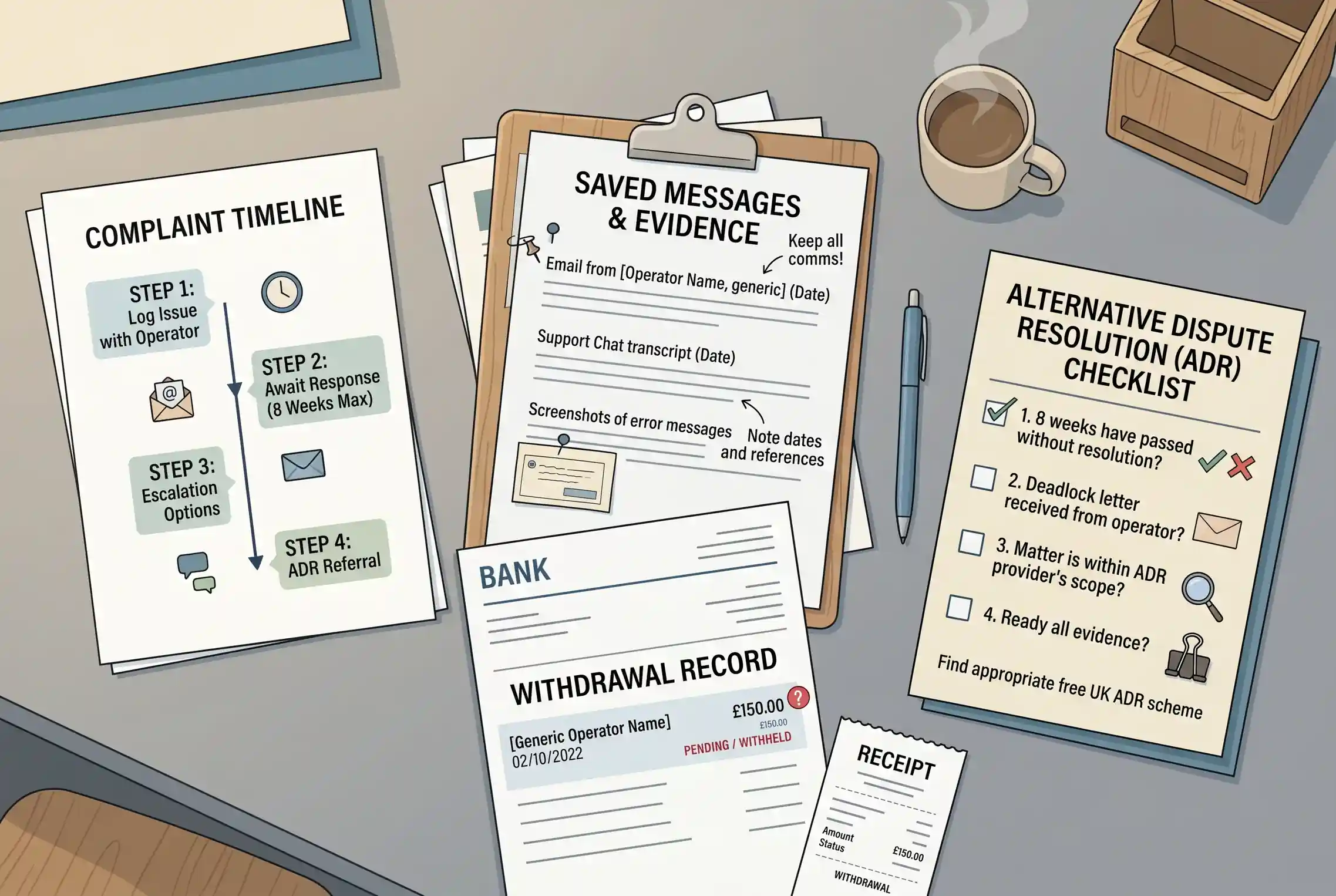
Collecting Evidence to Recover Withheld Gambling Funds
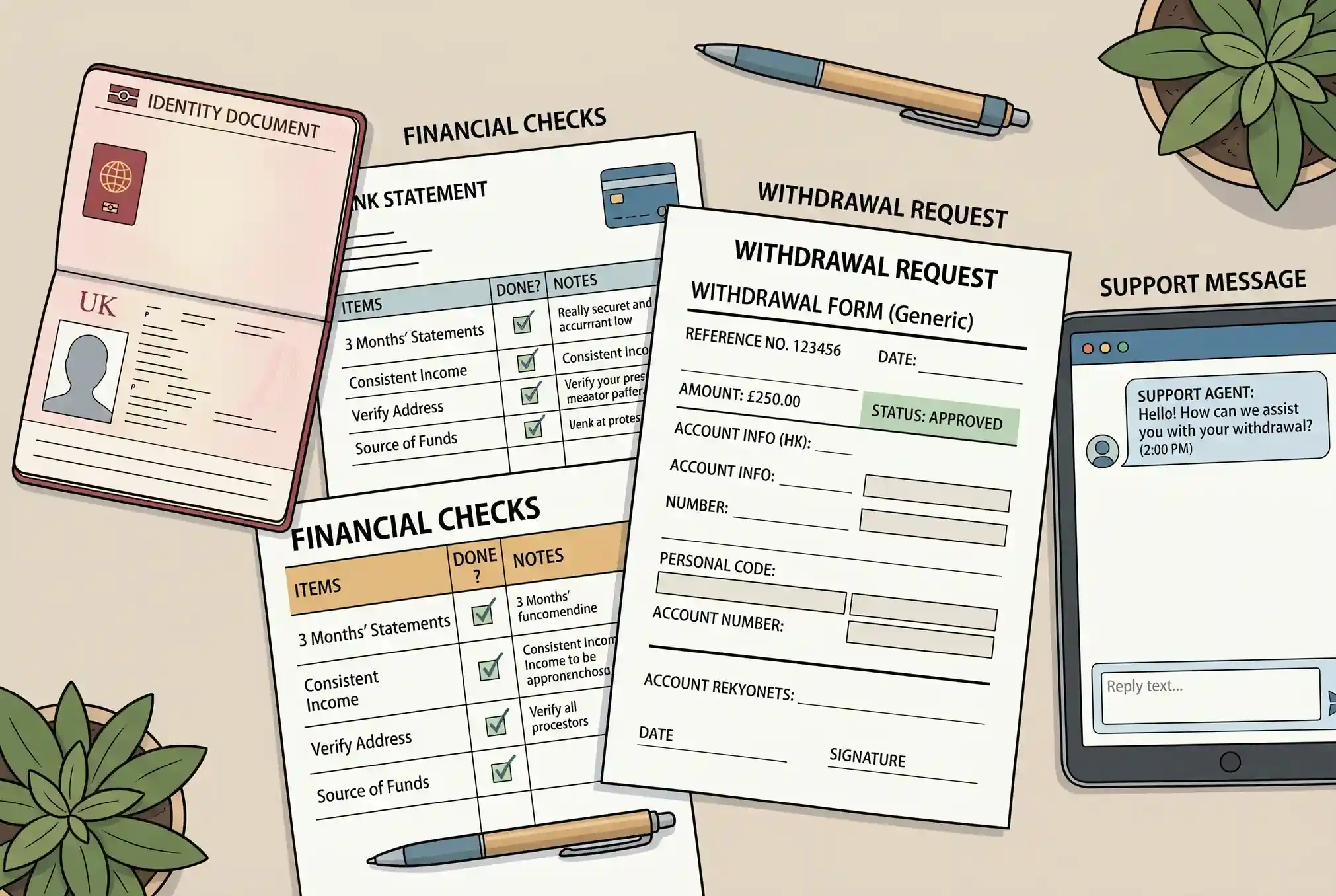
When a withdrawal is delayed or money appears to be withheld, the first useful step is to slow the exchange down. Save the transaction record, the date of the withdrawal request, the account balance shown at the time, the promotion or term involved, and every message that explains the delay. If the business changes its explanation, record each version. If a document request appears, save the exact wording and the time it arrived.
Do not rely on memory. A dispute about gambling money often turns on dates, account terms and what the business told you before you deposited or accepted a promotion. Screenshots, emails and message transcripts help you explain the issue calmly. They also stop the complaint from becoming a long argument about general fairness when the real question is specific: what rule is being applied, to which amount, and why?
Also stop making new deposits while the issue is unresolved. Continuing to fund the same account, or opening another account because one withdrawal is delayed, can make the position more confusing. If the dispute is making you feel that you must gamble more to repair the problem, treat that as a support warning, not a strategy.
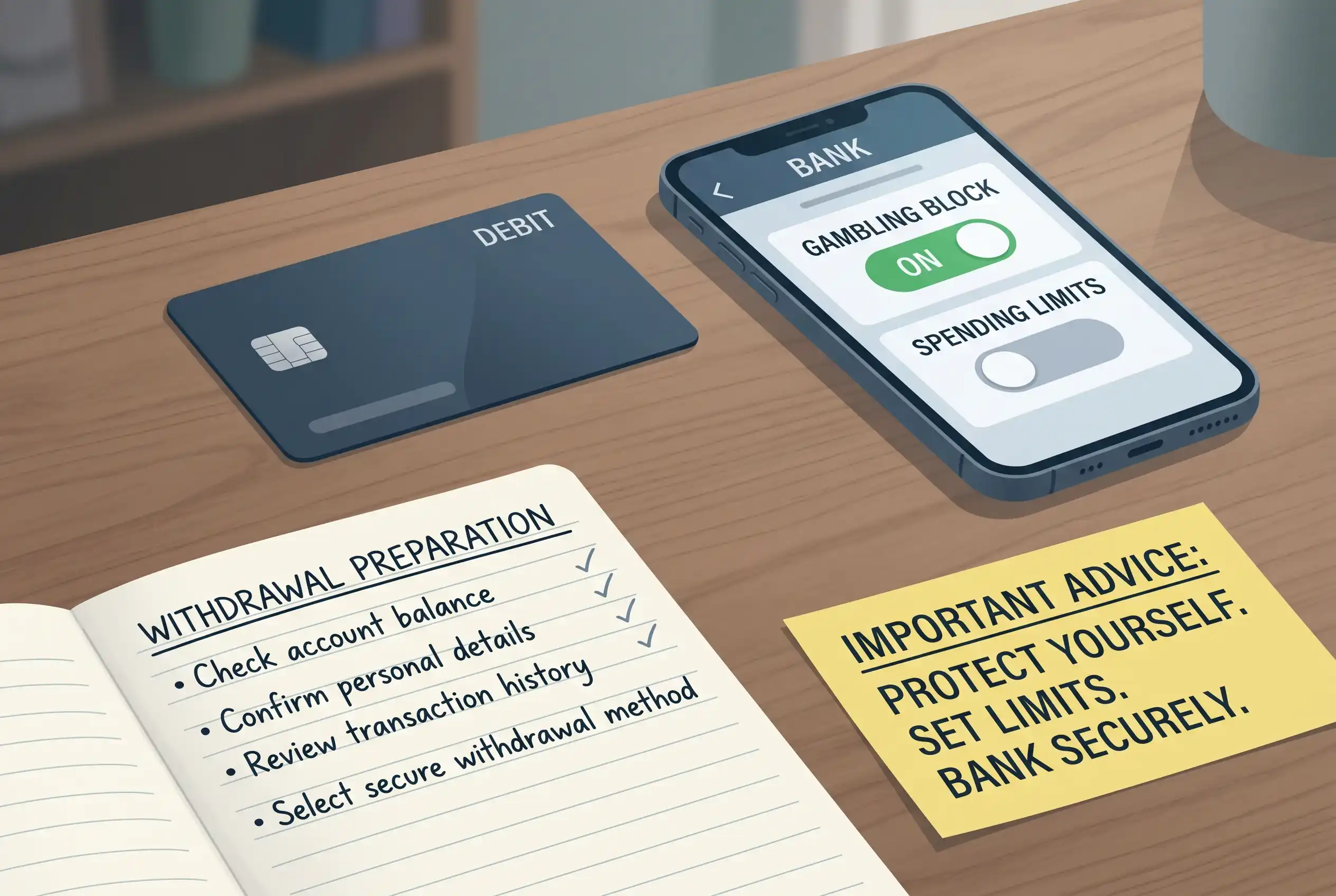
In some cases, payment issues arise due to strict credit card rules and bank blocks implemented by financial institutions.
Complaint path
| Step | What to do | What to keep | What not to assume |
|---|---|---|---|
| 1. Collect facts | List dates, amounts, account name, withdrawal reference, documents sent and the term being discussed. | Screenshots, emails, chat transcripts and the relevant terms. | Do not assume a delay proves wrongdoing. |
| 2. Ask support | Request the exact reason, the missing item and the rule or process being used. | The support reply and any promised action. | Do not accept a vague phrase as the final answer. |
| 3. Make a formal complaint | Use the gambling business’s complaint process, not only live chat. | Your complaint, date submitted and any reference number. | Do not threaten or add claims you cannot evidence. |
| 4. Wait for the response route | Follow the procedure set out by the business and note any final response. | Final response, missed deadlines or refusal to explain. | Do not pay a third party for guaranteed recovery. |
| 5. Escalate where relevant | Use the named alternative dispute route if the gambling complaint qualifies, or the correct financial-firm route if the issue is with a bank or financial provider. | The final response and the full file of evidence. | Do not send a gambling-site dispute to the wrong body expecting it to recover money. |
Dispute types that can delay withdrawals
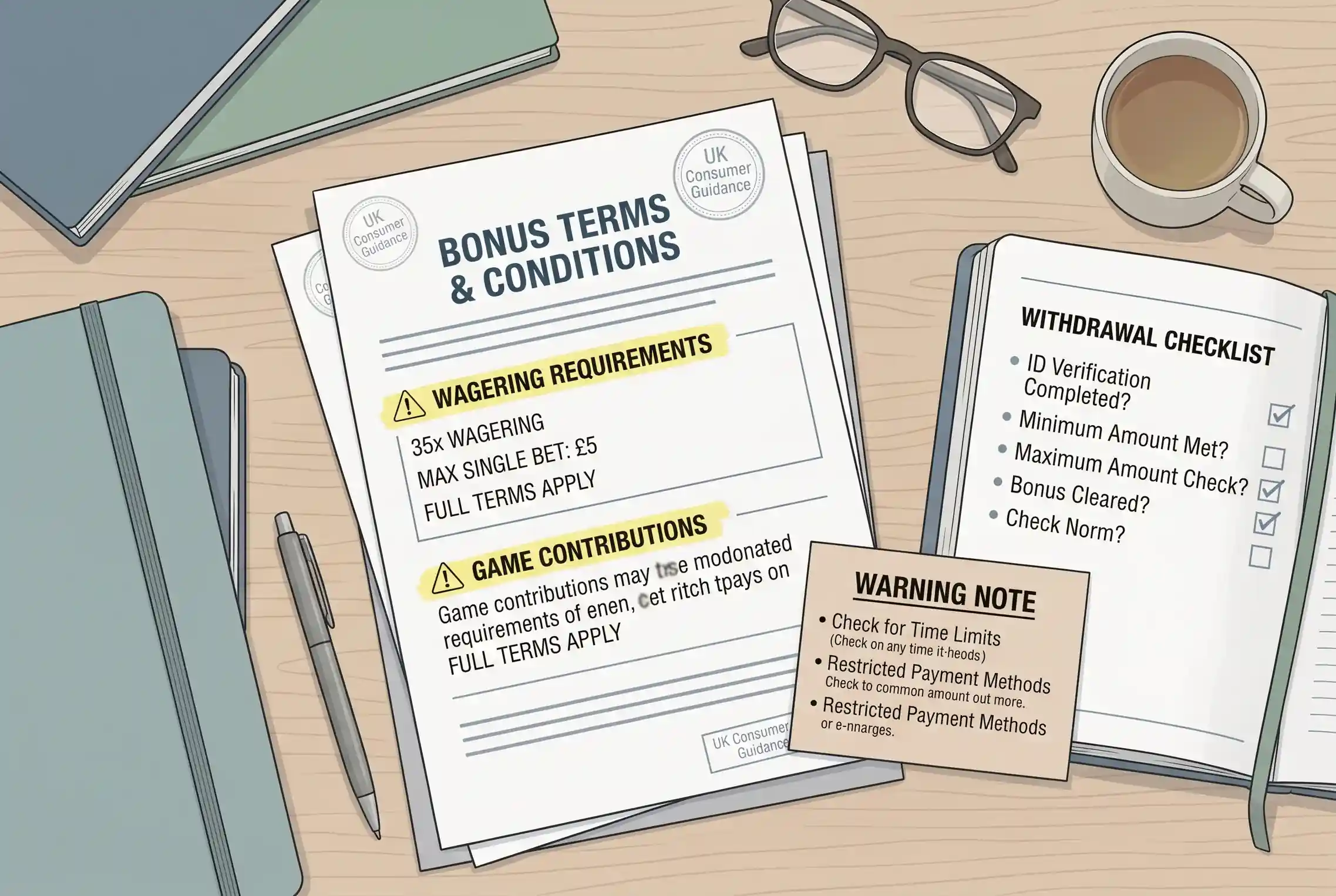
Payment disputes can involve delayed withdrawals, returned deposits, payment ownership, account closure or disagreement about whether a balance is eligible for withdrawal. Verification disputes can involve repeated document requests, a mismatch between account and payment details, or a question about why information was requested only after a withdrawal. Bonus disputes can involve wagering requirements, game restrictions, expired promotions, maximum conversion rules or a claim that deposit funds were tied to bonus conditions.
Each type needs a slightly different question. For a payment dispute, ask which payment rule applies and whether the payment details belong to the account holder. For a verification dispute, ask which item is missing and why it is needed. For a bonus dispute, ask which promotion was accepted, which term was breached and what amount is affected. For an account closure, ask whether the balance is being returned, restricted by a term, or held because of a regulatory concern.
Do not mix every frustration into one complaint. A focused complaint is easier to answer and easier to escalate. Start with the outcome you want: release of eligible funds, completion of verification, a written explanation, correction of an account decision, or confirmation of the complaint route. If several issues exist, list them in separate numbered points so the business cannot answer only the easiest one.
ADR and other routes
Licensed gambling businesses must have complaint procedures and arrangements for unresolved disputes. In practice, the business should tell you which alternative dispute route applies to its complaints. Use the route named in the business’s own complaint information and provide the full evidence file. An alternative dispute process is not a shortcut for every annoyance; it is generally for a complaint that has gone through the business’s process and remains unresolved.
The Gambling Commission is important, but it is not a personal money-recovery service for individual complaints. Its public material directs consumers to the business complaint process and dispute routes, while the Commission uses information for regulatory purposes. That distinction matters because sending a detailed withdrawal complaint to the wrong place can cost time and increase stress.
Sometimes the gambling site is not the only organisation involved. If the problem is with a bank, card provider, payment account or another financial firm, the complaint may belong first with that financial firm. The Financial Ombudsman Service may be relevant to complaints involving financial firms and gambling-related harm after the firm’s formal complaint process has been used. That does not turn it into a general route for gambling-site winnings, so keep the issue clear: who made the decision you are challenging?
Suspected illegal or criminal activity
If you think the issue points to unlicensed gambling, underage gambling, criminal behaviour, money-laundering concerns or another serious regulatory matter, the Gambling Commission provides a confidential reporting route. A report is different from a personal complaint. It may help the regulator understand risk, but it should not be treated as a promise that your money will be recovered or that you will receive a case decision.
Before reporting, separate what you know from what you suspect. “The site has not paid me” is not the same as “the business is unlicensed” unless you have checked the operator identity and official register position. “The support agent was rude” is not the same as criminal activity. A good report is factual, dated and supported by documents. It explains the business name, domain, transaction details, communication and why the matter appears serious.
When money stress is becoming harm
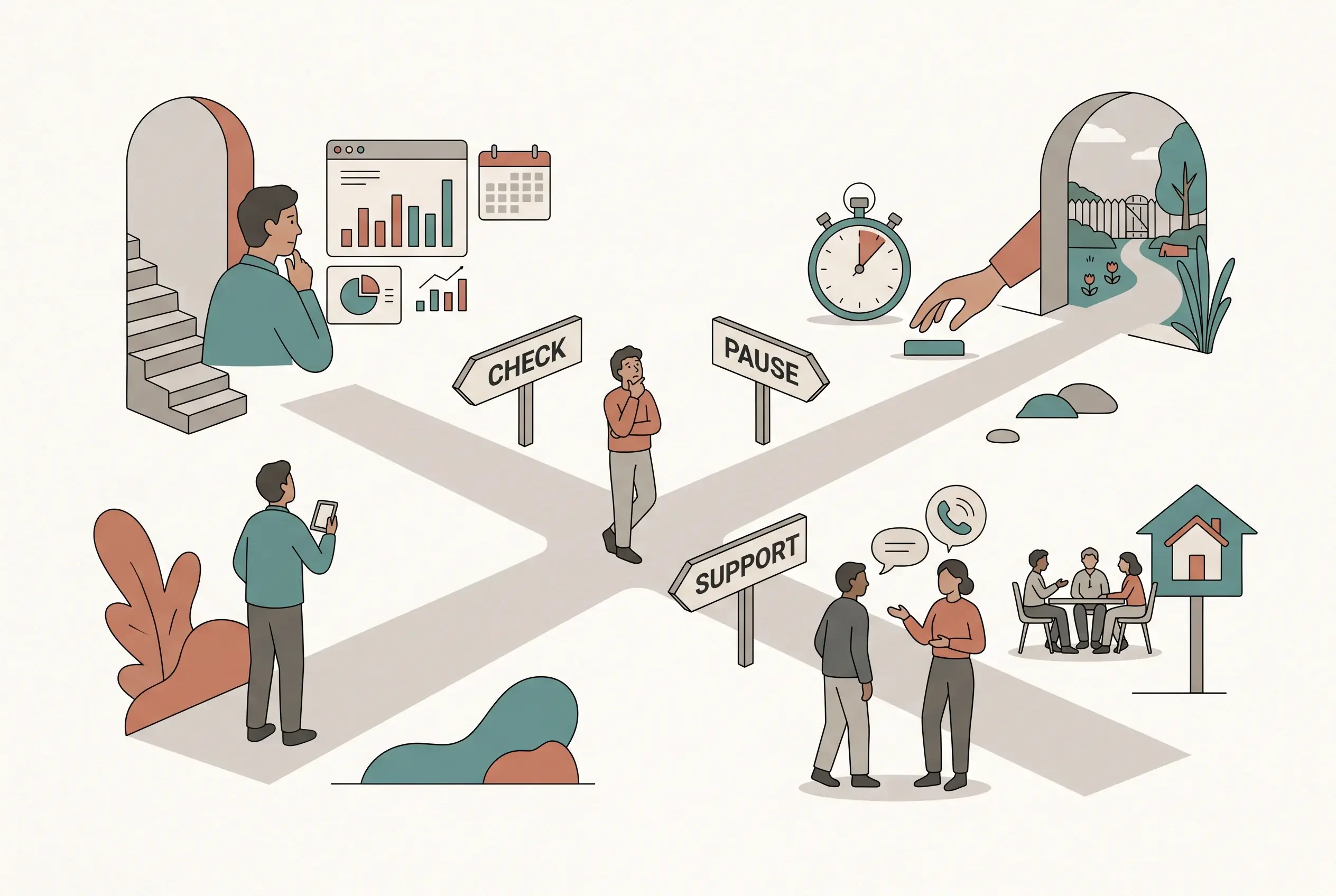
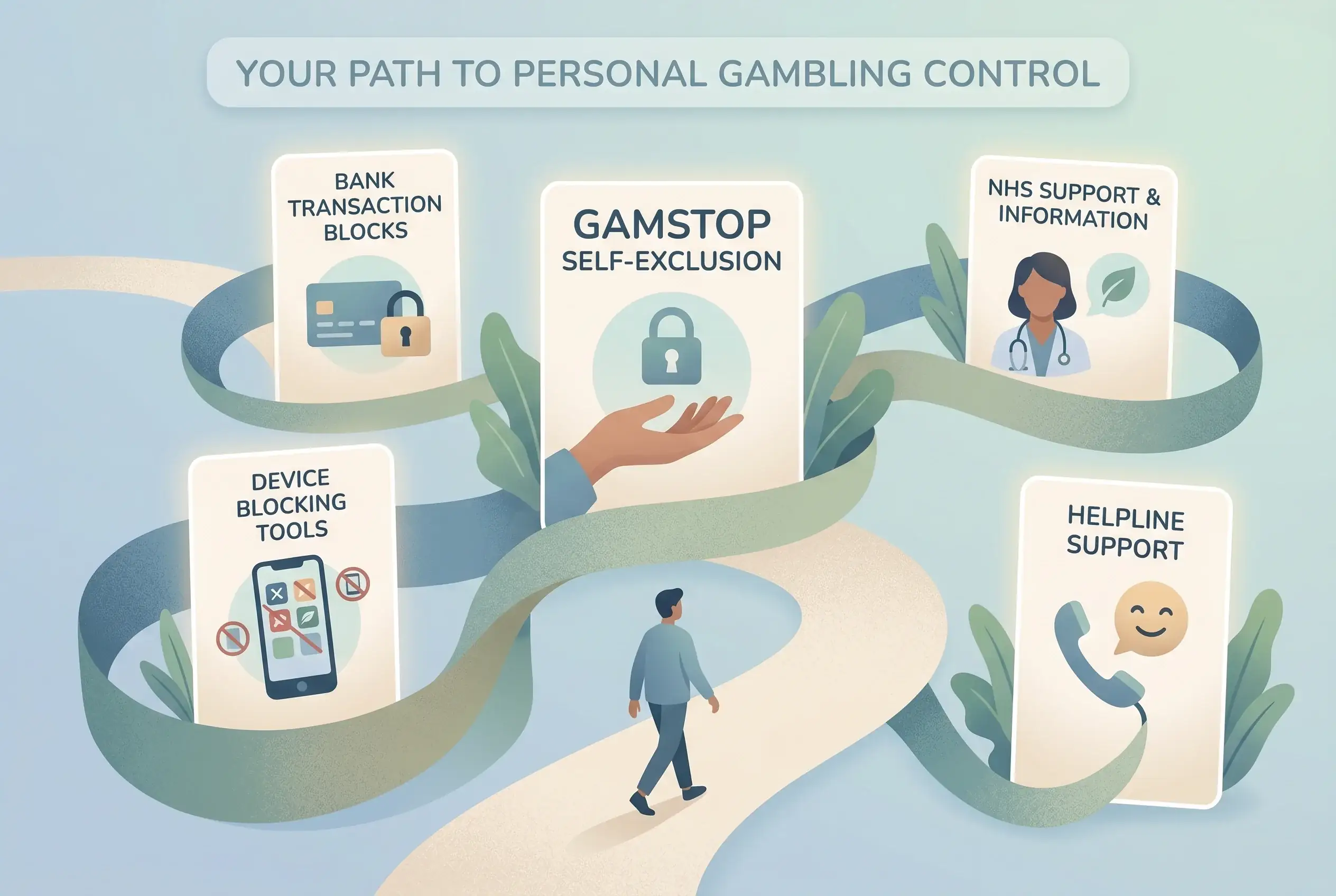
Money disputes can feed the urge to keep gambling: trying to win back a delayed amount, opening a different account, chasing a bonus, or pushing through a block. If that is happening, the complaint route should sit alongside support. The National Gambling Helpline from GamCare is 0808 8020 133 and is available 24 hours a day, 7 days a week. NHS information also treats gambling problems as something that can affect money, relationships, physical health and mental health.
Always play responsibly and choose trusted UK casinos not on Gamstop to minimize the risk of financial disputes.
If your dispute is mainly about a bonus term, read the bonus terms and withdrawal conditions guide. If it is about document requests, read the ID checks guide. If it is about credit card rules, e-wallet context or bank gambling blocks, read the payments guide. If you are unsure whether the business was identifiable before you paid, go back to the pre-deposit licence check.
Created by the "Casino not on Gamstop" editorial team.