Best Online Casino Game Shows in the UK: What to Know
Live presenters and studio-style broadcasts shape the experience, but a game show remains a gambling product when money is staked on an outcome.
 Available in GB
What Makes a Live Casino Game Show Different
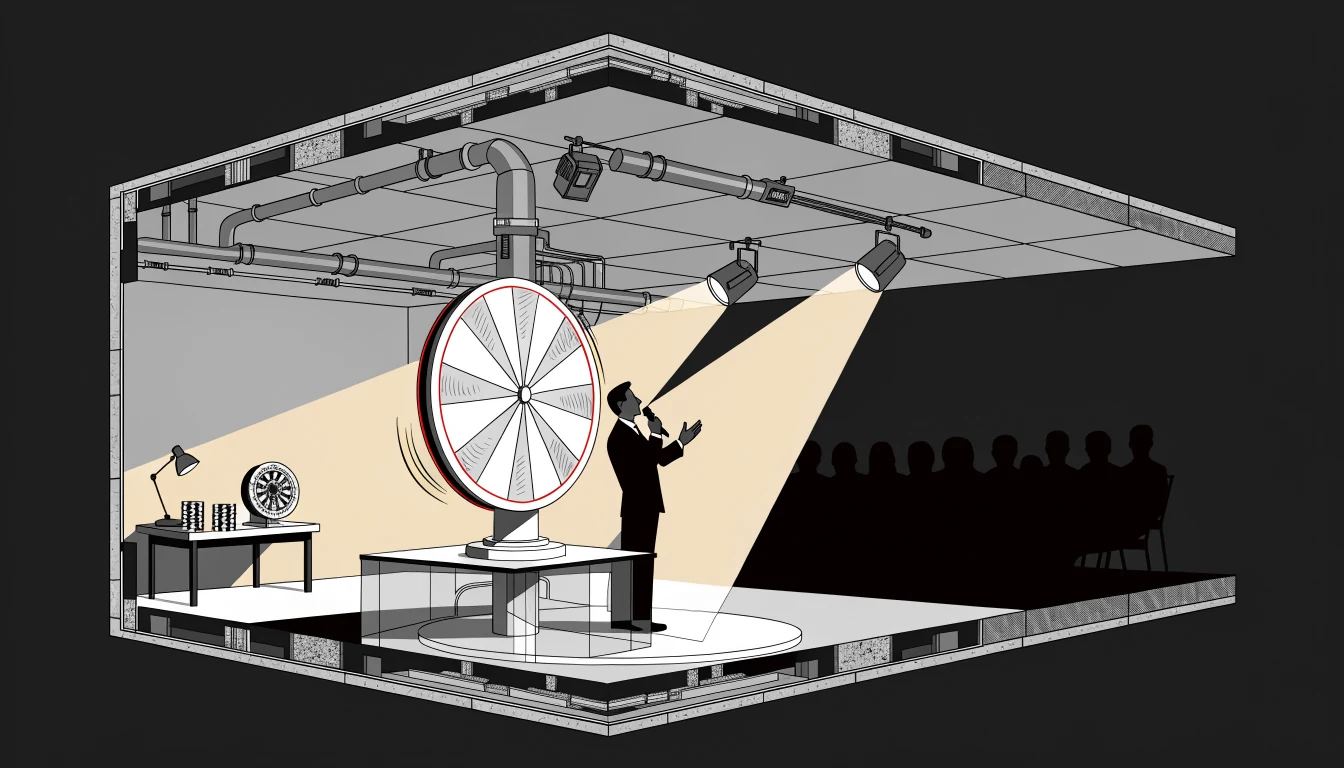
A live casino game show sits somewhere between a gambling product and a piece of television. Its setting may resemble a studio, its rhythm may borrow from broadcasting, and its presenter may address a room rather than an unseen algorithm. Yet the arrangement remains a casino game when money is staked on an outcome. The lights and applause alter the atmosphere, not the legal character.
That distinction matters in Britain, where gambling is treated as a regulated commercial activity rather than as a harmless corner of entertainment. The UK Gambling Commission is the sole regulator for commercial gambling in Great Britain. Its remit includes remote gambling offered to consumers there, even when the equipment running the service is located elsewhere. A polished studio does not create a regulatory gap.
The phrase “live game show” therefore carries two meanings at once. One describes the visible format: a presenter, a broadcast feed, a scheduled or continuous performance, and an audience watching events unfold. The other describes the commercial arrangement behind the screen: a gambling service made available by a licensed business. Confusing those layers makes the product seem simpler than it is.
More than a conventional casino screen
A conventional online casino game often keeps its personality inside the software. Symbols turn, cards appear, or a wheel is represented through animation. The participant sees the interface and receives the result through it. A live game show, by contrast, makes the presentation itself part of the experience. The studio, host, sound design and pauses become visible features rather than decoration hidden behind a menu.
This does not necessarily make the outcome more transparent or more favourable. It makes it more legible as an event. A result appears to happen in a shared visual space, with a human presenter giving it a beginning, a middle and an end. That theatrical structure explains much of the appeal: the entertainment is not merely the possibility of a win, but the feeling of watching something happen.
Slots: UK Online Casinos by Game Provider
The older television game show provides the cultural template. It divides time into rounds, creates suspense before a reveal, and gives repeated actions a ceremonial quality. The casino borrows that grammar while retaining its own purpose. The participant is not simply watching a programme. A stake remains attached to the result.
There is an odd intimacy in the arrangement. The screen presents a room full of people, but the commercial relationship is individual. The viewer may feel included in a crowd while dealing with a private account, private balance and private consequences. The social appearance is public; the financial decision is not.
The word “live” and what it signals
“Live” is often used as shorthand for human presentation and real-time transmission. It distinguishes a broadcast-led product from a purely automated interface. A presenter, studio or visible production environment supplies the sense that an event is taking place rather than merely being generated for one screen.
New Online Casinos in the UK: How to Compare Sites
But the word should not be treated as a promise about every aspect of the service. It does not, by itself, explain how a particular title works, who supplies it, which operator carries it, or what terms apply to a transaction. Nor does it turn a casino into a television channel. The useful question is not whether the presentation looks live, but how that presentation fits into the licensed remote gambling service.
This is where the British framework becomes more important than the studio aesthetic. The Commission issues operating licences to companies and personal licences to individuals working in Great Britain. Those are different permissions attached to different responsibilities. A business offering the gambling service is not the same thing as a presenter appearing on screen, and neither should be mistaken for the software or production interests behind a title.
The distinction is easy to miss because the visible product compresses several roles into one experience. A participant sees a name, a host, a set and a betting interface. Behind that image may be separate commercial functions: the operator providing the account and transaction relationship, the production team delivering the broadcast, and other businesses supplying technology or content. The camera makes the arrangement look singular. It is not.
- Check the operator’s current lobby for title availability
- Verify the operator holds a valid UKGC licence
- Use the operator’s own terms and help pages to confirm availability
- Rely on old reviews or historical snapshots as proof of availability
- Assume a software provider’s licence means they are the casino
- Treat a name or a category as a guaranteed list of contents
Entertainment first, gambling still
Game-show language can soften the perception of risk. “Round”, “bonus”, “reveal” and “host” belong to the vocabulary of entertainment, where the stakes may be emotional rather than financial. In a casino setting, those words acquire a second layer. The show may be cheerful, but the account balance is not a prop.
That is why the format deserves to be judged on two planes. As entertainment, it can be considered for presentation, pace, clarity and the pleasure of watching a human-led event. As remote gambling, it belongs to a framework in which the operator’s legal status and operating arrangements matter. A charming set cannot compensate for an unsuitable gambling service, just as a serious regulatory structure cannot guarantee that a particular show will be enjoyable.
Britain’s approach reflects a wider social compromise. Gambling is permitted, but commercial provision is placed under a dedicated public authority. The Gambling Commission’s role covers gambling activity in Great Britain, including online casino services. This arrangement acknowledges both sides of the subject: gambling is a form of leisure, and it can also produce financial harm. Treating it as only one or the other would be convenient. It would also be incomplete.
The live format makes that compromise unusually visible. Traditional casino software can disguise the institutional structure behind a quiet interface. A live game show puts performance at the centre, encouraging the feeling of a public occasion. Yet the underlying transaction remains governed by the operator’s service and the rules attached to it. The festive surface does not suspend the framework beneath it.
Best Online Casinos No Limits: UK Rules Explained
Why the format attracts attention
The appeal of live casino game shows is partly social. A presenter gives the event a human voice, even when the participant is physically alone. The studio suggests company; the repeated rounds create a common rhythm; the visible reactions of the production make the result feel less abstract than a solitary animation.
There is also a narrative advantage. A standard interface can deliver a result quickly, while a show can stretch expectation. The pause before a reveal, the host’s announcement and the movement from one stage to another turn an outcome into a small story. That story may last only moments, but it gives the act of staking a dramatic form.
For some participants, this theatrical structure is precisely the attraction. For others, it may be a distraction from the financial nature of the activity. Both responses are understandable. The format is designed to hold attention, and attention is one of the oldest currencies in entertainment. In a casino, it meets money.
The phrase “best” is consequently unstable. A title can be admired for its production and still be unsuitable for a particular person’s circumstances. A polished presentation is not evidence of better odds, safer play or more favourable terms. Those are separate questions, and a screen full of music is remarkably good at making separate questions appear to be one.
The British setting behind the screen
The relevant jurisdiction is not determined by the location of a camera or server alone. Remote gambling offered to consumers in Great Britain falls under the Commission’s regulatory reach regardless of where the key equipment is situated. This matters for live products because broadcasting naturally creates the impression that location belongs to the studio. Legally, the commercial service is the more important point.
The commercial service is more important than the studio aesthetic. A polished studio does not create a regulatory gap in the British framework.
The operator’s role is therefore central even when the show appears to be the product. The business offering the gambling service needs the appropriate operating permission. Individual personnel involved in operating gambling in Great Britain may require personal licences. The two forms of licensing recognise that a company and the people carrying out regulated functions are not interchangeable.
This structure also explains why “an online casino with live game shows” is not a description of a single thing. It may refer to a licensed operator’s wider casino service, to a category within its interface, or to a particular broadcast-led title supplied through commercial arrangements. The same phrase can describe the visible shelf, the service behind the shelf, or the entertainment placed on it.
A careful account keeps those meanings apart. It can discuss the live format without turning a general description into a claim about a named title. It can explain why the British regulatory environment matters without pretending that regulation measures artistic quality. It can recognise the cultural appeal of the game-show form without allowing the form to conceal the wager.
A format with an old inheritance
The casino game show is not a wholly new invention. It inherits the rituals of public gaming and the conventions of television. The presenter acts as master of ceremonies; the studio supplies spectacle; the repeated round creates habit. What changes is the route by which the audience participates. The viewer is no longer merely watching the outcome. The viewer may have money attached to it.
Amatic Online Casinos UK: Games and Operators
That shift changes the moral texture of the familiar format. Television turns suspense into a shared performance. Remote gambling turns suspense into a private financial decision made inside a public-looking performance. The social costume remains, but the responsibility is different.
This may be why the category feels more approachable than an austere casino interface. Human speech and bright production soften the machinery of chance. The result feels narrated rather than merely calculated. Yet narration cannot change probability, and performance cannot change the obligations attached to a licensed gambling service.
A sensible description should resist both extremes. Live game shows are not merely ordinary casino games with better scenery, nor are they ordinary television programmes with a payment button. They are a hybrid form: entertainment designed around the presentation of gambling, delivered through remote services that operate within Britain’s licensing system.
What separates a show from a recommendation
Describing the format is one task. Recommending a particular title or operator is another. The first concerns presentation, atmosphere and the relationship between television conventions and casino play. The second would require current, title-specific and operator-specific information. A broad category cannot supply those details by itself.
That boundary is especially important in a market where availability can change. A title may appear in one service and not another; a platform’s presentation may alter; commercial arrangements may move. The existence of a live game-show category says little about the current contents of every casino lobby. A category is not a catalogue.
Nor does a live broadcast provide a shortcut through the ordinary meaning of a UKGC licence. The regulator’s authority concerns commercial gambling in Great Britain, and its licensing system applies to businesses and relevant individuals. The show’s dramatic identity does not replace the operator’s legal identity.
Main Conclusions
- The visual presentation of a live game show does not change its legal status as remote gambling
- A licensed operator, not the software provider, is the entity responsible for the player’s account and transactions
- Availability of specific titles is subject to the operator’s current catalogue and jurisdiction
The result is a useful starting point for the phrase “best online casino game shows UK 2026”. “Best” can sensibly refer to the qualities of the format—presentation, pace, atmosphere and the degree to which the broadcast adds something to the casino experience. It cannot be treated as a magic label that settles licensing, current availability or personal suitability. Those matters belong to the service carrying the show, not to the glitter surrounding it.
The camera changes the mood. Not the rules.
Top online casinos in the UK
- BritsinoBonus: Welcome Package – Get your £2,200 + 2,000 FS · Payout speed: 1-3 business days
- Revery PlayBonus: 100% up to€1,000+ 100 FS · Payout speed: 1-3 business days
- AmunbetBonus: Join now and get 450% up to 2,700 GBP + 450 FS · Payout speed: 1-3 business days
- ZombillionBonus: Welcome Pack 250% up to £4000 + 200 FS · Payout speed: 1-3 business days
- x3betBonus: Welcome Pack 100% Up to £1.000 + 200 Free Spins · Payout speed: 1-3 business days
- NightLuckBonus: Welcome Pack + 805% Up To 6400€ + 280 FS · Payout speed: 1-3 business days
- BeOnBetBonus: 100% up to €500 + 100 FS · Payout speed: 1-3 business days
Finding Game Shows Inside UK Casino Lobbies
A live game-show title does not normally arrive in Britain as a self-contained casino. It reaches the public through an operator’s lobby: the visible catalogue belongs to the casino, while the underlying game may come from a separate business. That distinction is easy to lose amid colourful tiles and loud branding. It is also the distinction that determines who accepts the bet, records the account activity and deals with a complaint.
For a British player, the relevant commercial relationship begins with the operator holding the UKGC licence. A supplier may provide software or a game catalogue, but it does not thereby become the casino serving the customer. In a business-to-business arrangement, the operator supplies the consumer-facing account and places titles in its lobby. The show may have its own identity; the transaction does not.
The lobby is the point of entry
An online casino lobby is less like a television schedule than a shop window assembled from several wholesalers. Categories can be organised by supplier, game type, novelty, popularity or whatever editorial structure the operator has chosen. A title appearing there is therefore a statement about that operator’s current catalogue, not proof that the title exists as a direct-to-player product.
Best IGT Online Casinos UK: Amatic Explained
That matters when a provider is mentioned alongside casinos. Amatic Industries, for instance, holds a UK Gambling Commission remote gambling software licence, but it does not run consumer-facing casinos. Its games are supplied to UKGC-licensed operators through direct integration or aggregator feeds. A customer does not open an Amatic account, fund it and request a payout from the supplier. The operator remains the commercial door.
The same logic applies to live game-show searches. A title can be associated with a studio or software provider while being offered only within particular casino lobbies. It is not enough for a supplier’s catalogue, a review page or a promotional image to exist. The operator must have made the game available in the relevant customer account and territory.
The lobby is an editorial surface. Not a licence register.
This also explains why a casino’s provider filter should not be confused with regulatory approval. Any UKGC-licensed operator may use the B2B model involving Amatic. If Amatic appears in the casino’s game menu, that appearance is a catalogue decision. It is not a separate entry in the Gambling Commission’s register, and it does not mean that the provider itself is accepting bets from British players.
Who does what after a title is listed?
The operator’s role is practical rather than decorative. It controls the gambling account through which deposits, wagers and withdrawals are handled. It also sets the relevant bonus terms and provides customer support. The supplier’s role is to deliver the game technology under its commercial arrangement with the operator.
Before You Deposit
- Confirm the casino is serving Great Britain under a current UKGC licence
- Locate the specific title within the operator’s live lobby
- Verify the provider name is shown by the casino itself
- Read the operator’s current terms and conditions
That division creates a useful test for claims about “casinos with live game shows”. The word casino should refer to the licensed operator offering the game to its customers, not merely to a software company whose name appears in a review. The phrase with live game shows should mean that the title can be found in the operator’s current lobby, not that the operator once advertised a supplier partnership or that a third-party page lists it.
A listing can change without any public ceremony. A provider can be added, removed or displayed only to a particular group of accounts. A game can disappear while its review remains indexed elsewhere. A broad statement about an operator’s catalogue consequently ages faster than the page that makes it.
This is especially important for people comparing online casinos with live game-show sections. A neat list of names can suggest permanence where the underlying fact is conditional. The responsible unit of description is not “this casino belongs to the supplier”; it is “this operator currently presents titles from that supplier in its own lobby”, subject to the operator’s present catalogue and the customer’s jurisdiction.
Barcrest Online Casinos in the UK: Games and Operators
How availability can be checked without guessing
The most direct route is the operator’s own lobby. A provider filter, a search field or a clearly labelled game category can show whether a title is currently presented to account holders. The operator’s terms and help pages may also explain whether particular games are available in Great Britain and whether catalogue access differs between products or account types.
A provider listing needs to be read as current commercial information, not as a permanent guarantee. The appropriate checks are modest but concrete:
- confirm that the casino is serving Great Britain under a current UKGC licence;
- look for the title in the operator’s live lobby rather than relying on an old review;
- check whether the provider name is shown by the casino itself;
- distinguish a game tile from a general statement that the operator works with a supplier;
- read the operator’s current terms before treating promotional language as an offer.
The operator’s identity remains central at every stage. Its licence covers the remote gambling service offered to British consumers. Its account handles the funds. Its support team is the first practical contact when a game fails to load, a balance does not update or a withdrawal requires investigation.
A specialist review can be a useful pointer to where a provider has been seen, but it cannot establish present availability at every named casino. One such review advised checking the operator’s current provider list before depositing because individual availability had not been verified. That is a precise limitation, not a ritual warning. A catalogue claim without an operator-level check is incomplete.
Why a casino list can mislead
Lists are attractive because they turn a complicated supply chain into a row of familiar brands. Their weakness is that they flatten several different questions:
- Is the operator licensed to serve Great Britain?
- Does it have a commercial relationship with the relevant provider?
- Is the particular title in the current lobby?
- Is it available to the account being viewed?
- Is the game actually the format being described?
Only the first question is primarily regulatory. The others concern commercial arrangements, catalogue management and presentation. A licence does not prove that an operator carries every title from every supplier. Nor does a supplier relationship prove that every game is offered at the same time.
The phrase “best casino for live game shows” adds another layer of uncertainty. Best might refer to a large catalogue, a particular interface, payment arrangements, promotion terms, customer support or a personal preference for a certain studio. Without a defined, verifiable measure, it is a marketing adjective rather than a fact. A casino can be named as a place where a title is listed; it cannot be declared the best merely because a tile appears in its lobby.
The same restraint applies to claims about “all” operators carrying a particular catalogue. A list assembled at one moment may contain accurate names and still mislead later. Operators revise their supplier portfolios. Game pages are retired. Aggregator feeds change. A page that treats an old list as a standing market map quietly turns a historical snapshot into a present-tense promise.
Attention A list of names can suggest permanence where the underlying fact is conditional. Operators frequently revise their supplier portfolios.
The operator is not the provider
The difference between the two businesses becomes clearer when something goes wrong. If a game does not open, the account balance is disputed or a withdrawal is delayed, the player’s relationship is with the casino operator. The supplier may be involved behind the scenes, but it is not the party that accepted the deposit or promised the payout.
The distinction is not merely legal terminology. It tells the customer where the relevant account records are held, where the promotional conditions are written and where support should begin. It also prevents a common category error: treating the presence of a named provider as though it were an endorsement of every operator displaying that provider’s games.
Amatic illustrates the point neatly. Its UK Gambling Commission software licence authorises supply to British operators, not consumer-facing banking. The licence does not turn Amatic into a casino brand. A UKGC-licensed operator may incorporate Amatic titles through its B2B arrangements, but the operator’s own licence remains the one that matters for the customer’s remote gambling account.
Wazdan Online Casinos in the UK: Games and Limits
The same separation should govern descriptions of live game shows. Supplier, studio, format and operator can all appear in the same promotional sentence, but they are not interchangeable. The supplier may build or distribute the software. The studio or brand may give the show its public identity. The operator presents the game and manages the account. A lobby tile compresses those roles into one small image; a careful description opens them up again.
What “available” should mean
Availability is strongest when it is tied to a specific operator lobby at a specific time. It is weaker when it means that a provider has a UK presence, that an operator once carried a game or that a review describes an old catalogue. It is weaker still when the statement concerns a whole class of live game shows without naming a current operator or title.
That does not make catalogue information useless. It makes its boundaries visible. A page can explain how titles reach British customers, identify the operator as the consumer-facing party and direct attention to current provider information without manufacturing a definitive league table.
The wording should follow the evidence. “Listed in the operator’s current lobby” is narrower and more useful than “available everywhere”. “The operator has displayed titles from this provider” is safer than “the provider runs the casino”. “The catalogue should be checked before the first deposit” is more honest than treating an old list as a standing guarantee.
Understanding the supply chain
The distinction between a software provider and a casino operator is critical for consumer protection. While a provider like Amatic Industries may hold a software licence, the commercial relationship for a player exists solely with the UKGC-licensed operator who provides the lobby and handles the funds.
The first deposit is a particularly poor moment for assumptions. Before funds are committed, the operator’s current provider list and the relevant game page can establish whether the desired title is actually present. Promotional pages may describe a broader brand relationship; only the current customer-facing catalogue shows what the account can open.
A regulated route, not a supplier shortcut
For Great Britain, remote gambling operators serving consumers must hold the relevant UKGC licence. That requirement concerns the operator offering the gambling service. It does not mean that every company appearing in the supply chain is a casino, nor that a software licence grants a supplier permission to take player deposits directly.
Offshore sites may display the same or similar supplier names, but they operate outside the UKGC regulatory framework. They are not a substitute for a British operator’s licensed lobby, and their presence does not extend UK consumer protections to the player. The attractive simplicity of a supplier name can conceal a very different regulatory route.
The regulated model is less theatrical than the game-show branding. A British customer reaches the title through a licensed casino operator; the provider supplies the underlying product; the operator administers the account. That is the structure behind the tile.
Reading the lobby with the right expectations
A lobby is useful evidence, but it is not a permanent catalogue and not a regulatory certificate. It shows what the operator chooses to present at that moment. Provider pages and independent reviews can help locate possibilities, yet current operator information remains the decisive practical check.
Best Betsoft Online Casinos UK: What to Check
That approach also keeps availability claims proportionate. It avoids turning a supplier’s licence into a consumer licence, a historical review into a present offer or a long list of casino names into a ranking. For live game shows in Britain, the important question is not simply whether a show exists somewhere in the industry. It is whether a UKGC-licensed operator currently places it in the customer-facing lobby and stands behind the account through which it is played.
Crazy Time and Funky Time: What the Facts Can—and Cannot—Establish
Crazy Time and Funky Time sit in a part of the casino vocabulary that is easy to recognise and surprisingly easy to misdescribe. Their names are associated with live casino game shows, but a name alone establishes very little about how a title works, where it is offered, or what a British player encounters after opening it.
That distinction matters because casino pages often turn recognition into certainty. A familiar title is treated as proof of a particular format, a particular supplier, or a particular operator listing. Those are separate matters. A game’s name identifies a product; it does not, by itself, establish its ownership, technical design, current availability or treatment under a particular casino’s terms.
Crazy Time
Crazy Time is commonly discussed as a live casino game-show title. That description places it within a recognisable category, but it should not be stretched into a catalogue of unconfirmed features.
Crazy Time A commonly discussed live casino game-show title within a recognisable category.
Funky Time A branded live casino game show presented as a casino product.
Nor does the title point to a single British destination. A game shown in a casino lobby is there because an operator has arranged access to it, whether through a supplier relationship or another distribution route. The operator remains the business dealing with the account: deposits, withdrawals, promotional conditions, customer support and the handling of complaints. A game’s presence is therefore an operator-level matter, not a promise carried by the title itself.
For British customers, the legal frame is straightforward even when the commercial one is not. Remote gambling offered in Great Britain requires the relevant UKGC licence. The Gambling Commission regulates commercial gambling in Great Britain and issues operating licences to businesses. An offshore casino sits outside that system; its games should not be confused with games offered through a UKGC-licensed operator.
That distinction is less glamorous than a studio set, but considerably more useful.
Funky Time
Funky Time belongs to the same broad naming pattern: a branded live casino game show presented as a casino product rather than as a conventional online slot. The title may be familiar from casino discussions, yet familiarity is not evidence of a specific mechanism.
Amatic Casinos in the UK: Games, Licensing and Play
Availability can change at the operator level. A title may appear in one lobby and not another, or be visible only to customers in a particular jurisdiction or account state. A promotional page can also describe an offer without proving that the underlying game remains available under identical conditions. The sensible unit of verification is consequently the current operator lobby and its terms, not a general claim attached to the game’s name.
The same principle applies to responsible-gambling controls. A UKGC-licensed operator must prompt a customer to set a financial limit before the first deposit, and a reduction to that limit must be applied immediately. GamStop has been mandatory for all GB-licensed online operators since 31 March 2020. These are properties of the licensed gambling service, not features that can be inferred from a game-show brand.
What the two names do not establish
Crazy Time and Funky Time should not be presented as verified recommendations merely because both are recognisable live casino titles. Nor should either name be used to imply:
- a confirmed UKGC licence for a particular casino;
- current availability at a named operator;
- a particular RTP or payout profile;
- identical rules across different platforms;
- eligibility for a bonus;
- access through an offshore casino with British protections.
There is another small trap in the language of “casino game show”. It sounds like a complete description, but it is really a category label. It says that the product belongs to the live-show side of casino entertainment; it does not settle the commercial details that determine how the product reaches a British account.
Consequently, Crazy Time and Funky Time can be named as live casino game-show titles without dressing them in invented statistics or borrowed promises. Their names identify the subject. The operator’s current UKGC position, lobby and terms determine the practical setting. The rest belongs to evidence, not atmosphere.
The Live Game-Show Format, Without the Catalogue
A live casino game show is a broad format, not a single product category with a fixed catalogue. The phrase can describe a studio-led gambling experience presented with the visual grammar of television: a host, a set, a camera, a scheduled or continuous broadcast, and an outcome generated under casino rules. That description identifies the shape of the experience. It does not establish which titles exist, who supplies them, where they are offered, or how they operate.
The Final Word
The format provides the atmosphere, but the operator’s licence provides the framework.
That distinction matters because the language of entertainment is generous. A programme may look like a quiz, a televised contest or a piece of light studio theatre while remaining, in legal and commercial terms, a casino game. The stage dressing changes the atmosphere; it does not by itself identify the product behind the screen.
Format is not evidence of a particular game
The words “live” and “game show” carry several different suggestions at once. “Live” points towards human presentation and a broadcast setting. “Game show” suggests prizes, rounds, suspense and a host who fills the pauses that a purely digital interface would leave empty. None of those impressions proves a particular mechanic.
A wheel, cards, numbers, bonus rounds or other devices may belong to a named title, but the existence of such features cannot be inferred from the format alone. Nor can a title’s return-to-player figure, volatility, maximum stake, bonus conditions or mobile behaviour be safely borrowed from another game simply because both are presented as shows. Similar scenery is not identical evidence.
The same caution applies to suppliers. A live game-show title might be associated with a specialist studio, a software company or an operator’s own presentation. A general description of the format cannot turn one of those possibilities into a confirmed attribution. The distinction is commercially important: the company presenting a lobby is not necessarily the company producing every game within it.
A catalogue, then, is a separate object. It requires named entries and current availability, not a persuasive description of the genre. Without those entries, “best” becomes an editorial judgement floating without an object.
What a responsible description can say
The format can be described in terms of its visible and social character. It places gambling inside a broadcast environment rather than leaving the player alone with reels, cards or buttons. The host gives the experience a public-facing rhythm, even when participation remains individual and remote. The set and production style make the casino resemble television, while the result remains tied to the rules of the underlying game.
Amatic Online Casinos UK: How the Games Reach Lobbies
This also explains why the format attracts several kinds of attention. Some interest lies in the social illusion: the sense of joining an event already in progress. Some lies in presentation, where the host and studio create continuity between rounds. Some lies in the contrast between familiar entertainment conventions and the less theatrical business of placing a wager. The format is a meeting of two industries that have long borrowed from one another.
What cannot be added merely for colour is a list of supposed leaders, a ranking of named shows or a claim that one title is available at a particular UK operator. Availability can change as operators alter their lobbies, suppliers revise distribution, or a game is withdrawn. A polished description may age more slowly than a catalogue, but it is also much less precise.
The UK context still sets the boundary
Although this section is not a regulatory guide, the category cannot be detached from the market in which it is offered. Remote gambling sold to customers in Great Britain must be provided by an operator holding the relevant UKGC licence. The licence belongs to the business accepting deposits and managing the customer relationship; a show’s appearance on screen does not replace that responsibility.
The distinction becomes especially useful when a title is discussed as though it were a standalone destination. A game-show format is normally encountered through an operator’s service, not as an independent casino that handles deposits, payouts and support on behalf of British players. The studio may supply the spectacle, but the operator remains the visible commercial gatekeeper.
That arrangement also keeps the editorial question in proportion. A format can be interesting without being a recommendation. A title can be memorable without being confirmed as available. And a casino lobby can display a product without making every claim commonly attached to that product true.
The catalogue is absent; the distinction remains.
Are Amatic casinos safe and regulated in the UK?
Amatic Industries is a software supplier, not a consumer-facing casino. Its games are offered through UK Gambling Commission-licensed operators, which are responsible for deposits, payouts, bonuses and customer support.
Do Amatic slots come with their own welcome bonus or free spins?
No, Amatic does not offer casino bonuses directly. UK casino operators set their own promotions; 32Red, Betfred and bet365 offer free spins with no wagering requirement.
What is Amatic Industries and when was it founded?
Amatic Industries GmbH is an Austrian business-to-business gaming software supplier founded in 1993. It launched its online gaming division, AMANET, around 2010.
Are Amatic games licensed and legal to play in the UK?
Yes. Amatic Industries GmbH holds a UK Gambling Commission remote gambling software licence, and its games are distributed to UK-licensed operators. The operator offering the games must hold the relevant licence for the consumer-facing casino service.
Created by the "Casino not on Gamstop" editorial team.