Crazy Time Live Casino Game Show: UK Guide
A clear guide to Crazy Time’s live format, casino access, bonus conditions, demo play and the limits of interpreting results.
 Available in GB
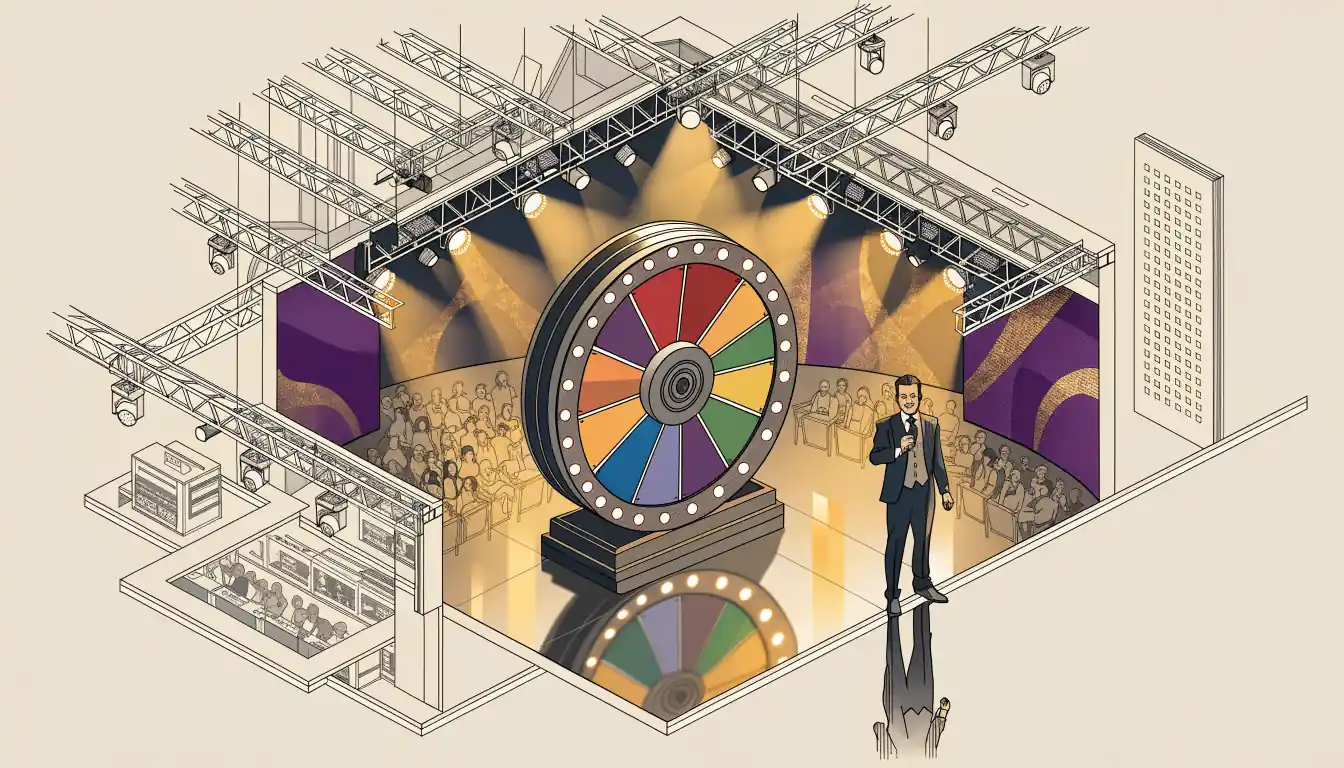
Table of Contents
- What Crazy Time Is—and What “Live” Adds
- Top online casinos in the UK
- Finding Crazy Time in an Online Casino
- Choosing a Casino: Licence Checks Before Deposit
- From Grosvenor’s Tables to Today’s Live Casino Floor
- A Game of Chance, Not a Casino Strategy
- Bonus Offers and the Conditions Around Deposits
- Free Play, Demo Access and What It Can Show
- Rules, Multipliers and the Limits of a Score
What Crazy Time Is—and What “Live” Adds
Crazy Time is a live casino game show created by Evolution. At its centre is a large, colourful wheel divided into numbered segments and bonus-game spaces. A presenter stands beside it in a studio, introduces each round and sets the pace while the wheel turns. The result is determined by where the wheel stops, not by a player making a tactical move at a virtual table.
That distinction explains why the word “live” matters. An ordinary online casino game is often software displayed on a screen: the interface presents the rules, accepts a wager and produces an outcome through its programmed game system. Crazy Time, by contrast, is built as a broadcast. The studio, presenter, wheel and round-by-round rhythm are part of the product, rather than decorative additions to an otherwise conventional digital game.
The format sits somewhere between a television quiz-show set and a casino table. There is a host to follow, a shared wheel to watch and a stream of activity that continues whether one person is taking part or many are observing. It is not a private video call, and it is not a physical casino table transported into a browser. The physical set is combined with online betting technology, creating a game that is social in appearance while remaining individual in its financial consequences.
Crazy Time is also different from the wider category of live casino games. Live casino is an umbrella term covering streamed versions of familiar formats such as roulette, blackjack and other table games. Crazy Time belongs to that category, but it does not imitate a traditional card table. Its identity comes from the wheel, the presenter and its bonus segments. Calling it a live casino game show is therefore more precise than calling it merely an online casino game.
French Roulette Online Casinos in the UK: Rules and Odds
The show-like presentation gives each round a visible beginning, middle and end. The host announces the action; the wheel is set in motion; the stopping segment determines what follows. This makes the experience easier to watch than a silent digital reel, but spectacle should not be confused with influence. A presenter can shape the atmosphere and explain what is happening, yet cannot turn a losing outcome into a favourable one.
For a UK audience, the phrase “Crazy Time casino” therefore describes a particular kind of online gambling experience: a named Evolution product delivered through a live studio format, rather than a generic casino wheel hidden among software games. “Crazy Time live casino” says much the same thing, with the emphasis placed on the broadcast element. The language is slightly awkward; the distinction is not.
Like any gambling product, it carries a plain financial boundary. Stakes should come only from money that can be afforded to lose. The bright lights do not alter that old rule.
Top online casinos in the UK
- BritsinoBonus: Welcome Package – Get your £2,200 + 2,000 FS · Payout speed: 1-3 business days
- Revery PlayBonus: 100% up to€1,000+ 100 FS · Payout speed: 1-3 business days
- AmunbetBonus: Join now and get 450% up to 2,700 GBP + 450 FS · Payout speed: 1-3 business days
- ZombillionBonus: Welcome Pack 250% up to £4000 + 200 FS · Payout speed: 1-3 business days
- x3betBonus: Welcome Pack 100% Up to £1.000 + 200 Free Spins · Payout speed: 1-3 business days
- NightLuckBonus: Welcome Pack + 805% Up To 6400€ + 280 FS · Payout speed: 1-3 business days
- BeOnBetBonus: 100% up to €500 + 100 FS · Payout speed: 1-3 business days
Finding Crazy Time in an Online Casino
Crazy Time appears in the live-casino part of an online casino, rather than among the ordinary digital table games or slot titles. That distinction matters because the game is built around a live studio, a presenter and a shared game floor. A casino may therefore offer several ways of displaying it: as a tile in a live lobby, within a provider’s dedicated section, or through a category devoted to game-show formats.
Live Casino Streamed versions of familiar formats such as roulette and blackjack.
Game Shows Specialised formats like Crazy Time involving a presenter and a large wheel.
Slots Automated digital games played through software interfaces.
The label is not always identical. One site may place the game under “Live Casino”, another under “Game Shows”, while a third may group it with live roulette and blackjack. The quickest route is generally the casino’s own search field, followed by the live-games menu if the title does not appear immediately. Searching for “Crazy Time” is more useful than browsing every table in the lobby; casino menus are often arranged for commercial convenience rather than human logic.
A listing should open a game page with the live video window, the betting interface and the available account controls. The presence of a logo alone proves little. Some lobbies display promotional tiles for games that are unavailable in a particular jurisdiction, temporarily closed, or accessible only after sign-in. The useful test is whether the title can be opened and whether the casino identifies the game as available for real-money play in Great Britain.
How the game fits the casino lobby
The online casino is usually divided into functional rooms:
- slots and other automated games;
- live dealer tables;
- game-show-style live titles;
- poker or specialist tables, where offered;
- recently played or featured games.
Crazy Time belongs with the live, hosted formats. It should not be confused with a similarly named slot, a free promotional wheel, or a casino’s internal prize feature. The visual language may be colourful and theatrical, but the practical question is simple: does the page connect to the live game supplied through the casino’s gaming platform?
A functioning page normally shows the studio feed and the controls for selecting a wager. It may also display the game’s current status, connection information, language options or table availability. Those details can change during the day. A live title is dependent on a scheduled studio operation, so its presence in a lobby is not necessarily a promise of uninterrupted access.
The same game can be listed by several casinos without each casino producing it. The casino provides the account, cashier, responsible-gambling controls and access point; the game provider supplies the studio experience. For that reason, a search for an online casino offering Crazy Time should begin with the operator’s live-casino catalogue, not with assumptions based on a casino’s general size or advertising style.
Access before account registration
Some casinos allow visitors to inspect a lobby before registration. Others show only a shortened catalogue until an account is created. In either case, the relevant signs are the live-casino category, the game title and an opening button that leads to the actual table rather than to an article or advert.
Accessing Crazy Time
- Open the casino’s live-casino lobby.
- Search for Crazy Time or inspect the game-show category.
- Confirm the title opens as a live game rather than an advert.
- Check that the operator serves Great Britain under a UKGC licence.
- Complete registration only when conditions match intended use.
An account is required for real-money access. The operator must establish that the customer meets the legal age requirement before allowing money to be deposited into a gambling account. Registration may also involve identity and location checks, since availability is tied to the market in which the operator offers remote gambling.
For customers in Great Britain, the location of the operator’s equipment does not remove the regulatory requirement. The UK Gambling Commission regulates remote gambling offered to people in Great Britain, and the operator serving that market must hold the relevant licence. This is part of the access question itself, not decorative legal language: a game page may load from almost anywhere, but lawful availability depends on the operator’s status in the market.
A sensible path is therefore:
- Open the casino’s live-casino lobby.
- Search for Crazy Time or inspect the game-show category.
- Confirm that the title opens as a live game rather than an advert or a different product.
- Check that the operator serves Great Britain under the required Gambling Commission licence.
- Complete registration only when the game and the account conditions match the intended use.
The last check is the least glamorous and the most important. A bright wheel still needs a proper doorway.
Choosing a Casino: Licence Checks Before Deposit
A casino offering Crazy Time is not automatically a suitable place for a deposit. The game may be familiar, the studio may look polished, and the lobby may be crowded with tables; none of that establishes who is legally responsible for the gambling account. In Great Britain, the first question is therefore not whether the wheel is available, but whether the operator is licensed to offer remote gambling to people there.
The UK Gambling Commission regulates commercial gambling in Great Britain, including online casinos, and is the sole regulator for that activity. Its role is more substantial than a logo placed in a website footer. The Commission issues operating licences to businesses and personal licences to individuals involved in operating gambling businesses. A casino claiming to serve British customers should therefore be identifiable in the Commission’s public register.
Start with the register, not the advert
The operator’s name, trading brand and domain should be checked against the UK Gambling Commission register before an account is funded. The relevant entry should correspond to the site being used, not merely to a similarly named business. A brand can have a parent company, a trading name or several domains, so a familiar name alone is not enough.
The practical sequence is straightforward:
- Find the operator’s legal or trading name on its website.
- Open the UK Gambling Commission’s public register at gamblingcommission.gov.uk.
- Search for the operator and compare the registered information with the casino’s stated brand and domain.
- Confirm that the entry concerns the kind of remote gambling being offered.
- Recheck the information immediately before depositing, since a register is a record of regulatory status, not a permanent certificate of good character.
The domain comparison matters. A licensed company may operate more than one online brand, but the register and the casino should still provide a coherent explanation of the relationship. If the website presents one company while the register identifies another without a clear connection, the discrepancy deserves more attention than a welcome banner.
A specialist review can be useful as a starting point for identifying an operator, but it is not a substitute for the Commission’s register. Reviews can become outdated; the register is the relevant public record for licensing status. A casino’s own statement is also not independent confirmation. It is, at best, a signpost to information that still needs checking.
What a licence does—and does not—mean
A UKGC operating licence establishes that the operator is authorised within the British regulatory framework. It does not mean that every game will suit every player, that every promotion is favourable, or that a particular outcome is more likely. Regulation is a framework for lawful operation and player protection, not a prediction service for a spinning wheel.
This distinction is especially useful with live casino products. The presence of Crazy Time in a lobby may tempt an operator to make the game the centre of its marketing. Licensing asks a prior, less glamorous question: who is accountable for the account, the payments, the records and the complaints route?
The register check should be followed by a look at the casino’s own legal and responsible-gambling pages. The information should be specific enough to identify:
- the licensed business operating the site;
- the applicable terms for the account and gambling services;
- the procedure for making an internal complaint;
- access to an approved Alternative Dispute Resolution service;
- the responsible-gambling tools available at account level;
- the arrangements for self-exclusion.
UKGC-licensed casinos must provide responsible-gambling tools, including self-exclusion, and licensees must offer an internal complaints process together with access to approved ADR. These are not decorative paragraphs for a footer. They describe what happens when the relationship with an operator stops being frictionless, which is precisely when vague promises become useless.
Examine the account protections
A casino’s protections should be visible before money is committed. Remote operators must prompt a new customer to set a financial limit before the first deposit and must provide accessible controls for managing account-level limits. The quality of those controls matters in practical terms: they should be easy to find, clear about what they affect and available without having to negotiate with customer support.
Age verification is another basic safeguard. Operators must verify a customer’s age before allowing funds to be deposited into a gambling account. A site that treats identity and age checks as an inconvenience to be postponed until later is presenting the wrong order of priorities. Legal access begins with verification, not with the first wager.
Financial Limits
Stakes should come only from money that can be afforded to lose. The bright lights do not alter this rule.
Self-exclusion deserves separate attention because it is different from an ordinary spending limit. A limit manages permitted gambling within an account; self-exclusion is a stronger request to prevent gambling access for the selected period or arrangement. UK-licensed casinos must provide this tool. GAMSTOP is also available as a national self-exclusion service for participating gambling websites in Great Britain, but the operator’s own controls should still be explained clearly.
The presence of a tool is not the same as its usability. A responsible casino should make limits, time-outs, account closure and self-exclusion discoverable from the account area or help centre. The wording should not turn a protective measure into a sales conversation. A maze is not a safeguard.
Read the funding rules carefully
Payment methods can reveal whether a casino’s compliance language matches the rules it is expected to follow. Remote gambling operators cannot accept credit-card payments for gambling, including credit-card funding routed through a money service business. They also cannot accept wallet payments where the wallet permits credit-card funds to be used for gambling.
That means a casino’s cashier should not be assessed only by the number of icons displayed. The important question is whether the method is permitted for gambling and whether the operator explains restrictions plainly. A payment option may be familiar from ordinary online shopping and still be unsuitable for gambling when credit funding is involved.
Terms should also identify how deposits, withdrawals, identity checks and account restrictions interact. A demand for documents is not, by itself, evidence of misconduct; operators may need to verify identity and age. But the explanation should be intelligible, and customer support should be able to state what is required without sending the account holder in circles.
- Check the operator’s name against the UK Gambling Commission register.
- Verify identity and age before depositing funds.
- Use approved tools for self-exclusion and limits.
- Rely on a brand name alone without checking the legal register.
- Use credit cards or prohibited wallets for gambling payments.
- Assume a promotional offer is compatible with all game types.
The same care applies to bonus language. A promotional offer can sit beside a licensed casino and still contain conditions that make it poor value or incompatible with the intended way of playing. The operator’s licence answers the question of regulatory status. It does not answer whether a particular offer is worth accepting. Those are separate judgements.
Treat the operator as a service, not just a doorway
Two casinos may carry the same live game while offering very different standards of account management. One may present its terms, limits and complaints route clearly; another may hide them behind layers of promotional copy. Since the game itself is supplied within the operator’s wider service, the surrounding administration deserves as much scrutiny as the table interface.
Useful signs include a consistent legal identity across the site, a working link to the UKGC register, clear responsible-gambling information and an intelligible complaints procedure. Warning signs include contradictory company names, unexplained domains, missing licence details, pressure to deposit before verification and support that avoids direct answers about regulation.
The public register is also a better reference point than badges copied into a website design. A badge can be outdated or misleading; the register allows the operator’s claim to be tested. The check should be repeated when returning to a casino after a long absence or when a brand has changed its domain, ownership or presentation.
Licensing Verification
A brand can have a parent company, a trading name or several domains, so a familiar name alone is not enough to confirm regulatory status.
One recorded review of LuckyPays reported that a Gambling Commission register dated 26 September 2026 did not show an entry under that brand or the stated domain, including luckypays.io. That observation belongs to the time and source of the review rather than serving as a timeless verdict. It illustrates why a brand’s own licensing claim should be checked against the current public register, especially where a domain or corporate identity is not immediately clear.
Keep the decision narrow
The sensible comparison among Crazy Time casinos UK players can access is not a contest in which the loudest site wins. It is a sequence of checks:
- Is the operator identifiable?
- Does its current remote gambling status appear on the UK Gambling Commission register?
- Does the registered information correspond with the brand and domain?
- Are age verification and financial-limit controls explained?
- Are self-exclusion and other responsible-gambling tools accessible?
- Is there a clear complaints process and ADR route?
- Do the payment rules exclude credit-card gambling and prohibited wallet funding?
- Are the terms readable before a deposit is made?
If any answer is unclear, postponing the deposit is the rational response. A missing game is an inconvenience; an unclear operator is a different category of problem. The wheel can wait.
From Grosvenor’s Tables to Today’s Live Casino Floor
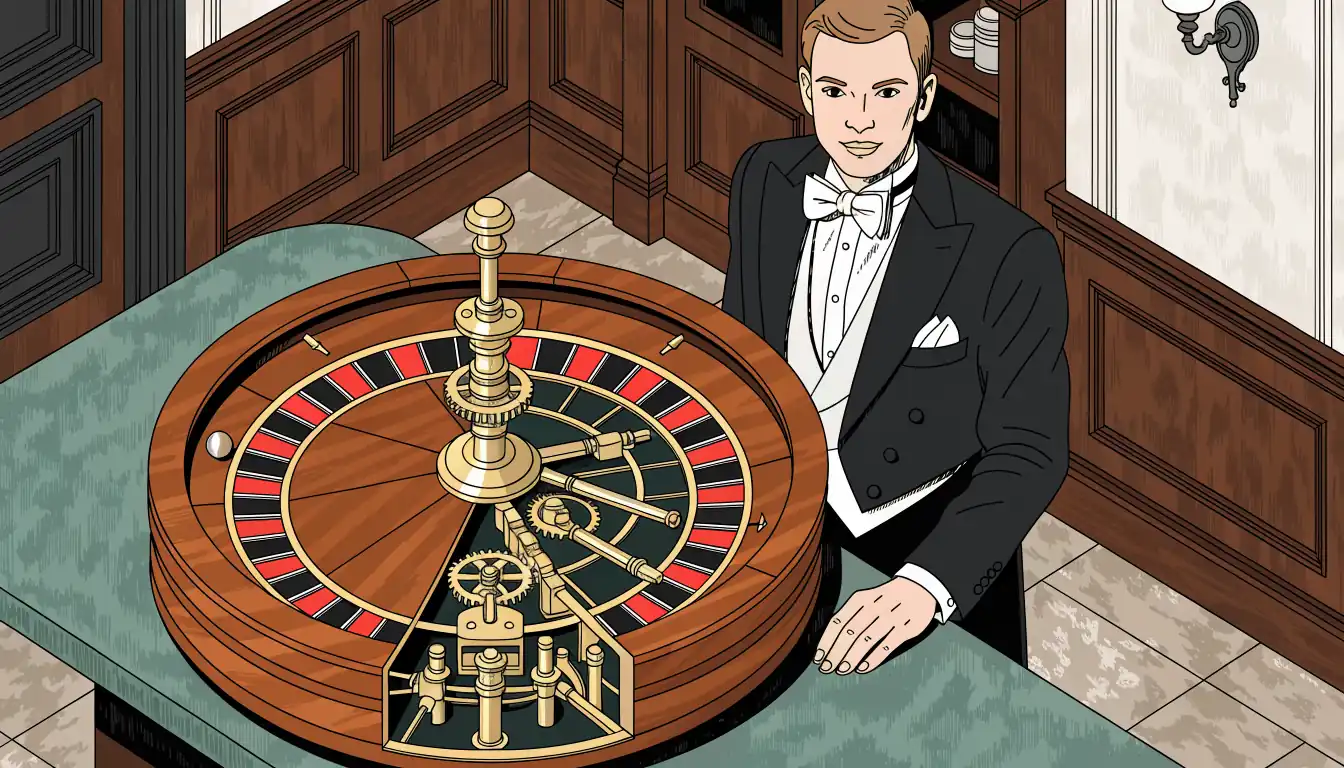
The live-casino floor is best understood as a bridge between two kinds of gambling culture. On one side are the quiet interfaces of online casino games: reels, menus and mathematical outcomes contained within software. On the other is the older theatre of the gaming table, where a dealer, a wheel or a card shoe gives the game a visible setting. Crazy Time belongs to this second tradition, although its setting is unmistakably a television-style studio rather than a conventional casino room.
Grosvenor provides a useful British reference point for how that setting entered online gambling. In 2013, the operator unveiled live casino games built around a range of card and casino formats. The selection included Blackjack, Texas Hold’em and Roulette. That launch marked less a sudden invention than a change in scenery: familiar games were given dealers, cameras and a remote audience.
The format has since become broad enough to resemble a digital casino floor rather than a single product category. A lobby may place several kinds of live table beside one another, each with its own visual grammar:
- Blackjack, organised around cards, dealer procedure and decisions made during the hand.
- Roulette, centred on the wheel and the ball, with conventional and themed variants.
- Texas Hold’em, where community cards create a recognisable poker structure.
- Game-show formats, including Crazy Time, in which a large wheel and studio presentation replace the restrained atmosphere of a traditional table.
Live Dream Catcher Casino UK: Game and Session
The providers behind such games matter because they shape the studio, interface and pace of the session. Evolution is associated with the game-show side of live casino, while other providers have built their identities around table games or digital recreations of established casino rooms. NetEnt and Eyecon are also names encountered in the wider provider landscape, though a casino’s catalogue determines which products actually appear in its lobby.
That distinction matters when looking for a place to play Crazy Time in Britain. A casino may advertise live games while offering only a particular selection, or may separate game-show tables from roulette and blackjack under different lobby headings. The presence of a live section therefore says little by itself about whether the Crazy Time wheel game is available. The title must be found in the catalogue, alongside information identifying the provider and the format.
Roulette shows how varied the category can become. A conventional table may sit beside Lightning Roulette, where the familiar wheel is presented with a distinct branded structure. Both remain recognisably roulette, yet the surrounding presentation and rules can make them feel like different rooms in the same building. Live casino thrives on precisely this mixture of continuity and novelty.
The result is a floor where old names acquire new lighting. Crazy Time does not stand apart from casino history; it borrows the wheel, the host and the audience’s appetite for ceremony, then places them in a studio designed for an online crowd. A modern arrangement, built from old furniture.
A Game of Chance, Not a Casino Strategy
Crazy Time invites strategy language because its interface looks active: a wheel turns, a host announces the result, and bonus segments interrupt the ordinary rhythm. Yet movement is not control. The outcome of each spin is determined by chance, so a betting pattern cannot make a particular segment appear, and a previous result cannot compel the next one to be different.
Strategy Myth
Attention Movement is not control. The outcome of each spin is determined by chance, so a betting pattern cannot make a particular segment appear.
That distinction matters when considering claims about a “Crazy Time live casino strategy”. Selecting a wager, changing its size, or deciding when to stop are choices about exposure. They are not methods for directing the wheel. A sequence of recent results may be recorded, but it does not become a forecast merely because it has been arranged in a table or given a confident name.
What a tracker can—and cannot—do
A Crazy Time tracker may be useful as a personal record. It can show which outcomes have occurred during a session, help identify how quickly wagers accumulate, or make a player’s own habits less hazy. That is information about the past and about personal behaviour.
It cannot reveal a hidden cycle or produce a reliable signal for the next spin. A tracker casino feature, spreadsheet, or third-party results page remains an observer, not an instrument that changes probability. The history of Crazy Time can explain the game’s development and place it within the live-casino tradition; it cannot turn historical results into a system for controlling future ones.
This is an old human impulse in modern costume: when random events arrive in a visible sequence, the mind starts looking for a story. The wheel supplies the theatre. The story remains speculation.
Stake choice is not outcome control
A more honest approach to “casino strategies” is to treat them as spending decisions. A fixed wager can make losses easier to understand than a constantly changing one; a predetermined stopping point can prevent a session from expanding simply because an earlier result was disappointing. Neither practice improves the chance of a chosen outcome. They only define how much money is placed at risk and when participation ends.
Games: Casino Slots, Live Tables and More · Casino Dice Games in the UK: How They Work
The distinction also prevents a regulatory category from being dragged into the wrong game. A specialist affiliate review states that Great Britain’s online-slot controls set a maximum of £5 per game cycle for adults aged 25 and over, while the limit is £2 for those aged 18 to 24. That information concerns online slots. The same review specifies that those limits do not govern roulette or blackjack, and they should not be presented as a rule for Crazy Time merely because all of these products appear in an online casino.
Crazy Time should therefore be approached as a chance-based game, not as a puzzle awaiting the right formula. Any wager can be lost, and gambling should be limited to money that can be afforded to lose. A tracker may describe what happened; it cannot tell the wheel what to do.
Bonus Offers and the Conditions Around Deposits
A casino welcome offer can look simple on its banner and rather less simple in its terms. A Crazy Time bonus may be described as a deposit promotion, free spins, bonus funds or a no-deposit offer, but the label alone does not establish how it can be used. The important wording sits in the conditions: eligible games, qualifying deposits, expiry rules, withdrawal requirements and any restrictions on winnings.
Understanding Bonuses
While a bonus might be advertised for Crazy Time, it is essential to check the specific terms. Some bonuses cover the whole casino, while others may exclude live games or attach different contribution rules to them.
The same distinction matters when a promotion is presented as being specifically for Crazy Time. Some bonuses cover the whole casino; others exclude live games or attach different contribution rules to them. A casino may also advertise the game prominently while the offer applies only to slots. The promotional page and the full terms need to agree before a deposit is made. Marketing, left unattended, has a talent for becoming fiction.
A deposit bonus also needs to be read alongside the casino’s payment rules. In Great Britain, remote operators cannot accept credit-card payments for gambling. That prohibition includes credit-card funding routed through a money service business. A payment wallet is not an escape route where the wallet permits credit-card funds to be used for gambling: operators cannot accept that form of payment either.
This makes the payment method more than a technical choice. The name of a wallet or banking service does not by itself show that a transaction is permitted. The relevant question is how the funds reached it and whether the operator’s payment process accepts that source for gambling.
Crash Casino Games in the UK: How They Work · Chicken Road Game Casino UK: Slot or Crash Game?
Terms concerning payouts deserve equal care. A displayed balance is not automatically withdrawable bonus money, and a request to cash out may trigger checks or conditions set out in the promotion. The rules should explain which funds are real cash, which are promotional, and what happens if the offer is cancelled. If the wording is unclear, the safest course is to leave the promotion unused rather than treat ambiguity as a gift.
Only money that can be lost without damaging ordinary finances belongs in gambling. A bonus is not a reduction of that risk; it is a condition attached to an offer.
Free Play, Demo Access and What It Can Show
A free version of Crazy Time can be useful for a modest reason: it lets the game be inspected before money enters the picture. The screen layout, presenter-led rhythm, wheel animation, betting panel and transitions between rounds become familiar without a wager attached to them. That is practical information, especially for anyone deciding whether a live game-show format feels understandable or merely noisy.
Summary
- Crazy Time is a live broadcast product, not a standard software game.
- Always verify an operator’s licence via the UK Gambling Commission register.
- Use demo versions to understand the interface without financial risk.
- Treat all outcomes as matters of chance rather than predictable patterns.
A no-stakes preview is not the same thing as the real-money table in every operational detail. Availability can depend on the casino, the device, the browser and the way the operator has configured its lobby. Some versions may open directly in a browser; others may sit behind registration or be offered only at selected times. The label “free” therefore describes the absence of a cash wager in that session, not a universal promise about access.
The distinction matters because “free spins” is often used loosely. Crazy Time is a wheel-based live game rather than an online slot, so a phrase suggesting free slot spins should not be taken as a description of its ordinary format. A demonstration round may allow the wheel and its bonus segments to be viewed, but it does not turn a later paid session into a sequence of complimentary rounds. Marketing language has a talent for making separate things look like relatives.
What a demo can establish
A free-play session can show:
- how the betting interface is arranged;
- where the available wagering choices appear;
- how the presenter and studio feed are displayed;
- how the wheel is started and how the result is announced;
- whether the pace and visual style suit the player;
- how clearly the game communicates a completed round.
It can also reveal small points that written descriptions tend to flatten: whether the on-screen text is easy to follow, whether the broadcast feels distracting, and whether the interface remains legible on a particular screen. These are matters of fit, not predictions.
A demo cannot establish that a particular outcome is due, that a sequence will repeat, or that a future result will resemble the practice session. Random outcomes remain random when no money is attached to them. A run of favourable or unfavourable results in free play has no evidential force over the next round. Treating the preview as a forecasting tool would give a rehearsal more authority than it possesses.
Reading reviews alongside a preview
Reviews of Crazy Time can help describe the experience, but they are opinions about presentation, accessibility and the handling of the game rather than proof of profitable play. A useful review distinguishes the game itself from the casino hosting it: the provider’s interface, the operator’s account controls, the availability of a demo and the clarity of the published terms are separate questions.
Safety is similarly broader than a polished stream. Before any real-money deposit, the casino’s licence number should be checked on the UK Gambling Commission’s public register. Age verification must take place before funds can be deposited, and a licensed remote operator must provide account-level financial-limit controls, including a prompt for a new customer to set a limit before the first deposit. Responsible-gambling tools and an internal complaints route should also be available, with access to an approved Alternative Dispute Resolution service.
No preview removes the financial boundary. Any later wagering should be limited to money that can be afforded to lose, and a free session should remain what it is: a way to learn the interface, not a rehearsal for guaranteed results.
Deal or No Deal Casino UK: Slot Features Explained · Mines Casino Game UK: How Play and Risk Work
Rules, Multipliers and the Limits of a Score
Crazy Time is built around a wheel divided into numbered segments and bonus-game symbols. A presenter spins it, the wheel slows, and the pointer settles on one segment. That result determines the round’s immediate outcome. The live dealer, camera feed and broadcast interface make the process visible, but visibility is not control; the wheel remains a chance-based mechanism.
The numbered segments carry their stated values. When the wheel lands on a bonus symbol, the game moves into the corresponding feature round rather than paying as though it were an ordinary number. These features are part of the rules, not hidden signals about what the wheel will do next.
A multiplier is a figure applied to a qualifying outcome under the game’s rules. It can increase the return attached to that particular result, but it does not alter the probability of the next spin. The distinction matters because a large multiplier is memorable: it looks like a message when it is only a settlement detail.
Online Casino Games for Real Cash in the UK · JetX Casino Game UK: Crash Play and Licensing
“Score” is similarly easy to overread. In a live casino interface, the term may refer to a displayed result, a payout calculation or a record of what happened in a round. It is not a rating of the player, a measure of skill or a forecast. Previous scores do not form a pattern that can compel a future wheel result.
The cleanest way to read the screen is therefore mechanical: identify the segment, note whether a bonus feature has begun, and check how the displayed multiplier affects that round. A trusted Crazy Time casino should present those rules and settlement information clearly, while the UK Gambling Commission’s licensing framework provides the relevant regulatory context for legal remote gambling in Great Britain.
The wheel has no memory.
Are online casino games licensed and regulated?
Yes. The UK Gambling Commission regulates remote gambling offered to consumers in Great Britain, and remote operators serving them must hold the relevant licence.
What are the online slot stake limits in Great Britain?
The limit is £5 per game cycle for adults aged 25 and over, and £2 for adults aged 18 to 24. These limits do not apply to roulette or blackjack.
Is LuckyPays licensed by the UK Gambling Commission?
The Gambling Commission’s public register dated 26 September 2026 does not list LuckyPays under its brand or stated domain, including luckypays.io.
Created by the "Casino not on Gamstop" editorial team.