Progressive Jackpot Slots: How the Pools Work
See how connected wagers build shared prizes, how jackpot features differ from base-game play and what to consider when choosing a UK casino.
 Available in GB
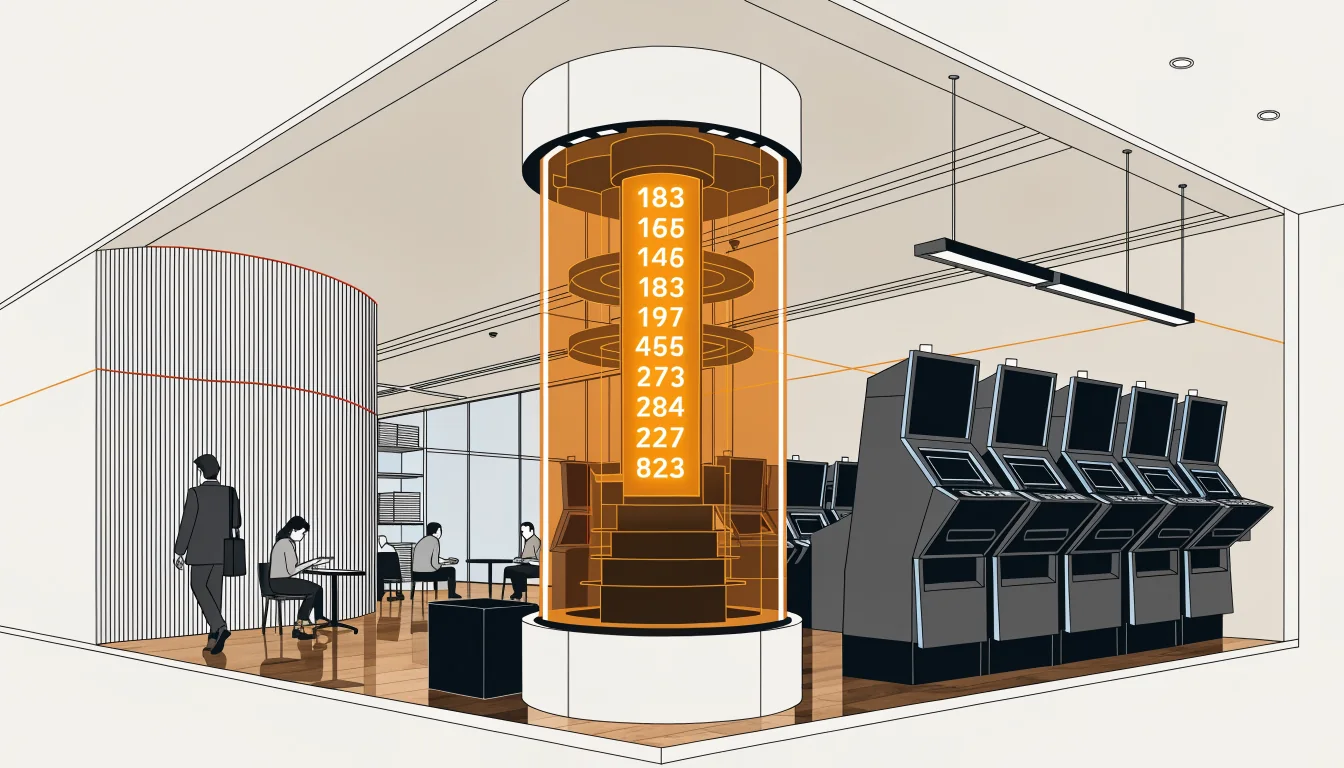
Table of Contents
- How Progressive Jackpot Pools Grow
- Top online casinos in the UK
- Online Play, Free Spins and the Base-Game Trade-Off
- Casino Bonuses and the Fine Print Around Progressive Games
- From Slot Machines to Networked Jackpots
- How Jackpot Games Trigger Their Prizes
- Finding Progressive Slots at UK Casinos
- The Jackpot Is Not the Whole Return
- Popular Slots, Changing Catalogues
- Mega Moolah and the Shared-Pool Model
- Playing for Real Money: Verification and Payouts
How Progressive Jackpot Pools Grow
A progressive jackpot begins less like a treasure chest than a public meter. Each qualifying wager on a connected slot adds a small contribution to a prize pool, and the displayed figure rises as play continues. The machine may stand in a land-based casino or appear in an online lobby, but the underlying idea is similar: many separate wagers feed one accumulating sum.
That shared structure is what distinguishes progressive jackpot slots from games with a fixed top prize. A fixed jackpot is built into the game’s design and does not necessarily change when another person spins. A progressive prize moves with activity. More connected play means more contributions entering the pool, although a win can reset or alter the amount according to the game’s rules.
A small slice of every wager
The money entering the pool is not the entire wager. Progressive games typically direct between 1% and 3% of each stake towards the jackpot. The remainder belongs to the ordinary operation of the slot: its reels, symbols, features and base-game prizes.
That division matters because the rising number on the screen can make the jackpot seem to be the whole point of the game. It is only one part of the wager’s destination. Most spins remain ordinary spins, with their outcomes determined within the game itself, while the designated contribution quietly joins the larger pool.
The mechanism is cumulative rather than personal. A player does not need to be the person whose wager supplied most of the money eventually won. Every connected machine adds to the same reservoir, so the prize reflects the activity of a network rather than the history of one account or one terminal.
From one machine to a network
The simplest version links several machines in one venue. Each machine records play and passes the relevant contribution into a common total. The display then presents that total as a single progressive prize, visible across the connected games.
Modern arrangements can extend further. Network jackpot pools may be shared across different operators that offer the same progressive slot. In that case, a wager placed through one operator can contribute to a pool also fed by play elsewhere. The machines or online versions remain separate points of access, but the prize structure is connected behind them.
Jackpot King Slots at UK Casinos: Amatic Explained
This is why the number shown beside a game may appear larger than the activity of one casino could plausibly create on its own. The pool is not necessarily local. It may represent wagers travelling through a provider’s wider network, crossing the boundaries between participating operators while remaining attached to the same slot title.
A casino therefore does not necessarily own the entire progressive jackpot displayed in its catalogue. It may provide access to a game whose prize is administered across a broader system. The visible counter belongs to the networked arrangement, not simply to the room, website or screen where it happens to appear.
What the counter is really showing
The rising figure is best understood as an accounting display for accumulated contributions, not as a promise of a particular outcome. It shows how the pool changes as qualifying wagers are recorded. It does not show that a win is becoming more likely merely because the number has grown, nor does it identify which connected machine will produce the winning result.
This distinction has a slightly old-fashioned lesson: a public total can create a sense of shared participation even when each spin remains an individual event. The crowd builds the fund together, but the game still evaluates each wager according to its own programmed rules. Community creates the jackpot; it does not turn chance into a queue.
The pool also gives the progressive format its distinctive tension. A modest contribution may seem insignificant beside a large displayed prize, yet the prize could not grow without the steady accumulation of such contributions. The system depends on repetition across many wagers, not on one dramatic payment into the fund.
Why the structure affects the game
Directing part of each wager to the progressive pool changes the balance between the jackpot feature and the base game. The prize is allowed to grow because some of the wager is reserved for that shared possibility rather than returned through the ordinary reel outcomes.
That arrangement explains why progressive slots need to be considered as two connected layers. The first is the base game, where regular symbols and features produce routine results. The second is the accumulating jackpot, funded by the network of wagers. Separating those layers makes the displayed total less mysterious: it is not conjured by the machine, but assembled gradually from play across linked access points.
Progressive jackpot slots consist of two layers: the base game with regular symbols and features, and the accumulating jackpot funded by a network of wagers.
The same logic applies when the game is presented through online progressive jackpot slots. The screen may be digital and the machine invisible, but the pool can still depend on connected wagers across a wider network. A virtual interface does not turn a shared prize into a private one.
So the essential model is simple: linked machines or online game instances accept wagers, a stated portion enters the common pool, and the accumulating figure reflects activity throughout the network. The jackpot grows collectively, even though any eventual win belongs to a single game outcome.
A communal fortune, one spin at a time.
Top online casinos in the UK
- BritsinoBonus: Welcome Package – Get your £2,200 + 2,000 FS · Payout speed: 1-3 business days
- Revery PlayBonus: 100% up to€1,000+ 100 FS · Payout speed: 1-3 business days
- AmunbetBonus: Join now and get 450% up to 2,700 GBP + 450 FS · Payout speed: 1-3 business days
- ZombillionBonus: Welcome Pack 250% up to £4000 + 200 FS · Payout speed: 1-3 business days
- x3betBonus: Welcome Pack 100% Up to £1.000 + 200 Free Spins · Payout speed: 1-3 business days
- NightLuckBonus: Welcome Pack + 805% Up To 6400€ + 280 FS · Payout speed: 1-3 business days
- BeOnBetBonus: 100% up to €500 + 100 FS · Payout speed: 1-3 business days
Online Play, Free Spins and the Base-Game Trade-Off
Moving a progressive jackpot slot onto the internet changes its setting, not its central bargain. The reels appear in a browser or app, the stake is processed through an online gambling account, and the jackpot may still be connected to a wider network. The important distinction is between seeing a game for nothing and staking cash on it. A demonstration mode can show the symbols, features and pace of play; it does not create a claim on a real progressive prize.
That distinction matters because the word “free” is made to carry rather more luggage than it can reasonably bear. Free online progressive jackpot slots may mean a practice version supplied by the game provider, free spins issued by a casino, or a no-deposit promotion. These are different arrangements. A practice session is entertainment without a cash stake. Promotional spins are governed by their own terms. Real-money progressive jackpot slots involve an actual wager and whatever qualification rules apply to that game.
Slots: UK Online Casinos by Game Provider
What online play changes
An online progressive jackpot slot is generally presented alongside ordinary casino games, with the jackpot meter displayed in the game interface. The convenience is obvious, but convenience does not turn the underlying mathematics into a gift. Each spin remains a paid game cycle when cash is involved, and the prize pool remains separate from the amount returned through the ordinary reel combinations.
The British setting also places firm boundaries around online slot play. A UKGC-licensed operator must verify age before allowing a customer to deposit. Credit cards cannot be used for gambling, including through a money service business, and a wallet cannot be used where its funds originate from a credit card. New customers must be prompted to set a financial limit before the first deposit, while account controls must make later limit-setting accessible. Autoplay is banned, and at least 2.5 seconds must pass before another online slot game cycle can begin.
The rules give online gambling a distinctly administrative character: the jackpot may sparkle, but the account still has paperwork.
For customers aged 25 and over, the maximum stake per online slots game cycle is £5. For those aged 18 to 24, it is £2. These limits concern the stake, not the size of a progressive jackpot. They do not make a practice version a cash game, nor do they remove the need to read the conditions attached to promotional play.
Free spins are not ordinary spins
Casino free spins often look like an invitation to test a progressive jackpot slot, but the offer may be narrower than the game lobby suggests. A specialist review reports that most free spins are confined to non-progressive titles. Where progressive slots are included, winnings from those spins are typically capped at £50–£100. That is a description of terms reported in the market, not a universal rule for every UKGC-licensed operator.
Attention! Most free spins are confined to non-progressive titles, and winnings from promotional spins on progressive games are typically capped at £50–£100.
The cap can matter more than the number of spins displayed in a promotion. A progressive game offers the possibility of a prize pool that has grown beyond the ordinary scale of a single spin, while the promotional terms may place a modest ceiling on what those same spins can release. The two ideas sit beside each other uneasily. The jackpot mechanism may be expansive; the bonus clause may be very small.
Free-play access has another limitation: the balance generated by free spins may not be withdrawable immediately. A promotion can require further wagering before any winnings become cash, and the game contribution rules may differ between eligible and excluded titles. Those conditions belong to the offer, not to the progressive slot’s basic design. They should therefore be read as a separate contract rather than treated as evidence of the game’s normal return.
The lower base-game return
Progressive jackpot slots often reserve part of each wager for the shared prize pool. As a result, the base game’s RTP is often in the 88%–92% range, with the difference directed towards the jackpot. RTP describes the long-run theoretical return from the ordinary game, not a promise about a particular session and not a forecast of when the progressive prize will appear.
This creates the trade-off at the heart of the format. A non-progressive slot may devote more of its theoretical return to its regular reel features. A progressive slot diverts part of that return into a prize that can become substantial, but may never arrive during a particular period of play. The lower base-game RTP is therefore not a hidden malfunction. It is part of the funding structure for the jackpot.
Amatic Games at UK Casinos: How to Find Them
A cash player comparing an online casino progressive jackpot with a conventional slot is consequently comparing two different distributions of expectation. One game may provide more frequent ordinary wins; another may place greater weight on a rare prize. The progressive meter is visible, while the reduced base-game return is easier to overlook. Visibility is not the same as value.
No-deposit access and cash play
A no-deposit bonus can resemble free play because no initial deposit is required, yet its winnings may be subject to wagering requirements and a withdrawal ceiling. A specialist review reports requirements of 40x–60x and maximum withdrawal caps of £50–£100 for such winnings. These terms vary by promotion and should not be mistaken for the rules of every progressive jackpot online casino.
The practical boundary remains clear. Promotional funds and winnings exist inside the offer’s conditions; cash play uses deposited funds and follows the slot’s ordinary rules. A bonus may help open a game without proving that the game is favourable, while a practice mode proves even less. For real-money progressive jackpot slots in the UK, the relevant questions are not simply whether the reels can be opened, but which balance is being used, which games qualify and what the promotion permits to be withdrawn.
Casino Bonuses and the Fine Print Around Progressive Games
A progressive jackpot casino bonus can look like an invitation to chase a large prize, but the promotion and the slot remain separate things. The jackpot belongs to the game’s own rules; the bonus belongs to the casino’s terms. Confusing the two is how an attractive headline acquires a less attractive ending.
- Check the full terms and conditions of any bonus
- Verify if progressive games are eligible for promotional funds
- Read the specific withdrawal ceilings for bonus winnings
- Assume the advertised jackpot is automatically available for withdrawal from a bonus
- Mistake a deposit offer for a guarantee of jackpot eligibility
- Ignore the wagering requirements attached to promotional play
A deposit offer may add bonus funds, spins or another promotional benefit to an account. Whether those funds can be used on a progressive jackpot slot is a separate condition. Some promotions exclude progressive games entirely, while others permit them only for certain parts of the offer. The relevant wording is not the banner but the full terms attached to it.
No-deposit offers and the small print
No-deposit bonuses deserve particular attention because they can appear to require no initial payment while still imposing substantial conditions on any resulting balance. A specialist review has described wagering requirements in the 40x–60x range for such offers, alongside maximum withdrawal caps of £50–£100. That is a description of terms reported for this type of promotion, not a permanent rule of every progressive jackpot casino site.
The distinction matters. If a bonus produces winnings on a progressive slot, the advertised jackpot is not automatically available for withdrawal. The casino may count only eligible winnings, restrict the games that contribute to wagering, or apply a separate ceiling to the amount that can be collected. A large prize shown inside the game therefore says nothing, by itself, about the amount a promotion permits to leave the account.
The cap may also apply after the wagering condition has been completed. In that case, satisfying the requirement does not remove the limit; it merely fulfils one of the conditions for withdrawing the permitted amount. Promotional language tends to place the exciting part in large type and the limiting part in smaller type. The arrangement is traditional.
What to check before using a bonus
The terms around a progressive jackpot casino bonus should be read as a set rather than as isolated phrases. The important questions include:
- Are progressive jackpot slots eligible for the bonus?
- Do wagers on those games contribute fully, partially or not at all towards the wagering requirement?
- Are bonus funds, cash funds or both used first?
- Does the promotion impose a maximum withdrawal amount?
- Does the cap apply to all winnings from the offer or only to the bonus element?
- Can free spins be used on the progressive game, or only on specified non-progressive slots?
- What happens if a jackpot is won while the bonus is active?
That last point can be decisive. A promotion may allow a game to be opened but exclude its winnings from the qualifying balance. Another may treat the stake as contributing to wagering while excluding the resulting jackpot. The difference is not cosmetic: it changes whether the promotion has any useful relationship with the prize being pursued.
A casino can also list a progressive game in its general catalogue without making it eligible for every offer. The game’s presence under the slots heading is not evidence that a bonus applies to it. Eligibility is a promotional condition, not a property of the software.
UK oversight and promotional responsibility
For the British market, the regulatory setting sits above the wording of individual offers. The UK Gambling Commission regulates commercial gambling in Great Britain, including remote gambling offered to consumers there even when essential equipment is located elsewhere. It is the sole regulator for commercial gambling in Great Britain, and it issues operating licences to businesses as well as personal licences to relevant individuals.
UK Gambling Commission role
The UKGC regulates commercial gambling in Great Britain and issues operating licences to businesses and relevant individuals.
That framework does not turn every promotion into a favourable one. It does, however, place UK-facing online gambling within a licensing system whose rules govern the operator’s activity. A progressive jackpot casino site serving Great Britain is not defined as acceptable merely because its advertisement uses the language of fairness or because it accepts a particular payment method. The operator’s status and the promotion’s written conditions are separate checks.
This is especially relevant to offers presented under labels such as the best progressive jackpot casino bonus or the best progressive jackpot casino sites UK. “Best” is advertising language, not a regulatory category. It does not explain eligibility, wagering treatment or withdrawal limits. Nor does a payment label change the promotional terms: a bitcoin progressive jackpot casino or a crypto progressive jackpot casino still needs its bonus conditions stated in a way that makes the restrictions clear.
A bonus is not a jackpot strategy
Promotions can reduce the immediate cost of entering a game, but they do not erase the rules attached to the prize. A deposit bonus may be unavailable on the chosen slot; a no-deposit offer may carry a high wagering requirement and a withdrawal cap; a displayed jackpot may be excluded from the promotional balance altogether.
The useful reading is therefore contractual rather than celebratory. The progressive game supplies its own jackpot conditions, while the casino promotion adds another layer of eligibility and withdrawal rules. Only the latter determines whether promotional funds can be used, how wagering is counted and how much of the resulting balance may be withdrawn.
From Slot Machines to Networked Jackpots
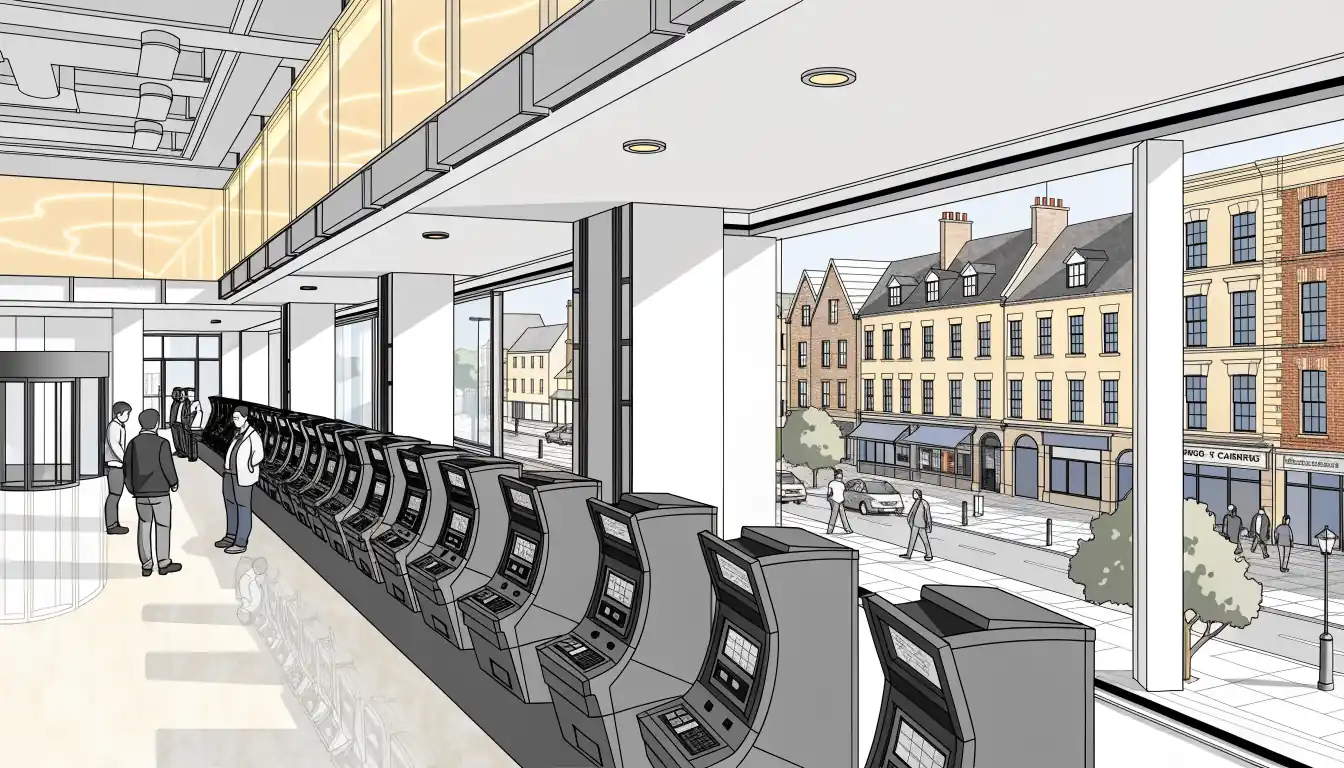
A progressive jackpot slot machine is not an isolated cabinet quietly keeping its own purse. It is a visible terminal within a larger system. Several connected machines can feed the same prize pool, whether they sit beside one another in a casino or appear as separate online games in different parts of a platform’s catalogue.
Best Online Casino Game Shows in the UK: What to Know
Each qualifying wager placed on a linked machine contributes to that shared pool. The amount may be small, but the mechanism is cumulative: activity across the network causes the displayed jackpot to rise. The machine therefore has two identities. It is a slot game with its own reels, symbols and ordinary payouts, but it is also an access point to a prize whose value is being shaped elsewhere.
That distinction matters in the UK. A player looking at one progressive slot machine may be seeing the result of wagers made on many other connected machines. The number on the display is not necessarily a reflection of activity at that particular cabinet or game window. It belongs to the network.
One game, many locations
The network can extend beyond a single casino brand. Where operators carry the same progressive slot game, the associated jackpot pool may be shared between them. A wager made through one operator can therefore contribute to a prize visible through another operator offering the same linked game.
This arrangement changes the meaning of “the casino” in the old mechanical sense. The important unit is no longer just the room, website or machine in front of someone. It is the connected group defined by the game and its provider. The casino supplies the point of access; the network supplies the wider flow of wagers.
For progressive jackpot slot machines UK players encounter online, this can make the displayed prize appear strangely detached from the surrounding site. The operator’s page may host the game, but the jackpot can be accumulating across a broader system. A familiar brand name on the webpage does not, by itself, describe the full boundary of the pool.
Jackpot pools can be shared across different operators that offer the same progressive slot, meaning the prize is connected behind the scenes.
The arrangement also explains why two operators can display the same progressive slot machine while showing the same moving jackpot figure. They are not necessarily running separate contests with similar values. They may be presenting different doors into one shared pool. The architecture is less glamorous than the number on the screen, but it is the architecture that gives the number its scale.
The machine as a network node
In a land-based setting, linked machines make the relationship easier to imagine: several cabinets connected to a common system, each receiving wagers and reporting to the same pool. Online, the cabinets disappear, replaced by software interfaces, but the underlying idea remains. Each game instance functions as a node in a distributed network.
This is why “progressive” describes more than a jackpot that happens to increase. It describes a system in which participation is pooled. The prize is attached to connected play rather than to one self-contained machine.
The arrangement has an almost industrial logic: many ordinary wagers, one conspicuous counter. The counter gets the attention. The network does the work.
How Jackpot Games Trigger Their Prizes
A progressive jackpot is not won in one universal way. The prize mechanism belongs to the individual game, and the same broad label can conceal very different moments of suspense. In one progressive jackpot slot game, the winning event may arrive without any visible pattern. In another, the reels must produce a defined combination. Elsewhere, the jackpot sits behind a bonus feature, waiting for the game to open the right door.
Random triggers
A random trigger is the most abrupt arrangement. The jackpot event is selected by the game’s random-number system rather than by a combination that can be read from the reels. A qualifying spin may suddenly activate a prize display, a pick feature or another award sequence. The symbols on that spin are not necessarily a conventional jackpot pattern; the trigger is a separate game event.
That separation matters. A screen may show a dramatic animation, but the animation is the announcement, not the cause. The outcome has already been determined by the game’s approved random process. No timing, stopping technique or preferred reel position turns a random trigger into a forecastable event.
Certain progressive jackpot slot games also attach different prize tiers to the stake. A specialist review has reported that some random-trigger games require a minimum bet before the highest tier is eligible. That is a feature of the particular title described, not a settled rule across progressive jackpot casino games. The paytable and game rules carry more authority than folklore built around a memorable win.
A qualifying combination
The older and more legible method is a specific combination. Matching symbols, a designated sequence or a particular arrangement can activate the progressive prize when the game’s rules say that combination qualifies. Here the reels provide the visible explanation: the winning pattern is part of the published paytable or feature description.
Yet visibility should not be mistaken for predictability. The combination remains subject to chance, and its appearance does not make a “biggest progressive slot jackpot” more attainable than a smaller one. Jackpot size describes the pool, not the probability of producing the required result. A large display can therefore be economically impressive and statistically unhelpful. Glamour is not a probability table.
Entry into a bonus round
Some games place the jackpot inside a bonus round. A qualifying spin first unlocks the feature; choices, symbols or a secondary game then determine whether the progressive prize is awarded. This creates two stages: entry into the bonus and success within it. The bonus may contain several outcomes, with the jackpot occupying only one part of that structure.
Trigger types
Jackpot triggers can be random, requiring a specific combination of symbols, or hidden within a bonus round.
For popular progressive jackpot games, the exact trigger is therefore essential reading. The title, artwork and advertised prize say less than the rules explaining what starts the feature and which stake, combination or bonus outcome qualifies. That small section of the paytable is where the machinery stops pretending to be magic.
Finding Progressive Slots at UK Casinos
A progressive jackpot slot may be present at one UK casino and absent from another without anything mysterious happening behind the scenes. Online catalogues are assembled from games supplied by different studios, and each operator decides which of those available titles to carry. A casino can therefore offer a particular progressive game while a competing site shows an entirely different selection.
The practical result is that “progressive jackpot casinos UK” is not a single, stable category. It describes casinos whose current catalogues happen to include progressive titles, rather than a permanent club with the same games on every site. The same applies to searches for the best progressive jackpot casino or the best progressive jackpot slot sites: there is no reliable shortlist detached from the catalogue displayed at the time.
A specialist review has reported that availability can change as providers revise their catalogues. That is a narrower claim than saying that every operator carries the same games, and it matters in a market where the screen can alter without the slot itself having disappeared from Britain. A title may be removed, replaced, or simply no longer supplied to a particular operator.
Why catalogues differ
The provider relationship is the first dividing line. A casino can only display a progressive title when it has access to that provider’s games and has chosen to include them. Two UKGC-licensed operators may consequently have different collections, even when both offer real-money online slots.
Availability can also be temporary. Providers update their catalogues, and operators adjust the games presented on their sites. That makes a named title such as Jackpot King or a progressive diamond jackpot slot a question of current availability, not a permanent feature of every UK casino. The word “best” ages quickly here.
For anyone comparing a progressive jackpot slot in the UK, the sensible object of inspection is the live game catalogue, not a copied list of casinos. The Gambling Commission regulates remote gambling offered to consumers in Great Britain, and legal online casinos serving UK players must hold the relevant licence. The licence establishes the regulatory position; it does not mean that every licensed operator carries every progressive game.
A current catalogue may therefore be more informative than a broad claim about the best progressive jackpot casinos in 2026. Names change, providers refresh their offerings, and the casino that displayed a particular game yesterday may not display it today. Availability is part of the product.
The Jackpot Is Not the Whole Return
A progressive jackpot slot has two financial stories running at once. One belongs to the ordinary game: the reels, symbols and any regular wins. The other belongs to the prize pool, which grows as linked play adds contributions. Treating the displayed jackpot as the whole return makes the arithmetic look more generous than it is.
Attention The base-game RTP of progressive slots is often lower (88%–92%) because a portion of the wager is diverted to the jackpot pool.
The relevant measure is return to player, or RTP. It describes the share of wagers a game is designed to return over a very long sequence of play, not the result of one session. Progressive slots often show a base-game RTP in the 88%–92% range. That is lower than many non-progressive slots because part of the game’s theoretical payout is directed towards the progressive prize rather than distributed through ordinary wins.
The contribution is not mysterious, though its effect can be easy to overlook. Typically, 1%–3% of each wager goes into the jackpot pool. The remainder supports the base game and its regular payouts. Thus a progressive slot machine can offer a chance at a changing prize while giving back less through its everyday features. The large figure above the reels is visible; the reduced routine return is less theatrical.
This distinction matters when comparing a progressive jackpot slot with another game. A higher displayed prize does not automatically mean a better overall mathematical proposition. The jackpot may be shared across linked play, and its eventual value says little by itself about how often the base game pays or how much of each wager is allocated to ordinary outcomes. A game with a smaller advertised pool may therefore have a different balance between routine wins and jackpot potential.
Nor does the phrase “best progressive jackpot slot” describe a measurable universal category. “Best” depends on which part of the return matters: the base-game RTP, the structure of the prize, or the attraction of a rare top payout. Claims about the biggest progressive slot jackpots address the size of the pool, not the complete return from the game.
For UK players comparing progressive slot machine jackpots, the useful question is consequently not only how large the prize appears. It is how the game divides each wager between regular play and the progressive element. The jackpot is one component of the design, not a correction to every other result. A glittering exception remains an exception.
Popular Slots, Changing Catalogues
Popularity sounds like a ranking, but in progressive slots it is often a catalogue effect. A title may appear prominently across several casino lobbies, become familiar through repeated exposure, and then disappear when a provider refreshes its portfolio or an operator changes its content arrangement. The game has not necessarily become less popular; it may simply have moved out of view.
This makes labels such as “top-rated” or “biggest” unstable descriptions. A large advertised prize can attract attention, while a recognisable theme or widely distributed title can make a slot feel established. Neither quality nor availability follows automatically from that visibility. The catalogue is a commercial display window, not a permanent record of public judgement.
The same distinction matters when comparing progressive jackpot slots in Britain. One UKGC-licensed operator may carry a particular game while another does not. A familiar title can therefore be present in one lobby and absent from another without indicating that it has been withdrawn from the British market. Availability changes as providers update their catalogues, a point also noted in a specialist review of progressive slots. The review is useful as a snapshot, not as a timeless map.
There is a small historical irony here. The word “popular” once suggested something measured by crowds: a song heard in many homes, a newspaper bought at many stations. In an online casino, it can mean little more than repeated placement in a menu. Digital shelves rearrange themselves quietly.
Popularity in online casinos can be a result of a provider refreshing their portfolio or an operator changing their content arrangement.
For that reason, lists of popular progressive slots should be read as dated selections rather than fixed tables. A current catalogue may contain video slots with progressive prizes that were absent from an earlier one, while a previously familiar game may return under changed presentation or distribution. The sensible question is not whether a title belongs permanently among the best progressive jackpot slots, but whether it is currently offered by the operator being considered and under what game information. Availability, in this corner of gambling, has a short memory.
Mega Moolah and the Shared-Pool Model
Mega Moolah is often used as shorthand for the kind of progressive jackpot slot whose prize is not confined to one casino’s customers. The important point is structural rather than theatrical: the game can sit in the catalogues of several operators while wagers made across that network contribute to a shared jackpot pool.
That arrangement changes the meaning of “online”. The screen may belong to one UKGC-licensed operator, but the progressive element can extend beyond that individual site. A player entering the game through one casino is not necessarily facing a prize funded only by that casino’s traffic. The connected game network is the larger financial setting.
This is why a search for a Mega Moolah progressive jackpot slot in the UK can lead to different casino pages without describing entirely different versions of the same idea. The operator provides the account, payment interface and access to the game; the networked progressive system links the relevant title across participating operators. The pool follows the connected game, not the branding of a single front end.
The same distinction matters when a game is offered online in demo form. A demonstration mode can show the reels and general presentation, but it does not make the player part of the cash network. The screen may look familiar; the financial relationship is not. A glittering imitation remains an imitation.
“Progressive diamond jackpot slot” is another phrase that points towards the wider family of linked-prize games, not automatically to one particular title or one universal jackpot arrangement. Names can travel further than their underlying terms. The operator’s game information remains the place to establish what is actually being offered, including whether the progressive feature is available for cash play.
Mega Moolah therefore serves as a useful illustration of shared-pool logic, rather than a promise about a particular prize, trigger or return. Its significance lies in the network: several operators may carry the same progressive slot, and wagers placed through those connected versions can feed the common pool. The casino window is local. The jackpot may not be.
Playing for Real Money: Verification and Payouts
Playing progressive jackpot slots for real money in the UK begins with an administrative fact rather than a dramatic one: age verification comes before the first deposit. A remote operator must confirm that a customer is old enough to gamble before allowing funds into the account. For online slots, the permitted stake per game cycle is £2 for customers aged 18 to 24 and £5 for those aged 25 or over. The law has little interest in the romance of the jackpot.
Cash play also means using a UKGC-licensed operator. The Gambling Commission regulates remote gambling offered to consumers in Great Britain, and every legal online casino serving that market must hold the relevant operating licence. Before depositing, the licence number can be checked on the UK Gambling Commission public register. Licensed operators must also provide financial-limit controls, self-exclusion and an internal complaints route with access to an approved Alternative Dispute Resolution service.
The route from a winning screen to a bank account may involve another examination. A large progressive jackpot withdrawal can prompt additional identity or source-of-funds checks, even where the account was verified at registration. A specialist review describes some very substantial prizes as being paid in structured instalments over several years. That is a reported arrangement, not a universal rule: the operator’s terms and the individual payout decision govern what happens.
Payment timing depends on the method selected and the operator’s processing. Debit-card withdrawals typically take one to three working days; e-wallet payments can arrive within hours, while bank transfers often take three to five working days or longer. These are processing descriptions, not guarantees. A jackpot may be won in a moment, but collecting it belongs to a slower institution: paperwork.
Are progressive jackpot slots worth playing?
They offer a chance at a shared, growing prize, but typically send only 1%–3% of each wager to the jackpot. The base-game RTP often falls to 88%–92%, so consider the trade-off against the jackpot potential.
Do all UK casinos offer the same progressive jackpot games?
No. Progressive slot availability varies between operators and changes as providers update their catalogues, though the same game’s jackpot may be shared across operators that offer it.
How fast are progressive jackpot withdrawals paid out?
Debit card withdrawals typically take 1–3 working days, e-wallets can take hours, and bank transfers often take 3–5 working days or longer. Large jackpot payouts may need extra verification and can be paid in instalments over several years.
Can you win a progressive jackpot on a minimum bet?
Sometimes, but certain random-trigger games require a minimum bet to qualify for the highest jackpot tier. Check the game’s rules to see whether your stake qualifies.
What should I look for in a progressive jackpot slot?
Check how the jackpot is triggered, what stake qualifies for each prize tier, and the base-game RTP. Some jackpots trigger randomly, while others require a specific combination or bonus round.
Are there restrictions on high-stakes gambling and feature buy-in slots?
Some progressive slots require a minimum stake to qualify for the highest jackpot tier. The stated rules also note that large jackpot withdrawals may involve extra verification and structured instalments.
Created by the "Casino not on Gamstop" editorial team.