Best 3-Reel Slots UK: Classic Reels Explained
Explore how reel count, paylines and classic fruit-machine design shape the experience of three-reel slots online.
 Available in GB

Table of Contents
- What Makes a Three-Reel Slot Different
- Classic Reels, Fruit Machines and the Five-Reel Contrast
- Top online casinos in the UK
- Playing for Cash: Limits, Licensing and the Cost of a Session
- Free Play and Online Reels: Practice Without Payouts
- No-Download Play, Deposits and the Pace of Online Slots
- A Classic Three-Reel Slot, Seen Up Close
- Classic Slots and Video Slots: A Difference in Design
What Makes a Three-Reel Slot Different
A three-reel slot is defined first by its visible architecture. Three vertical reels sit beside one another, symbols pass through a compact window, and the result is read across a smaller arrangement than in the large video slots that dominate many online lobbies. The form is easy to recognise because it wastes little space. There is no elaborate map to cross, no collection of symbols scattered across a wide screen, and no need to learn a private mythology before the reels begin.
That simplicity is not merely a matter of appearance. Reel count influences how a slot presents its possible combinations, how the payline is understood, and how much information is placed between the player and the outcome. A three-reel game makes its central event conspicuous: symbols align, or they do not. The machine’s grammar is short.
This is what people generally mean by 3 reel slots or 3-reel slots. The description concerns the number of reels, not the age of the game, the theme, the operator hosting it, or whether it is played through a physical cabinet or an online interface. A modern digital slot can preserve the three-reel arrangement while replacing a metal handle with a button and a shop-floor cabinet with a browser window. The format survives the change of furniture.
Three reels, one compact relationship
The three reels create a narrow field in which the central payline tends to carry much of the visual meaning. In a five-reel game, the eye travels across a broader sequence. Symbols may form patterns over several reels, and the screen can support a denser collection of paylines, features and instructions. A three-reel design usually feels more concentrated because the winning relationship is easier to see at a glance.
That does not mean every three-reel slot has an identical payline arrangement. Some may be built around a single central line; others may offer more than one way to stake or interpret a result. The important distinction is structural: three reels give the game fewer columns across which a combination can be formed. The result is a more economical visual proposition.
Games: Casino Slots, Live Tables and More
A five-reel slot has a different spatial logic. A bet can be applied across all five reels, allowing the game to treat the full width as one connected playing area. This creates room for more elaborate layouts and for combinations that depend on a longer sequence of symbol positions. The difference is not automatically a difference in quality. It is a difference in how the machine asks the eye to read the screen.
The three-reel format therefore should not be reduced to “old” while five reels are labelled “new”. Digital design has made it possible to reproduce almost any visual arrangement, but the underlying geometry remains meaningful. A game with three reels still offers a shorter route from spin to result, at least in visual terms. A five-reel game can make the same moment feel more expansive, even when the basic action is identical.
Why the format feels familiar
The cultural memory of the three-reel slot comes from machines that were designed to be understood almost instantly. Fruit symbols, bars, bells and sevens became a shared vocabulary because the reels had little room for narrative. Their symbols had to carry recognition without a paragraph of explanation. A player did not need a fictional world to understand that matching images mattered.
That heritage still shapes the appeal of online 3 reel slots. Their interfaces can be polished, animated and technically modern, but the central gesture remains close to the older machine: set the stake, start the reels, watch the symbols settle. The compact display makes the action legible. There is less visual competition between the reel window and surrounding features.
This can also make the three-reel form feel more deliberate. The machine has fewer places to hide its identity. A five-reel slot may surround the main result with bonus symbols, counters, meters and changing panels. A three-reel game can use those devices too, but the reels remain the obvious centre of gravity. Its character is often expressed through symbol design and sound rather than through a large supporting system.
The result is a style of play that many associate with classic 3 reel slots. “Classic” here describes a design language, not a guarantee about the game’s age or its return. The word points towards restraint: a small reel window, recognisable symbols and a result that can be read without studying a diagram.
Format 3 reel slots
Visual Style Classic or modern digital
Core Layout Three vertical columns
Common Symbols Fruit, bars, bells, and sevens
What reel count does not tell
Reel count is useful, but it is not a complete description of a slot. It does not establish the value of a spin, the frequency of wins, the size of any return, or the presence of a particular feature. Nor does it turn one arrangement into a universal choice for every kind of player. Those questions belong to the individual game’s rules and mathematical design, not to the number three printed above its reels.
A three-reel slot may be simple to look at while still requiring attention to its paytable. The symbols may have different values, and the permitted betting arrangement may vary. A tidy screen is not the same thing as a transparent mathematical proposition. The old visual language can make a machine seem familiar; familiarity is not evidence about its outcome.
The same caution applies to five-reel games. More reels do not automatically mean more complexity in every practical sense, just as three reels do not guarantee a more favourable result. The extra width changes the possible arrangement of the game, but it does not by itself answer the questions that matter when comparing individual titles.
That is why the phrase best 3 reel slots UK should be approached as a description of a category rather than a verdict hidden inside the category. Three reels identify the format. They do not rank the machines within it. A sensible comparison begins only after the structure, paytable and playing conditions have been separated from the nostalgic glow of the symbols.
The online version of a small machine
When three-reel slots appear online, the physical dimensions of the original cabinet disappear, but the compact design remains. The reels may be rendered on a phone, tablet or desktop screen, and the surrounding interface may add menus or account controls. Yet the essential visual arrangement is still three columns of symbols and a result read from their positions.
Best RTP Casino Slots UK: How Returns Work
This makes 3 reel slots online easy to distinguish from a wide five-reel video slot without requiring a technical definition. The screen tells the story. Three columns produce a concentrated composition; five produce a longer one. The difference can be noticed before any discussion of theme, provider or presentation.
Online access also separates the format from its historical setting. A three-reel game no longer has to stand in a crowded arcade or behind the counter of a betting shop. It can be presented as one title among many, alongside games with broader layouts and more elaborate interfaces. The old machine has entered a catalogue, where its smallness becomes part of its identity.
There is a mild irony in that journey. A format once valued for requiring almost no explanation now sits inside platforms that may offer pages of information around it. The reels remain brief; the surrounding apparatus has grown.
For the purposes of this page, a three-reel slot means a game whose primary slot layout uses three reels. It may be presented in a classic style or a newer digital one, and it may appear as an online 3 reel slot without losing that defining arrangement. The five-reel comparison clarifies the shape of the format, but it does not settle which individual game deserves preference. That judgement belongs to a closer examination of machine design, rules and the circumstances in which the reels are offered.
Classic Reels, Fruit Machines and the Five-Reel Contrast
The language of classic slots was shaped by the machine itself. Before a screen became a small theatre of animated symbols, a slot machine presented a compact mechanical scene: reels turning behind a window, symbols arranged in vertical columns, and a payline marking the place where a winning combination might appear. The familiar vocabulary still survives in descriptions of three-reel slot games, even when the reels now exist only as software.
Three-Reel Slots A compact design where symbols align across three vertical columns for a concentrated visual experience.
Five-Reel Slots A wider arrangement providing more space for elaborate layouts and complex combinations across five reels.
Fruit Machines A traditional British style using familiar imagery like cherries and lemons to create a sense of familiarity.
“Classic” usually describes the visual and structural idea rather than a precise technical specification. A classic reel machine tends to be read from left to right, with a small number of reels and a plainly drawn route for combinations. Bars, bells, sevens, fruit and other instantly recognisable signs belong to this tradition. The attraction is not mystery but legibility. A machine can be understood at a glance, which is a rare courtesy in gambling design.
What “fruit machine” means
In Britain, “fruit machine” is an especially durable name for a slot machine with a traditional reel presentation. The fruit in question is not merely decoration. It belongs to a long visual shorthand in which cherries, lemons, oranges and similar symbols made the machine feel familiar, almost domestic. The imagery softened the commercial purpose. A brightly coloured lemon is less severe than a financial transaction.
The term can refer to a physical machine or to an online recreation of that style. It does not, by itself, establish the number of reels, the number of paylines or the size of any possible return. A three-reel fruit machine is therefore a particular form within the wider fruit-machine family, not a synonym for every classic slot.
The same caution applies to “reel slot machine”. It identifies the basic mechanism of the display: symbols are arranged on reels that appear to rotate and stop. It says less about the mathematics underneath. Two machines may look alike while using different payline arrangements or symbol distributions. Appearance supplies the grammar; the underlying configuration supplies the meaning.
Best High RTP Slots UK: How Returns Work
Three reels and the classic shape
Three-reel slot machines occupy the clearest version of the traditional format. Three vertical bands create a short sequence, and the central horizontal line often acts as the visual centre of the machine. The result is easy to scan: one symbol on the first reel, one on the second and one on the third, aligned along a marked route.
That compact arrangement influences how the machine feels. There are fewer visible positions to interpret, fewer directions in which a combination can be presented, and less room for the layered spectacle associated with many modern video slots. A three-reel slot machine does not need a crowded screen to announce what has happened. Its design is closer to a sign than to a story.
This is why searches for three-reel slot features often bring up questions about simplicity, symbols and paylines rather than elaborate themes. The important feature may be the restraint itself. A familiar symbol set, a single dominant route and a limited reel layout can create a more concentrated visual experience than a larger machine covered with instructions.
Yet “simple” should not be mistaken for “identical”. Three-reel slot games can differ in their symbol arrangements, winning lines and presentation. Some may preserve the look of an old fruit machine while changing the way combinations are evaluated. Others may imitate mechanical motion without reproducing the older physical construction. Nostalgia is adaptable.
Paylines as the machine’s grammar
A payline is the path used to judge whether symbols form a winning combination. On a traditional three-reel machine, that path is often imagined as a straight horizontal line across the middle. This is the arrangement most closely associated with the old fruit-machine image, but it is not the only way a reel display can be organised.
A payline is the specific path used to judge whether symbols form a winning combination across the reels.
The phrase “three-reel slot machine paylines” therefore concerns more than a number printed beside a game. It concerns the relationship between the reels and the routes across them. A machine may present one principal line, several lines, or a design in which the visible layout suggests more possibilities than the classic centre line. The reel count remains three, but the logic of the machine changes with the payline structure.
This distinction matters because reel count and payline count describe different things. Reels are the vertical units carrying symbols. Paylines are the routes by which those symbols are assessed. A machine can have three reels without being limited to one route, just as a larger machine can use its reels in several different ways.
The older format tends to keep these relationships visible. The symbols sit in a compact field, and the winning route is comparatively easy to imagine. Five-reel designs can make the same process more expansive, with combinations extending across a wider display and involving a greater number of possible positions.
The five-reel contrast
Five-reel slots represent the other major branch of the familiar slot vocabulary. Their wider arrangement gives the designer more columns in which to place symbols and more space in which to build patterns. A five-reel slot can also accept a bet that covers all five reels, making the full width of the display part of the evaluated arrangement rather than merely part of the scenery.
That wider field changes the visual rhythm. Instead of reading a short three-symbol sequence, the eye may follow a longer chain across the screen. Paylines can run horizontally, diagonally or through other permitted paths, depending on the machine’s design. The result is not automatically more complicated in operation, but it is more spacious in presentation.
Best Bonus Buy Slots UK: How the Feature Works
Five-reel slots are often associated with themes, layered symbols and extended feature structures, although the reel count alone does not guarantee any of these. A five-reel game can be visually restrained, while a three-reel design can be given decorative animation. Reel number is a structural description, not a promise about the surrounding theatre.
The contrast is most useful when thinking about how much of the display participates in a combination. With three reels, the arrangement is short and concentrated. With five, the possible route stretches farther, and the complete width can form part of the bet. The difference resembles the difference between a short phrase and a longer sentence: both may say the same kind of thing, but the second has more room to arrange its parts.
Reading odds without inventing a machine
Questions about three-reel slot machine odds are often really questions about how the visible design relates to the hidden distribution of symbols. The number of reels alone cannot answer them. Nor can the presence of fruit, bells or sevens. Those details identify a style, not the complete probability structure.
A classic-looking machine may therefore invite an inference that its outcomes are easier to understand than those of a five-reel game. The presentation may indeed be clearer, but clarity of display is not the same as predictability of results. A short row of symbols tells the eye what it is seeing; it does not reveal every arrangement used by the machine.
That is one reason the vocabulary of “simple” machines can be misleading. Simplicity may describe the interface, the number of visible reels or the small set of familiar symbols. It does not necessarily describe the calculations behind each spin. The old machine was visually honest in a narrow sense, but it was never obliged to explain its entire internal arithmetic.
Risk Warning
Clarity of display does not equal predictability of results; a positive house edge means the mathematical expectation is negative over time.
Physical machines and their online echoes
Three-reel slot machines online are generally presented as digital versions of a compact mechanical language. The screen may reproduce the upright cabinet, the reel window, the fruit symbols and the central line. A free version may reproduce the same appearance for demonstration, while a machine accessed through an online casino may place it within a wider catalogue. In either case, the visual design should not be confused with the conditions of play.
The phrase “free three-reel slot machines” can describe a practice presentation, a promotional display or a game using a non-cash balance. Those contexts belong to questions of access and play mode rather than machine construction. For the purpose of classification, the relevant point is that the digital image can preserve the compact three-reel form even after the metal, glass and physical lever have disappeared.
This persistence explains the continued appeal of three-reel slot games. They carry the memory of a machine that needed little explanation: three columns, familiar signs and a route across the middle. Five-reel formats widened the stage; the three-reel machine kept the sentence short. Both belong to the same family, but they speak in different accents.
Top online casinos in the UK
- BritsinoBonus: Welcome Package – Get your £2,200 + 2,000 FS · Payout speed: 1-3 business days
- Revery PlayBonus: 100% up to€1,000+ 100 FS · Payout speed: 1-3 business days
- AmunbetBonus: Join now and get 450% up to 2,700 GBP + 450 FS · Payout speed: 1-3 business days
- ZombillionBonus: Welcome Pack 250% up to £4000 + 200 FS · Payout speed: 1-3 business days
- x3betBonus: Welcome Pack 100% Up to £1.000 + 200 Free Spins · Payout speed: 1-3 business days
- NightLuckBonus: Welcome Pack + 805% Up To 6400€ + 280 FS · Payout speed: 1-3 business days
- BeOnBetBonus: 100% up to €500 + 100 FS · Payout speed: 1-3 business days
Playing for Cash: Limits, Licensing and the Cost of a Session
Real-money three-reel slots occupy an oddly familiar corner of online gambling. Their symbols may recall a pub fruit machine, yet the transaction is modern: an account is funded, a stake is placed, and each completed game cycle can alter the balance in actual pounds. Nostalgia supplies the scenery. It does not soften the arithmetic.
Best Low-Volatility Slots UK: How They Play
What a real-money spin costs
In Great Britain, online slot stakes are subject to age-related limits. Customers aged 25 and over may stake no more than £5 per game cycle, while customers aged 18 to 24 may stake no more than £2. These limits concern online slots, including classic three-reel games presented through an internet casino. They are limits on the stake, not promises about a return.
A game cycle is the complete unit of play: the stake is made, the reels resolve, and the resulting win or loss is recorded before another cycle can begin. The distinction matters because a fast interface can make a session feel like one continuous gesture, even though each cycle carries its own financial consequence. Online slot spins in Britain must also allow at least 2.5 seconds to pass from the beginning of one cycle until the next can start. Autoplay is banned.
The effect is less theatrical than practical. A traditional three-reel layout may look sparse beside a five-reel video slot, but real-money exposure is still measured by the repeated stake. A small-looking wager, repeated through a long session, remains a sequence of financial decisions rather than a harmless animation.
House edge and the long session
The central mathematical fact is simple and rather less charming than the symbols: a game with a positive house edge gives the operator an advantage over time. Across enough sessions, the player’s mathematical expectation is negative. The losses may arrive slowly, with pauses, small wins and occasional reversals, but their gradual arrival does not change the underlying direction.
This does not mean that every individual session ends in a loss. Short-term results can move either way. A three-reel slot may produce a win early in a session, or a sequence of losing spins may be interrupted by a payout. Neither event overturns the expectation created by the house edge. A favourable result is an outcome; it is not evidence that the machine has become favourable.
- Check the UK Gambling Commission register for a valid licence
- Set financial limits before making your first deposit
- Verify the operator’s legal status independently
- Use credit cards for gambling at licensed casinos
- Assume a “high payout” description applies to free play modes
- Rely on visual simplicity as evidence of mathematical advantage
That difference is easy to blur because slot play presents each spin as a fresh event. The previous result disappears into the history of the account, while the next set of symbols arrives with the same visual insistence. A run of losses does not compel a compensating win, and a recent win does not make another win more likely. The machine has no memory in the human sense. The balance does.
For that reason, “best real-money three-reel slots” can only be a practical description, not a mathematical guarantee. A title may appeal because of its compact layout, familiar imagery or straightforward betting structure. Those qualities describe design and atmosphere. They do not remove the house edge or turn play into an investment.
Licensing in Great Britain
Commercial gambling in Great Britain sits within a defined regulatory structure. The UK Gambling Commission is the sole regulator for commercial gambling in Great Britain and oversees gambling activity that includes online casinos. Its reach does not depend on where an operator’s key equipment is located: remote gambling offered to consumers in Great Britain falls within the relevant regulatory framework.
Operators selling real-money slots to the British market must hold the appropriate Gambling Commission operating licence. The Commission also issues personal licences to individuals whose roles require them within licensed gambling businesses. The distinction separates the permission granted to a company from the personal authorisation held by certain people working in the industry.
This is more than a logo displayed in a footer. A current operating licence is the legal basis on which an online casino may offer gambling to customers in Great Britain. Offshore sites that operate outside the UK Gambling Commission system do not hold a UKGC licence, even if their pages are accessible from Britain or their games resemble those available at a licensed casino.
Best High-Volatility Slots in the UK: How They Play
A licence does not make a slot profitable. Regulation governs the conditions under which gambling is offered; it does not reverse the mathematics of a positive house edge. The two questions belong together but should not be confused. One concerns whether the operator may lawfully provide the service. The other concerns the expected financial direction of play.
Account safeguards around funded play
A real-money account also brings controls that do not exist in a purely decorative game. Operators must verify a customer’s age before allowing a deposit into a gambling account. Online gambling is legal in the UK for people aged 18 and over when the operator holds a UK Gambling Commission licence, but age is not merely a declaration typed into a form. Verification comes before depositing.
Remote operators must prompt new customers to set a financial limit before the first deposit and provide accessible account-level controls for changing limits. These tools turn an abstract intention into a boundary attached to the account. They cannot make a negative-expectation game positive, but they can help prevent a session from expanding unnoticed as balances and time lose their ordinary meaning.
Credit cards cannot be used for gambling at UK-licensed casinos. Remote operators also cannot accept credit-card payments routed through a money service business, nor wallet payments where the wallet allows credit-card funds to be used for gambling. The rule concerns the source and route of the funds, not the visual design of the payment page.
Licensed casinos must provide responsible-gambling tools, including self-exclusion. They must also offer an internal complaints process and access to an approved Alternative Dispute Resolution service. Operators are required to contribute to the Research, Education and Treatment levy, placing part of the sector’s responsibility beyond the individual account and into wider gambling-related support.
Summary of Play
- Three-reel slots offer a compact, concentrated visual format compared to five-reel video slots.
- In Great Britain, age-related stake limits apply to online slots.
- Regulatory safeguards include mandatory age verification and financial limit setting.
- Free play is for demonstration only and carries no monetary value.
The machinery is administrative, but administration is often where protection becomes real. A limit that can be set at account level is more concrete than a good intention held in the mind; a self-exclusion system is more decisive than closing a tab in a moment of irritation.
Checking the operator before a deposit
The UK Gambling Commission maintains a public register of licences. Before a deposit is made, the operator’s licence number should be checked against that register rather than accepted solely from the casino’s own presentation. The name on an advert, a familiar game provider or a polished interface does not establish regulatory status.
This check is especially relevant to searches for classic three-reel slots online or for games available with real money. The appearance of a slot says nothing about the legal identity of the business offering it. A game may be supplied by one company while the gambling account is operated by another. The relevant question is whether the operator serving Great Britain holds a current Gambling Commission licence.
The licence also does not transform free play into gambling. A practice mode uses fictional money and awards no cash payout; a funded account creates actual financial exposure. The two may display identical reels, symbols and controls, yet their consequences belong to different categories. A familiar picture can conceal a very important change in what is being risked.
The cost of a session
The cost of a session is not limited to the amount shown beside a single spin. It is shaped by the stake per cycle, the number of cycles completed and the result of each one. Great Britain’s timing rule and the ban on autoplay place boundaries around the pace, but neither guarantees a particular session length or financial outcome.
Best Live Casino UK: Tables, Rules and Offers
A positive house edge means that extending play does not improve the mathematical position of the player. More cycles provide more opportunities for wins, but also more exposure to the disadvantage built into the game. A slow loss remains a loss; a lively sequence of small wins remains part of a game whose expectation is negative over enough sessions.
Three reels may evoke an older, simpler form of gambling. The account ledger is less sentimental. It records stakes and returns without caring whether the machine looked like a fruit machine, a cabinet from a betting shop or a glossy online recreation. For real-money play, design matters to preference; limits, licensing and mathematics matter to consequence.
Free Play and Online Reels: Practice Without Payouts
Free online three-reel slots occupy an agreeable but strictly artificial territory. The reels turn, symbols line up and a balance may change on the screen, yet that balance is not money. It cannot be withdrawn, transferred or exchanged for a cash prize. No payout is awarded.
That distinction matters because the appearance of a casino is remarkably easy to reproduce. A browser window can display old-fashioned three-reel slots with polished symbols, familiar sounds and the ceremonious pause before the result. The theatre remains; the financial consequence has been removed. Free classic three-reel slots are demonstrations, not gambling accounts in disguise.
What free play can show
A practice version can make the basic rhythm visible. It can show how a spin begins, how a winning line is presented and how a simple reel layout differs from the busier screens associated with many video slots. For someone curious about online casino three-reel slots, this is a way to inspect the format without depositing funds or opening a real-money session.
Is free play the same as real-money gambling?
No. Free play uses a fictional balance for demonstration and awards no cash prizes, whereas real-money gambling involves actual financial risk.
Can I use a credit card to play online slots?
No. Licensed casinos in the UK cannot accept credit cards for gambling.
What are the stake limits in the UK?
Customers aged 25 and over may stake up to £5 per cycle, while those aged 18 to 24 are limited to £2 per cycle.
It may also reveal whether the presentation feels appealing or merely nostalgic. The language of fruit machines survives online because it carries a small piece of social history: bright fruit, uncomplicated symbols and a result that arrives without a small novel of animation. The charm is economical.
What it cannot establish is whether a real-money game will produce a particular result. A practice spin does not forecast a cash spin, and a sequence of wins in free mode does not create a method for winning on three-reel slots. Each game cycle remains a separate event. The free balance is an interface device, not a store of luck.
Browser access without a download
Many free reel games can be opened in a web browser rather than installed as software. This no-download arrangement reduces the practical commitment: the game can be viewed on a compatible device and closed again without leaving a gambling application behind. It is especially suited to brief inspection of a classic layout, where the purpose is to understand the feel of the machine rather than construct a funded account.
The absence of a download does not change the status of the play. A browser-based demo is still free play when its balance is fictional and no prize is payable. Conversely, a game accessed through a browser becomes real-money gambling when an account is funded and stakes are placed under the relevant operating conditions. The technology is identical; the financial relationship is not.
The phrase “high payout”
Descriptions of a high-payout three-reel slot can sound more definite than the underlying experience permits. A free version does not pay out at all, whatever its display may suggest. It can illustrate a winning combination, but that visual event has no monetary value and says nothing about future results in a cash game.
Online Slots Payout Percentage: What RTP Means
Nor does practice mode turn chance into a skill exercise. It may help with familiarity, but familiarity is not prediction. The reels do not become more obliging because their symbols have been watched before. A small simulation, then, with no small print pretending otherwise.
No-Download Play, Deposits and the Pace of Online Slots
A three-reel game can open in a browser without a software download, making the format easy to reach on a phone or computer. That convenience describes the method of access, not the financial status of the game. Once an account is funded and spins are made for money, the activity is regulated gambling rather than an informal browser pastime.
A deposit is therefore a boundary, not merely a payment step. Before allowing funds into a gambling account, a remote operator must verify the customer’s age. New customers must also be prompted to set a financial limit before making their first deposit, with account-level controls available afterwards. Credit cards cannot be used for gambling, including through a money-service business, and a digital wallet cannot be used where its balance comes from a credit card intended for gambling.
The familiar phrase “no deposit” can mean several different things. It may describe free play, a promotional condition, or simply a page where a game loads before an account is funded. None of those descriptions turns a practice balance into withdrawable money. Real-money play begins only when an account is funded under the operator’s gambling arrangements, and those arrangements must sit within the British licensing system.
The pace is regulated too. Online slot autoplay is banned in Britain, so each game cycle must be initiated rather than left running unattended. At least 2.5 seconds must pass from the beginning of one cycle before another can start. This makes a rapid sequence of browser clicks less rapid than the interface might suggest. A machine may look brisk; the rules are not.
Final Conclusion
While the visual design of a slot may evoke nostalgia, the underlying mathematics and regulatory requirements remain strictly modern.
For customers aged 25 and over, a British online slot game cycle has a maximum stake of £5. For those aged 18 to 24, the maximum is £2. These limits concern online slots, not every casino game. A specialist review may describe the figures as part of the current British position, but the applicable conditions remain matters for the operator and regulator to maintain.
Video slots are the broader digital setting in which a three-reel game may appear. The distinction is not simply whether a download is required: both formats can be delivered through a browser, while real-money play in either case involves an account, age checks, limits and regulated payment conditions. The reel count describes the game’s visible structure; “video” describes its digital presentation. Two different labels, sharing one screen.
A Classic Three-Reel Slot, Seen Up Close
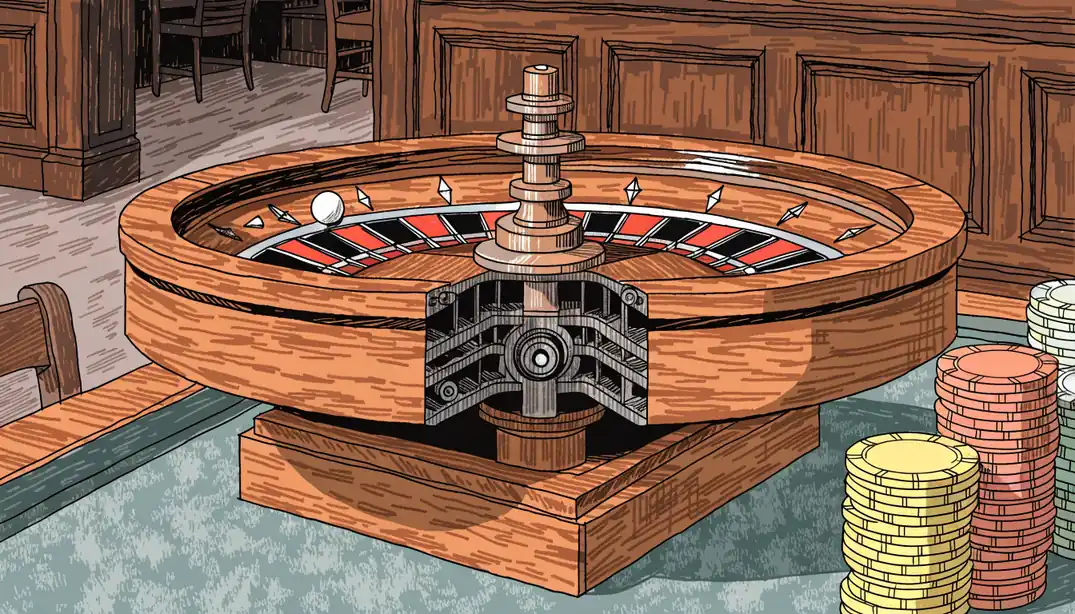
A classic three-reel slot is almost an object from another age: a compact arrangement of symbols, rows and a winning line, stripped of the theatrical machinery that later grew around online games. Its identity lies less in spectacle than in recognition. The reels turn, familiar images pass the viewing window, and the result is read from the alignment that remains when motion stops.
That simplicity has a cultural history. Mechanical fruit machines were designed to make gambling legible at a glance, even in a busy amusement hall or public house. Bells, fruit symbols and bold visual contrasts performed a small piece of theatre, but the theatre was economical. There was no need for a narrative world or a long explanation of what the symbols meant. The machine announced its logic on its face.
The classic three-reel format keeps that visual grammar. It suggests a game built around a central line rather than a landscape of expanding features. The pleasure is partly nostalgic, although nostalgia is not the whole explanation. Familiarity reduces the distance between the machine and its player: the arrangement looks like a machine before it looks like software.
First Deposit Bonus Casinos UK: Terms and Rules
That quality also explains why the format remains a useful reference point when discussing three-reel slots online. A digital version may reproduce the appearance of old reels without becoming a mechanical object. Its traditional identity is therefore a matter of presentation and structure, not proof that the underlying gambling experience has returned unchanged.
The appeal is concise, almost stubbornly so. A classic reel slot does not need to pretend to be an adventure. It offers a small ritual of movement, alignment and interruption. Less decoration, more emblem.
Classic Slots and Video Slots: A Difference in Design
The difference between classic and video slots is often a difference in presentation before it is a difference in mechanics. A classic slot borrows the visual language of the traditional machine: restrained symbols, a compact reel display and a sense that the game’s identity should be understood at a glance. Its appeal lies in recognition. Bells, bars, fruit and sevens belong to a gambling vocabulary older than the screen on which they now appear.
Video slots approach the same basic activity as a piece of animated entertainment. The reels may sit inside a themed scene, with colour, movement and narrative cues doing more of the communicative work. The result can feel less like operating a machine and more like entering a small visual world. Whether that makes the game clearer or merely busier depends on the design.
The contrast does not establish which format offers better odds. Presentation is not mathematics, and decorative complexity does not by itself indicate a larger or smaller house edge. A modest-looking classic game may still be gambling, while an elaborate video slot remains subject to the same underlying financial reality: a positive house edge works against the player over enough sessions.
The two styles also reflect different ideas about attention. Classic presentation reduces the distance between symbol and outcome; video presentation fills that distance with motion, sound and themed detail. Neither is automatically more serious, more generous or more suitable. One looks back to the fruit-machine tradition. The other treats the slot as a screen-based form of entertainment.
That distinction is useful when comparing classic slots with video slots, but it should not be mistaken for a verdict. The cabinet changed. The wager did not become a story.
Created by the "Casino not on Gamstop" editorial team.