Online European Roulette in the UK: Wheel and Odds
The single-zero wheel, its bet layout and digital formats explain how European roulette works and where its odds come from.
 Available in GB
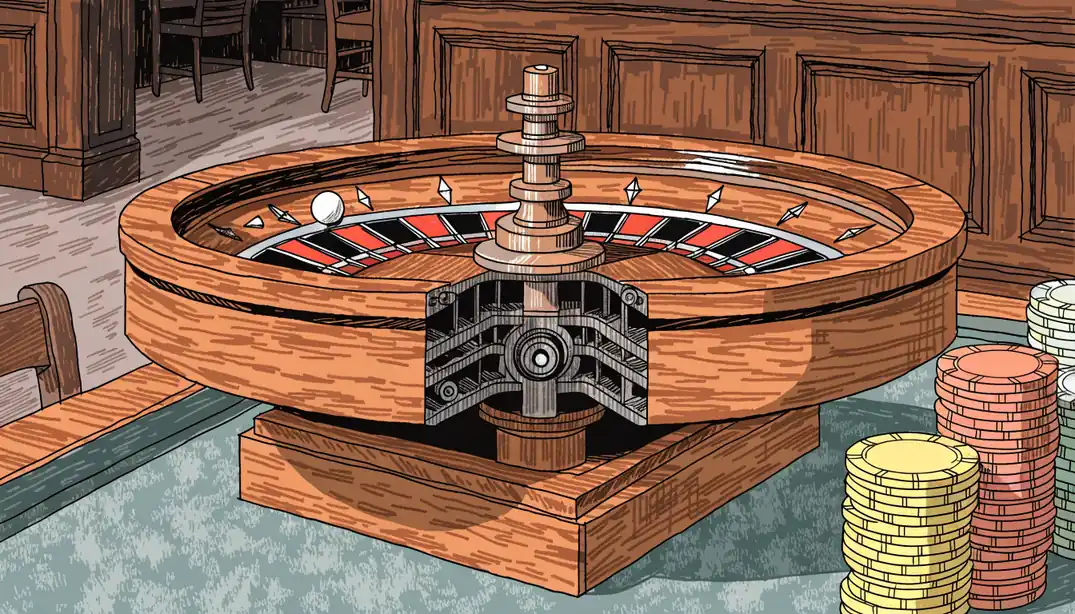
Table of Contents
- The European Wheel: One Zero, One House Edge
- Top online casinos in the UK
- Finding a UK Table Without Mistaking a Search Result for a Recommendation
- What “Best” Means When the Wheel Is the Same
- Inside Bets, Outside Bets and the Arithmetic of a Spin
- The Single-Zero Table and the Bets It Makes Possible
- A Wheel on Screen: RNG, Speed and Live Dealers
- Reading the Roulette Table Layout
- Roulette Demos and the Slot-Style Detour
- European or American: The Cost of an Extra Zero
- Bonuses, Limits and the Rules Around UK Play
The European Wheel: One Zero, One House Edge
A European roulette wheel is a neat circle of 37 pockets: the numbers 1 through 36 and one green zero. That is the entire numerical universe of the standard European game. The colours and the theatrical arrangement may suggest a little more mystery, but the ball has only 37 possible resting places.
The zero is the detail that changes the arithmetic. Numbers from 1 to 36 are divided into red and black pockets, while zero belongs to neither colour. It is not red or black, odd or even, high or low. Those familiar pairs therefore cover 36 pockets, not all 37. A bet on red is not playing against black alone; it is also vulnerable to the green interruption.
This is why the European wheel carries a 2.70% house edge. In mathematical terms, the casino’s advantage is the long-run difference between the amount staked and the amount returned across many spins. It does not describe what must happen on the next turn. A player can win immediately, lose repeatedly, or experience a sequence that looks almost persuasive. The percentage belongs to the structure of the game, not to a forecast of an individual result.
Online Bingo UK: Bingo Rooms and Casino Games
Why one pocket matters
The single zero gives the house its built-in margin on standard bets. Consider an even-money wager such as red or black. There are 18 red pockets and 18 black pockets, but one further pocket is green. A red bet wins on 18 outcomes and loses on the other 19. The same imbalance applies to black, and to the other even-money categories.
The difference is small enough to disappear in the drama of one spin and large enough to matter over time. A wheel with 37 pockets does not pay as though every outcome were equally favourable to the person placing the wager. The payout is set against the 36 numbered possibilities while the zero remains on the table as a quiet extra advantage for the house.
That arrangement also explains why the wheel’s edge is not the same as a player’s chance of winning a particular bet. A single-number wager, for instance, concerns one pocket; a broader outside wager covers more pockets but still encounters the zero. The number of covered outcomes changes, while the underlying interruption does not.
Games: Casino Slots, Live Tables and More
What “European” identifies
The word European refers chiefly to the wheel’s single-zero configuration. It does not mean that every online table has the same presentation, pace or interface. A European roulette casino may display a digital wheel, a filmed table or a more decorative version of the same basic game. Those differences can alter the setting in which the spin appears, but not the defining count of pockets.
This is also the first useful distinction between European and American roulette. The American wheel adds another green pocket, marked double zero, to the numbers 1 through 36. European roulette has one zero; American roulette has two. That extra pocket is not a cosmetic flourish. It changes the probability model and increases the casino’s advantage. The direct comparison belongs to its own discussion, but the essential contrast begins here: one green interruption rather than two.
For anyone considering European roulette online, the wheel’s identity should therefore be established before attention moves to graphics, themes or promotional language. The important question is not whether the table looks continental. It is whether the game contains numbers 1 to 36 plus a single zero.
Live Dream Catcher Casino UK: Game and Session
A small wheel, a permanent rule
Roulette’s appeal partly comes from the sense that every spin starts afresh. The ball does not remember the previous result, and the wheel does not become “due” to produce a particular colour or number. Yet the mathematical terms do not reset in any meaningful economic sense. Each spin still takes place on the same 37-pocket wheel, with the same 2.70% house edge in European roulette.
That distinction matters because visual patterns invite interpretation. A run of black pockets can look like a warning; a cluster of low numbers can acquire a story. The wheel offers no such promise. Its history may be recorded on a screen, but the record does not remove the zero or alter the odds attached to the next turn.
The elegance is mechanical. Thirty-six numbered pockets provide the drama; the single green pocket pays for the house.
Top online casinos in the UK
- BritsinoBonus: Welcome Package – Get your £2,200 + 2,000 FS · Payout speed: 1-3 business days
- Revery PlayBonus: 100% up to€1,000+ 100 FS · Payout speed: 1-3 business days
- AmunbetBonus: Join now and get 450% up to 2,700 GBP + 450 FS · Payout speed: 1-3 business days
- ZombillionBonus: Welcome Pack 250% up to £4000 + 200 FS · Payout speed: 1-3 business days
- x3betBonus: Welcome Pack 100% Up to £1.000 + 200 Free Spins · Payout speed: 1-3 business days
- NightLuckBonus: Welcome Pack + 805% Up To 6400€ + 280 FS · Payout speed: 1-3 business days
- BeOnBetBonus: 100% up to €500 + 100 FS · Payout speed: 1-3 business days
Finding a UK Table Without Mistaking a Search Result for a Recommendation
A page offering European roulette is not automatically a recommendation. It may be an operator’s game lobby, an editorial comparison, a bonus landing page or simply a result assembled around familiar words. Those forms look similar at first glance, although they serve different purposes. A sensible comparison begins by separating the table from the packaging around it.
- Check the operator on the UK Gambling Commission’s public register
- Verify that the game includes a single zero
- Read all terms and conditions and bonus requirements
- Accept a badge in a footer as proof of licensing
- Trust a site that hides its game rules or RTP information
- Mistake an operator’s promotional page for an independent comparison
For British players, the first question is regulatory rather than decorative. The UK Gambling Commission is the sole regulator of online casino activity in Great Britain, and a real-money casino serving this market must hold the appropriate UKGC licence. The licence should be checked on the Commission’s public register before an account is funded. A badge placed in a footer is not evidence by itself; a register entry is the useful piece of information.
That distinction matters because a page can be polished, localised and full of familiar payment symbols without belonging to a UKGC-licensed operator. An offshore casino sits outside the UKGC system. It is not a lawful provider of real-money live roulette to British residents, whatever the table graphics may suggest. The internet has never been short of convincing scenery.
Start with the game, not the headline offer
A comparison of European roulette casinos UK players can actually use should identify the precise roulette product. “Roulette” may conceal several variants, including American roulette, live roulette, speed roulette or a branded table with altered rules. The word European needs to describe the wheel and its rules, not merely appear in a page title.
The game information should be easy to find before registration or deposit. At minimum, the page should make clear:
- that the table uses the European single-zero layout;
- the stated return-to-player information, where provided;
- the available betting limits;
- whether the table is simulated or presented by a live dealer;
- the full rules, including any special treatment of zero.
RTP information is not a flourish for a comparison box. It gives the mathematical context in which the table operates and should be accessible without making a player hunt through several layers of menus. If a page announces a “best European roulette casino” but hides the game rules, the adjective is doing more work than the evidence.
The same applies to European roulette online casinos described as VIP destinations. “VIP” may indicate a table format or a customer tier, but it does not alter the need for clear rules, accessible RTP information and a valid UKGC licence. A higher-status room is still a roulette room. Velvet does not change arithmetic.
Separate the operator from the article about it
Editorial pages and casino pages should not be read in the same way. An operator’s own page may explain its tables and terms, but it is also presenting a commercial offer. An independent-looking comparison may contain useful checks, yet its order of presentation can be influenced by commercial relationships. Neither format deserves an automatic crown.
The practical test is whether the page gives enough material to inspect the offer rather than merely praising it. A useful page identifies the operator behind the table, links its licence details to the relevant public record, and states where the roulette rules and RTP information can be found. It also distinguishes the game from any welcome promotion attached to it.
Editorial pages and casino pages serve different purposes. An operator’s page is a commercial offer, while a comparison should provide material to inspect the offer independently.
Bonus language deserves particular distance. A large headline can make a table seem attractive while leaving the important conditions in smaller text: which roulette games qualify, how game weighting is applied, whether live roulette is treated differently from simulated play, and what restrictions govern bonus funds. Those are terms to read, not promises to admire.
A short comparison checklist
Before treating a listing as a serious option, the following checks keep the comparison anchored:
- Licence: Is the operator present on the UK Gambling Commission’s public register?
- Identity: Is the named casino the actual operator, rather than a game provider or an affiliate page?
- Game: Is European roulette clearly identified, with its rules separated from other roulette variants?
- RTP: Is the relevant RTP information accessible before money is committed?
- Terms: Are betting limits, eligibility conditions and roulette game weighting explained?
- Format: Is the table live, RNG-based or a special branded version, and is that description unambiguous?
- Promotion: Can the table be assessed independently of any bonus funds?
This method does not produce a universal winner, because the same wheel can be presented through very different tables and terms. It does something more useful: it prevents a search result, a promotional label or a glossy review from being mistaken for proof. A UK table earns attention through identifiable regulation and readable information first. Everything else is scenery.
What “Best” Means When the Wheel Is the Same
A “best” European roulette casino is not one with a superior wheel. The European version remains the European version: the same single-zero structure, the same mathematical basis and the same chance-driven outcome. What changes from one online casino to another is the setting around the game. A sensible comparison therefore concerns the table, the account and the terms attached to them, rather than an imaginary advantage hidden behind a polished interface.
Start with the table, not the label
The first distinction is between RNG roulette and a live table. RNG roulette uses a random number generator to produce simulated spins. It generally permits quicker play and lower minimum stakes, with some tables starting at 10p. That can suit a modest bankroll or someone who wants a simple digital table without a studio feed.
Live roulette places the same basic game in a different social frame. A streamed wheel, a dealer and the pauses between betting rounds make the experience closer to a physical casino. UK live tables can begin at 10p, according to a specialist review, while auto-roulette and speed formats sometimes begin at 5p. Those figures describe possible entry points, not a promise that every table or operator will offer them.
The distinction matters because “best online European roulette casino” can mean two quite different things. One person may value a low opening stake and brisk automated play; another may prefer a human dealer and visible ball drop. Neither preference changes the wheel. It changes the conditions in which the wheel is encountered.
Online Casino Games for Real Cash in the UK
Minimum stake is a practical criterion
A low minimum stake is not automatically a virtue. It gives a bankroll more room to absorb ordinary variation, but a faster table can also create more opportunities to place bets in the same period. Pace is therefore part of the comparison, even when the game rules are identical.
The useful question is not whether a casino advertises the smallest possible stake, but whether the available tables match the intended style of play. A platform offering only a high-limit live room will not be the best fit for cautious, low-stake sessions. Conversely, a collection of automated tables may feel unsatisfactory to someone who values the ceremony of a dealer-led game.
This is why the phrase “best European roulette casino UK” has no universal answer. A table’s minimum, format and rhythm may matter more to a particular player than the casino’s promotional language. A grand lobby can still be a poor match for a small, quiet session.
Online Slots Payout Percentage: What RTP Means
Bonuses need a separate reading
Promotional terms can make one casino appear more attractive, but they belong to the account rather than to European roulette itself. The relevant details include the games covered, the contribution assigned to roulette, the expiry conditions and any maximum stake or withdrawal provisions attached to bonus funds. These terms can change the practical value of an offer without changing the odds of a spin.
Game weighting is especially important. Roulette wagers may count at different rates depending on the operator and the format. RNG roulette may receive full weighting, while live roulette can receive a lower rate or be excluded from a particular offer. A bonus that looks generous in the headline may therefore be less useful for someone intending to play live tables.
Free European roulette and demonstration modes belong in the same careful category. They can show the interface and let a person understand how bets are placed without using real funds, but they do not turn a promotional offer into a better wheel. Nor does the phrase “European roulette slot” describe a standard roulette table: it may point towards a slot-style product, which should be assessed as a different game rather than treated as roulette by another name.
Live Casino Lightning Roulette in the UK: How It Works
The strongest comparison is consequently modest: table format, opening stake and readable bonus conditions. Everything else is decoration until those three questions have been answered. unerquicklich
Inside Bets, Outside Bets and the Arithmetic of a Spin
European roulette becomes less mysterious once the betting cloth is read as a division between inside and outside wagers. Inside bets occupy the numbered part of the layout and concentrate money on a small group of outcomes. Outside bets cover broader categories, trading a narrower possible return for a wider field of winning numbers.
The most concentrated choice is the straight-up bet: one selected number, including zero, pays 35:1 if the ball settles there. The payment reflects the small chance of that exact result, although the single-zero wheel still gives the casino its mathematical advantage. A split bet covers two adjacent numbers and pays 17:1. It sits between the single-number wager and broader combinations: more numbers can win, but the return is lower.
Other inside bets extend the same principle across connected portions of the layout. The wager is still tied to particular numbered positions rather than to a colour, parity or range. Its attraction is visible on the table itself: a smaller target, a larger stated payout. That is the basic arithmetic, stripped of ceremony.
Outside bets and even-money returns
Outside bets reverse the emphasis. Red or black, even or odd, and high or low each pay 1:1. A winning stake therefore returns an equal amount in winnings, while the original stake is also returned according to the table’s normal settlement. These bets cover much broader categories than a straight-up or split bet, but zero does not belong to the red/black, even/odd or high/low groups. When it appears, those categories lose.
That arrangement explains why a seemingly calm wager is not a prediction of balance. Red and black may look like opposing halves, yet the green zero interrupts the symmetry. Even-money language describes the payout, not a guarantee that the outcomes are evenly represented on every sequence of spins.
Understanding Outside Bets
Outside bets cover broader categories like red or black, even or odd, and high or low. These bets typically pay 1:1, but the green zero acts as an interruption to these symmetrical categories.
The same distinction applies whether roulette is played in a conventional online lobby, in a live dealer room or in a more formal European VIP setting. The screen may add a dealer, cameras or a higher-stakes atmosphere; it does not turn a chance event into a readable pattern. Real-money play changes the consequence of the stake, not the arithmetic printed on the table. A demo can remove that financial consequence, but it cannot make a losing number less losing.
Why betting systems do not rewrite the wheel
The Martingale is the familiar attempt to impose order on disorder. After each loss, the player doubles the next bet, hoping that a later win will recover the accumulated losses and produce the original target profit. It is simple enough to fit in a sentence, which is perhaps why it has survived so many complicated explanations.
Its weakness is equally simple. A losing streak can damage a bankroll before the hoped-for win arrives. Each doubling makes the next required stake larger, while the wheel remains entirely indifferent to the previous results. A run of black does not make red due; a missed number does not become more likely because it has been missed repeatedly.
No roulette strategy can predict the final outcome. The odds are determined by chance, whether the wager is an inside selection or an outside one, and whether the table is used for free or for real money. Systems can change the pattern of staking. They cannot change the spin.
The Single-Zero Table and the Bets It Makes Possible
A European roulette table is built around a wheel with 37 pockets: the numbers 1 through 36 and one green zero. That arrangement is more than a visual signature. It determines which betting choices exist and gives the table its mathematical character. The zero is a separate pocket, not another losing version of a number already printed on the cloth.
Online Casino Tournaments UK: Rules, Prizes and Entry
The layout mirrors this structure. A long column of numbered spaces is divided into rows, with the zero set apart at one end. Around it sit the areas for broader wagers: red or black, odd or even, and low or high numbers. The table therefore offers two broad families of choices without changing the wheel itself.
Inside bets on the numbered field
Inside bets are placed on, or immediately around, particular numbers. They concentrate a stake on a smaller part of the layout, so their payouts are larger when successful but the winning chance is narrower.
The most precise option is a straight-up bet on one number. On European roulette, it pays 35:1. A split covers two neighbouring numbers and pays 17:1. A street covers a horizontal row of three numbers and pays 11:1. These wagers use the geometry of the cloth: proximity matters, because the lines and corners mark which pockets belong to the same bet.
The distinction is practical as well as visual. A player selecting a single number is not making the same wager as one covering a row, even if both choices are made in the numbered section. Each bet has its own coverage and payout, while the wheel remains indifferent to the arrangement.
Outside bets around the numbers
Outside bets spread the stake across larger groups. Red and black divide the numbered pockets by colour; odd and even divide them by parity; low and high divide them into two numerical ranges. Each pays 1:1 when successful.
These wagers look safer because they cover more numbers, but the zero stands outside those ordinary pairs. It is neither red nor black, neither odd nor even, and belongs to neither low nor high group. That single green pocket is where the balance of the table reveals itself. A broad wager can cover almost half the numbered field and still lose when the ball finds the isolated green space.
Attention The single green zero gives the house a built-in edge of 2.70% on standard bets.
European roulette’s standard house edge is 2.70%, a consequence of that extra pocket against otherwise balanced-looking outside choices. The table does not need elaborate machinery to produce this advantage. One small green compartment is enough.
When La Partage changes the zero
Some European tables apply La Partage to even-money bets. When zero appears, an eligible red, black, odd, even, low or high wager does not disappear in full: half of it is returned. The rule applies to those even-money bets, not to the more concentrated inside options.
La Partage reduces the house edge on the covered outside bets to 1.35%. It is a modest alteration to the settlement rule, but a meaningful one over repeated play. The wheel still has 37 pockets; the difference lies in what happens after the zero arrives.
That is the quiet bargain of the single-zero table: one green pocket, several ways to arrange risk, and—where La Partage is offered—a partial retreat from the usual cost of the zero.
A Wheel on Screen: RNG, Speed and Live Dealers
European roulette can arrive on a screen in two quite different ways. In one, software generates the result and presents it as a simulated spin. In the other, a camera carries the table into a studio: a dealer releases a ball, a physical wheel turns, and the result is shown as it happens. The green zero remains part of the European wheel with 37 pockets in either format. What changes is not the mathematics of that wheel, but the machinery and atmosphere around it.
French Roulette Online Casinos in the UK: Rules and Odds
RNG roulette: the compact version
RNG roulette uses a random number generator to determine each result. The graphics may show a rotating European roulette casino wheel, but the visible animation is a representation of the software outcome rather than footage of a ball travelling around a physical wheel.
That arrangement gives simulated roulette its particular economy. There is no dealer waiting for bets to close, no ball to retrieve and no wheel to reset. Spins can follow one another quickly, and the format often supports lower minimum stakes — sometimes as low as 10p. For a player interested in a small-stake version of European roulette, the difference is practical rather than theatrical.
The underlying single-zero structure is still important. A virtual table showing numbers from 1 to 36 and one green zero is presenting European roulette, not American roulette. The screen may be bright, the wheel may be animated, and the interface may offer statistics or recent results, but none of those decorations alters the pocket count. A green zero is not a lucky symbol added for atmosphere. It is one of the wheel’s actual pockets.
RNG play also removes the physical pauses that give a traditional table its rhythm. The result is easier to reach and easier to repeat. That can make the game feel almost administrative: select, confirm, spin; then do it again. Efficiency has never been the same thing as restraint.
Live roulette: a physical wheel at a distance
Live dealer roulette works through a studio stream. Human dealers manage the table, a real wheel turns, and the ball drops into an actual numbered pocket. The screen therefore shows more than an outcome: it shows the process by which the outcome is produced.
Live dealer roulette provides a social atmosphere through a streamed video feed of a physical wheel and a human dealer.
A live European roulette casino table can preserve details that simulated play compresses into animation — the dealer’s hand, the movement of the ball, the changing wheel, and the moment when bets close. The physical setting also creates a shared room, even though the participants are remote. That social quality explains much of live roulette’s appeal. The game borrows the ceremony of a casino without requiring a journey to one.
The camera does not make chance more readable. A familiar dealer, a polished studio or a handsome European roulette wheel cannot reveal where the ball will land. The physical wheel supplies texture and accountability to the scene, not a pattern that can be used to predict its next result. The green zero remains green, singular and mathematically indifferent.
Live dealer roulette also has a different pace. A standard table is commonly described as handling 80–100 spins per hour, while a specialist review reports that speed roulette can exceed 150 spins per hour. The latter figure should be treated as a description of that format, not as a permanent promise attached to every table carrying the word “speed”.
Speed roulette is a pace, not a new wheel
Speed roulette sits between the two experiences in presentation, but it is not a separate betting system. Its defining feature is the shortened interval between spins. The wheel may be physical and filmed, or the format may use automated equipment; the important distinction is how quickly the game moves.
That matters because the pace changes the number of decisions that can be made in a session. A quicker table does not improve the chance of a winning number, reduce the house edge or turn a European wheel with 37 pockets into another variant. It simply gives less time between one result and the next. A faster conveyor belt still carries the same merchandise.
Speed roulette
A roulette format where the interval between spins is shortened, offering a faster pace than conventional live tables.
Some players prefer the quiet repetition of RNG roulette. Others want the dealer, the studio and the visible ball drop of a live table. A third group wants the live presentation without the full pauses of a conventional table and turns to speed roulette. These are differences in interface, tempo and ceremony, not evidence that one format can outwit chance.
Comparing the formats
| Feature | RNG roulette | Live dealer roulette | Speed roulette |
|---|---|---|---|
| Source of the result | Random number generator | Physical wheel and ball | A quicker roulette presentation |
| On-screen setting | Software interface and animation | Studio stream with a human dealer | A table arranged for shorter pauses |
| Pace | Faster simulated play | Standard live-table rhythm | More than 150 spins per hour is reported in a specialist review |
| Stakes | Lower minimums are common, sometimes 10p | Table minimums depend on the operator and table | Format-dependent |
| European identity | One zero and 37 pockets when the table is European | One zero and 37 pockets when the table is European | Still depends on the wheel shown |
The useful question is therefore not which screen looks most convincing. It is whether the table clearly identifies its variant and whether the chosen pace suits the intended session. Software can make roulette brisk; a dealer can make it ceremonial; speed roulette can make it relentless. None of them makes the wheel less governed by chance.
Reading the Roulette Table Layout
The European roulette table is less mysterious than its theatrical surroundings suggest. Its felt is a diagram: a numbered grid, a few broad colour fields and a separate place for the zero. Every marking tells the player how numbers may be grouped before the wheel decides which pocket receives the ball.
The central grid contains numbers 1 to 36, arranged in three vertical columns. The numbers do not follow the circular order of the wheel; the layout is made for betting patterns rather than for reproducing the wheel’s physical sequence. The single zero sits outside the numbered block, in its own green space. Together, these are the European wheel’s 37 pockets.
The numbered grid
Each individual square corresponds to one number. Placing a chip inside that square selects that number alone. The boundaries around the squares matter: they are the table’s small grammar, separating one choice from its neighbours.
Lines between squares create wider betting areas. A chip placed across the boundary of two adjacent numbers covers both. At the end of a row, a placement can cover three numbers at once. The felt therefore allows a narrow selection or a broader one without requiring a different game.
The grid also supplies larger combinations:
- The three-number row runs across a horizontal line.
- Two adjacent rows can be covered together as a six-number group.
- A column covers the twelve numbers arranged vertically.
- Larger blocks bring together groups of twelve or eighteen numbers.
The terminology may vary slightly between layouts, but the visual logic remains stable: the closer a placement is to a single square, the narrower the numerical field it covers.
The outside area
Beyond the numbered grid are the broad outside fields. Red and black divide the coloured numbers; even and odd divide them by parity; low and high divide the numbered range into two groups. These areas are designed for wider coverage rather than precision. The zero is green and belongs to none of those paired categories.
A European roulette casino table may use different colours, fonts or chip markers, yet the arrangement usually remains immediately legible. The layout does not predict a result, and no pattern on the felt changes the chance-driven nature of the spin. It merely turns an abstract set of 37 pockets into places where decisions can be recorded. That is the whole strategy of the cloth.
Roulette Demos and the Slot-Style Detour
A roulette demo is the quietest way to inspect a game before real-money play. No deposit is involved, and the screen can be used to understand the controls, betting stage and result display. It is practice, not a rehearsal for certainty: the next outcome remains chance-driven, whether the wheel is represented by software or shown as a graphic imitation of a physical table.
The word “demo” can conceal a change of species. A conventional European roulette game presents the familiar wheel and betting layout. A slot-style product may borrow the language of roulette while arranging play around reels, symbols, paylines or bonus features. A title suggesting a three-dimensional wheel, a gold edition or a platinum edition may therefore describe branding and presentation rather than a new roulette rule. Gold is not a mathematical category. Platinum is not one either.
That distinction matters because the appearance of a wheel does not establish the game’s mechanics. A product can be roulette-themed without offering the same betting structure as a standard European table. The useful questions are plain ones: does the game show the numbered layout, does it accept recognisable roulette bets, and is the result produced as a roulette spin or through slot-style reels? Decorative language answers none of them.
Warning A roulette demo is a simulation and does not transform a slot-style product into a standard roulette table.
The term “European roulette demo” normally points towards a free-play version of a conventional roulette game. “European roulette slot demo” points somewhere less stable: it may lead to a roulette-branded slot, a simulated table, or a page using both descriptions loosely. The boundary is easy to blur online, where a polished interface can make different games look like close relations. They may share a name and little else.
British rules add another reason not to confuse the two. The ban on autoplay applies to online slots, as does the requirement that each online slot spin lasts at least 2.5 seconds. Those are slot rules, not roulette rules. A roulette demo is not transformed into a slot because it is free to play, and a roulette game does not inherit slot restrictions merely because its graphics are glossy or its title contains “slot”.
The sensible label is the one the mechanics deserve. A demo can show how a game behaves; it cannot turn a branded imitation into a conventional European roulette table. Packaging remains packaging.
European or American: The Cost of an Extra Zero
The difference between European and American roulette is visible before the ball moves. A European wheel has 37 pockets: numbers 1 to 36 and one green zero. The American wheel adds a second green pocket, marked 00, bringing its total to 38.
That extra space is not decorative. It gives the house another winning outcome against most standard bets while the payout remains unchanged. A straight-up wager on a single number pays 35:1 on either wheel, yet the American version offers fewer favourable pockets in proportion to the possible results.
| Variant | Pockets | House edge |
|---|---|---|
| European roulette | 37 | 2.70% |
| American roulette | 38 | 5.26% |
The comparison is therefore less about a different style of play than about the arithmetic attached to each spin. An online European roulette casino game uses the same essential single-zero structure as a physical European wheel; the American version carries the cost of its additional zero.
American roulette can impose a still heavier disadvantage when the table offers the basket bet, covering 0, 00, 1, 2 and 3. Its house edge is 7.89%, higher than the ordinary American figure. Some UK online tables also display a third green pocket, 000. A specialist review has reported a 7.69% house edge for that form, but this is a specific reported table configuration, not a safe description of American roulette as a whole.
For a British player comparing European roulette with American roulette, the green pockets are the small symbols with the largest financial meaning. One zero leaves the game with the lower standard edge; two raise it; a third changes the table again. The felt may look familiar, but the extra green square has already rewritten the bargain.
Online Casino Without ID in the UK: What It Means
Bonuses, Limits and the Rules Around UK Play
Roulette’s game weighting can matter when bonus funds come with wagering requirements. Most UK operators count roulette wagers at 10% to 20% of those requirements, while the exact treatment depends on the offer’s terms. A specialist review reports that, since January 2026, UK regulations cap bonus wagering at 10x for all licensed operators; the promotion itself still deserves careful reading.
The safeguards are less decorative. UKGC-licensed operators must verify age before allowing a customer to deposit, prompt new customers to set a financial limit before the first deposit, and provide account controls for deposit and loss limits. They must also offer session reminders, reality checks, cool-off periods and GamStop self-exclusion. The wheel may be old; the paperwork is modern.
Credit cards cannot be used for gambling, including through a money service business, and wallets funded by credit cards cannot be accepted for that purpose. A UKGC licensee must provide an internal complaints process and access to an approved Alternative Dispute Resolution service, and must contribute to the Research, Education and Treatment levy.
Real-money live roulette is a licensing matter, not merely a matter of finding a table. Operators serving British residents must hold a current UK Gambling Commission licence. A platform without a valid UKGC licence cannot legally offer real-money live roulette to British residents. Before depositing, the licence number should be checked on the UKGC public register.
Should I play American or European roulette if I’m in the UK?
European roulette has the lower house edge: 2.70%, compared with 5.26% for American roulette. For real-money play in Great Britain, use a casino holding the appropriate UK Gambling Commission licence.
What is the house edge on European roulette compared to American roulette?
European roulette has a 2.70% house edge, while American roulette has a 5.26% house edge. The American basket bet has a 7.89% edge.
How does roulette actually work?
A ball lands in one of the wheel’s numbered or green pockets, and bets are settled according to the result and the bet’s payout. European roulette has numbers 1–36 and one zero; American roulette adds a double zero. Each spin is determined by chance, so previous results cannot predict the next one.
What is the difference between European and American roulette wheels?
European roulette has 37 pockets: numbers 1–36 and one zero. American roulette has 38, adding a double-zero pocket; its house edge is 5.26% compared with 2.70% on European roulette.
Created by the "Casino not on Gamstop" editorial team.